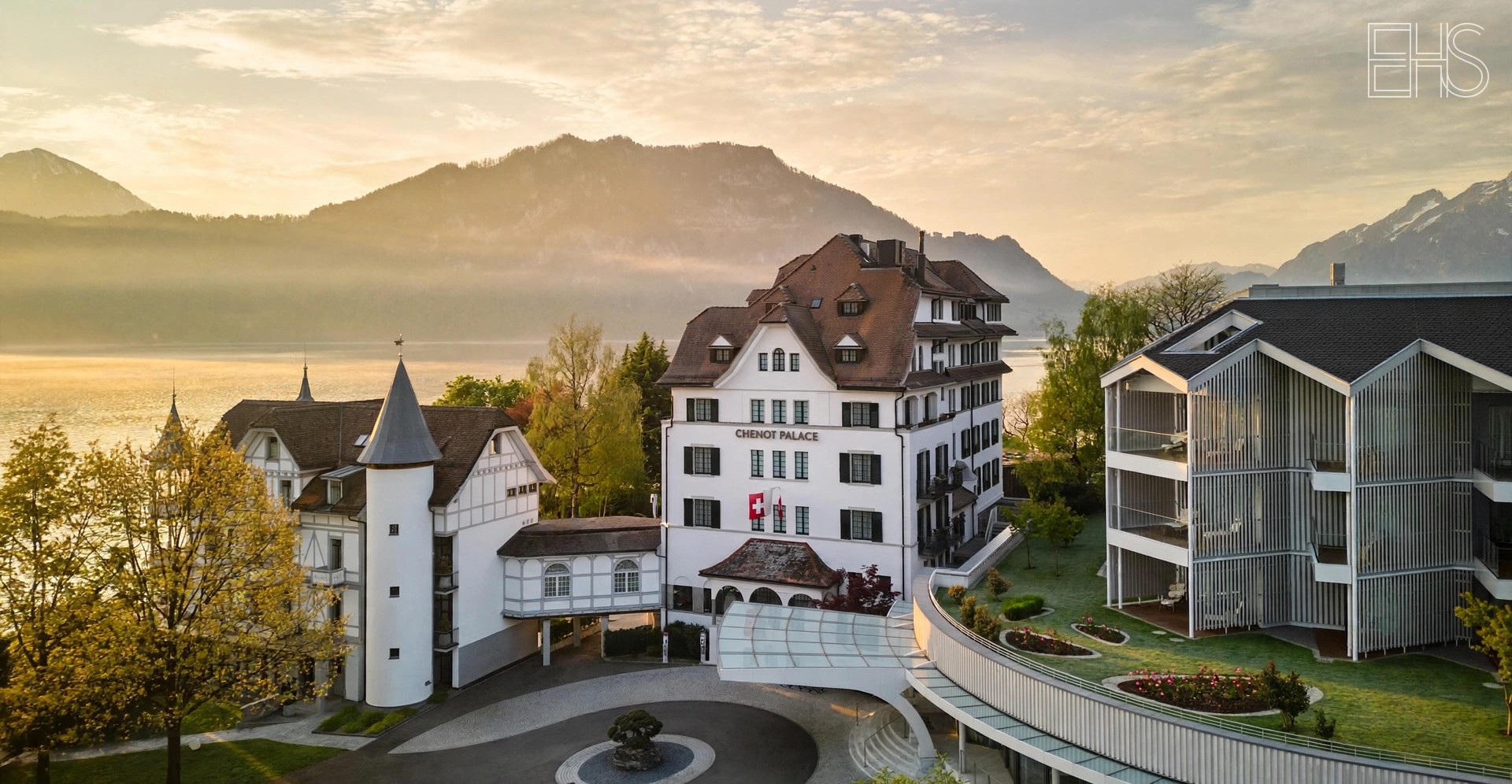
On Lake Lucerne in Weggis, Switzerland, stands the purpose-built flagship of the Chenot Method: a week organized around lighter eating, daily hydrotherapy, and a near-monastic daily rhythm. The method was developed by Henri Chenot and refined over decades at earlier addresses in Merano and St. Moritz before landing here. It is among the most expensive weeks in wellness travel, and one of the most demanding, so a clear-eyed preview is worth having before you commit. Here is what the money actually buys.
This guide covers a typical seven-night stay in practical terms: the setting, the rooms, the method, the food, the programs, the daily rhythm, the budget, and who tends to thrive here versus who should look elsewhere. Pricing shifts with season, room category, and program, so read every figure as a rough marker and confirm current rates before booking.
A candid word on suitability first. A week here means substantially reduced food intake, daily heat and cold hydrotherapy sessions, and early nights. That combination is not for everyone, and anyone with a health condition, a complicated history with food, or doubts about intensive schedules should weigh the decision carefully before booking. This guide describes a travel experience, not advice of any kind.
Key takeaways - Chenot Palace Weggis is a purpose-built lakeside property in Weggis, on Lake Lucerne, around 40 minutes from Lucerne and about an hour from Zurich airport. - The week centers on the Chenot Method: plant-based, calorie-controlled eating, a daily hydrotherapy circuit (hydro-aromatherapy baths, phyto-mud applications, hydrojet sessions), body treatments, and movement. - Flagship programs typically run seven nights; shorter and longer formats are listed. Expect an all-in week to land in the five figures in Swiss francs; verify current rates before booking. - Days are highly structured: an opening assessment produces an individual treatment calendar, with genuine rest built between sessions. - It suits guests who want a disciplined, quiet reset with strong hospitality. It does not suit anyone seeking indulgent dining, nightlife, or an unstructured holiday.
The Setting: Weggis on Lake Lucerne
Weggis sits on the northern shore of Lake Lucerne, in the canton of Lucerne, with the Rigi massif behind the village and the lake opening toward the Alps. The property occupies a private park directly on the water, about 40 minutes from Lucerne and roughly an hour from Zurich airport.
The setting does real work. Mornings begin with the lake flat and silver, walking paths run along the shore, and water and mountains are present from the rooms, the restaurant, and the spa terraces. The atmosphere is deliberately hushed: a place organized around rest, and the setting does the persuading. Guests expecting sightseeing or evening entertainment should know that Weggis is a small lakeside village and that most guests pass the week almost entirely inside the property. It is a destination for staying put.
The Chenot Method, in Plain Terms
The Chenot Method is the organizing framework of the week, developed by founder Henri Chenot over decades of work in preventive wellness hospitality. In practice it rests on four elements: plant-based, calorie-controlled nutrition; a daily hydrotherapy circuit; body treatments and massages; and gentle movement such as guided walks and stretching sessions.
The hydrotherapy circuit is the signature of the house: hydro-aromatherapy baths (warm baths infused with essential oils), phyto-mud applications (body wraps using plant-based muds), and hydrojet sessions (underwater massage from pressurized jets). These water treatments run in a set sequence and account for a large share of the daily schedule.
On arrival you sit down for an opening assessment covering your habits, sleep, energy, and your aims for the week. From that discussion the team builds your individual treatment calendar: mornings lean toward the hydrotherapy circuit and body treatments, afternoons toward rest and quieter sessions, with movement fitted around both. What separates Chenot from a luxury hotel that happens to have a good spa is structure: the week follows a method rather than presenting a menu of options. Readers curious about the heat elements will find background in our guide to sauna benefits, and the hot-and-cold sequencing is covered in our guide to contrast therapy.
Programs at a Glance
The flagship programs typically run seven nights, with shorter and longer formats listed at various points in the year. The main options are summarized below. Every figure is an approximate starting point seen on booking channels, so confirm current rates before booking.
| Program | Typical length | Focus | Typical starting price |
|---|---|---|---|
| Chenot Advanced Detox | 7 nights | The full method: structured hydrotherapy, controlled nutrition, daily treatments | Treatment program typically from around CHF 4,500; rooms separate |
| Chenot Recover and Energise | 7 nights | A gentler arc with more rest and fewer intensive sessions | Verify current rates |
| Shorter stays | 3 to 4 nights | An introduction to the method and the circuit | Verify current rates |
Program and room prices are usually quoted separately, with lake-view rooms commanding a premium over garden-facing rooms. Assemble the all-in figure for one guest, seven nights, from both parts, and always ask for the combined written estimate before committing.
Where You Sleep: Rooms, Suites, and the Penthouse
The property holds just under one hundred rooms and suites, and the room choice shapes the week more than first-time bookers expect. Entry rooms face the park and gardens; lake-view rooms and suites face the water and the mountains, and the difference in morning light is the difference between a good week and a great one.
Interiors follow the house aesthetic: pale wood, stone, muted textiles, and almost no visual noise. Suites add separate living areas for longer stays; a penthouse with panoramic lake views tops the range.
Choose a room you can truly rest in. Real gaps sit between treatments, and you will spend those gaps in your room, so the view is not the place to economize.
A Typical Week, Day by Day
Day 1: arriving and settling in. You reach the property, get into your room, and sit down for your opening assessment. The afternoon is deliberately light: a walk along the lake, a first pass through the hydrotherapy circuit, and an early dinner. Nobody minds the early bedtime.
Days 2 and 3: finding the rhythm. Mornings open in the hydrotherapy circuit and continue with body treatments and gentle movement. Afternoons bring rest, reading, and walks by the lake. The eating plan starts to feel normal, and evenings stay quiet by design.
Days 4 and 5: settling into the rhythm. By midweek the pattern holds: early treatments, long midday rest, unhurried afternoons. This is the stretch guests mention afterward: no inbox, no choices beyond the day's schedule, and sleep that comes without negotiation.
Days 6 and 7: winding down. Treatments taper. Your closing conversation reviews the week and maps out a take-home routine fitted to your life back home. You leave with written notes, which most guests barely register when booking and end up valuing most.
The Food: Plant-Based and Deliberate
The kitchen is central to the method. Menus are plant-based and calorie-controlled: vegetables, grains, legumes, carefully composed small plates. No alcohol on the program menus, and portions are measured rather than abundant.
Meals are planned as part of the week. Your opening assessment shapes your eating plan, and the kitchen executes it with genuine craft. Guests with complicated relationships with food should think hard before booking a week built around controlled eating: the kitchen is not a side dish to the experience. It is the experience, three times a day.
Budgeting the Week
For one guest staying seven nights, a realistic all-in total typically lands in the five figures in Swiss francs once program and room are combined. Program choice and room category are the main variables; lake-view rooms lift the total meaningfully, so ask for a written all-in estimate before you arrive.
Summer lake-season rooms run higher, and holiday periods sell out far ahead. Getting there, transfers, and anything outside the program package cost extra. Cancellation terms are strict by hotel standards, so only lock in dates you fully intend to keep. For a sense of how Chenot's pricing sits against the top tier, see our luxury retreat cost breakdown for the wider top-tier picture.
Who It Suits, and Who Should Look Elsewhere
Chenot Palace Weggis suits guests who want a disciplined reset with strong hospitality: people who like structure, quiet, and a clear method, and who are comfortable eating lightly for a week. It particularly suits repeat wellness travelers who want something more focused than the big resort weeks.
Consider looking elsewhere if you want indulgent dining (the kitchen is deliberate, not lavish), nightlife or social energy (evenings here are silent), or a traditional multi-day fasting program (for that, Buchinger Wilhelmi is the authority; see our Marbella guide). Guests who cannot tolerate set schedules, controlled portions, or early nights will spend the week fighting the program instead of following it. Our field guide to the legendary longevity retreats sets Chenot beside its peers. If you are still matching temperament to property, our wellness-retreat chooser walks through that decision.
Frequently Asked Questions
Where exactly is Chenot Palace Weggis?
Chenot Palace Weggis is in the village of Weggis on the northern shore of Lake Lucerne, in the canton of Lucerne, Switzerland. The property sits in a private park directly on the lake, with the Rigi massif behind it. It is about 40 minutes by road from Lucerne and roughly an hour from Zurich airport, which makes arrival straightforward from most international connections.
What is the Chenot Method?
The Chenot Method is the organizing framework created by founder Henri Chenot, built on plant-based, calorie-controlled nutrition, a daily hydrotherapy circuit, body treatments and massages, and gentle movement. An opening assessment on arrival turns into an individual weekly schedule drawn from the house sessions: hydro-aromatherapy baths, phyto-mud applications, hydrojet sessions, and energetic body treatments. It is an organizing idea for the week, not a set of promises.
What does a week at Chenot Palace Weggis cost?
Budget five figures in Swiss francs for one guest, seven nights, once the treatment program and accommodation are combined. The flagship seven-day Advanced Detox treatment program has been listed typically from around CHF 4,500 before rooms, with rooms from around CHF 600 per night and lake-view categories higher. Confirm the all-in figure, including any additional treatments, in writing before booking, and verify current rates before booking.
What does a typical day at Chenot Palace Weggis look like?
Mornings center on the hydrotherapy circuit (hydro-aromatherapy bath, phyto-mud application, hydrojet session) followed by body treatments. Midday brings rest and lake walks. Afternoons hold quieter sessions and genuine downtime, and evenings are deliberately uneventful, with an early dinner and early nights. Days are structured but not punishing, with real rest built into every afternoon.
How strict is the food, really?
Menus are plant-based and calorie-controlled, with measured portions and no alcohol on the program plans. The kitchen prepares vegetables, grains, and legumes with real craft, and your eating plan is shaped around your opening assessment. It is strict by restaurant standards. Anyone with a complicated relationship with food should be honest with themselves before booking a week organized around controlled eating.
How many nights do I need at Chenot Palace Weggis?
A full seven nights is the classic format, and the one the flagship programs are built around. Three to four nights work as an intensive introduction to the method and the hydrotherapy circuit. Longer stays suit guests who want a slower arc. Shorter than three nights gives you the setting without the method, so plan the length around how much of the program you want to experience.