Once a sideline fixture of professional sports teams, pneumatic compression boots have settled into home recovery rooms. The pitch is simple: pull on inflatable leg sleeves, let them squeeze your legs in waves for twenty minutes, and walk away with legs that feel fresher. Prices run from a few hundred dollars to well over a thousand, and the differences between models matter more than the marketing suggests.
This guide covers what the boots actually do, the categories on the market, what to compare before buying, and what realistic expectations look like. No miracles, no brand endorsements.
What Compression Boots Do
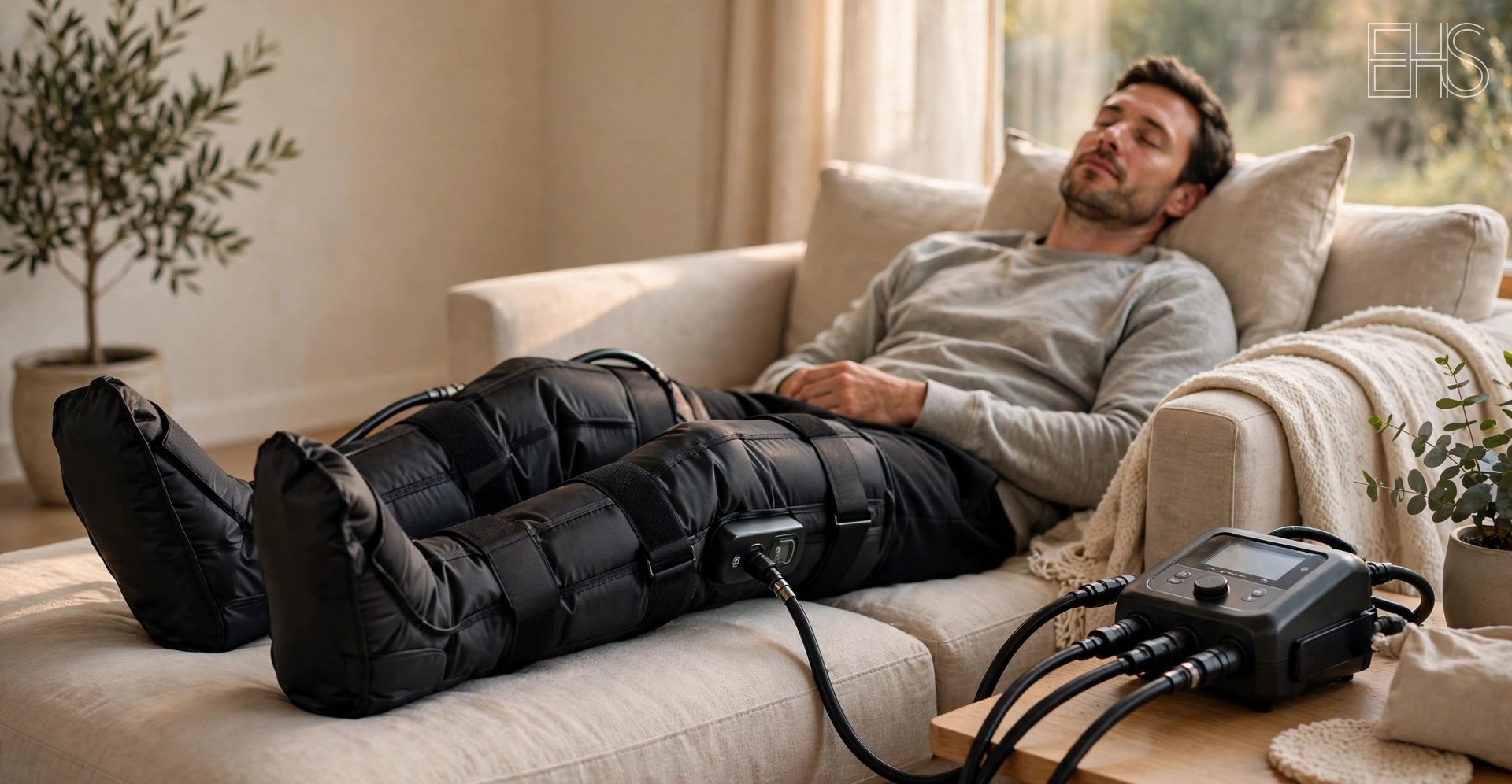
A compression boot is a sleeve, usually covering the foot to the hip, divided into a series of air chambers. A pump inflates those chambers in sequence, starting at the foot and working upward, then releases. The cycle repeats for the length of the session. This is sequential pneumatic compression, and the motion is meant to mimic the milking action of a manual leg massage: pressure applied progressively toward the torso, then released.
Manufacturers market the effect as support for post-exercise recovery, particularly perceived muscle soreness in the legs after running, cycling, or heavy leg training. The honest description of the sensation: a firm, rhythmic squeeze that most people find pleasant, somewhere between a blood-pressure cuff and a deep massage. It is a passive experience. You sit or recline while the device works.
Note the distinction from static compression garments like running tights, which apply constant light pressure. Pneumatic boots apply much higher pressure in moving waves, for the session duration only. Different tools, different purposes.
The Categories on the Market
Portable session units ($300 to $700): The entry tier. Battery-powered pumps, two to four chambers per leg, a handful of preset pressure levels and session lengths. Lighter, packable, and genuinely usable while traveling. The compromises: fewer chambers, coarser pressure control, and audible pumps.
Connected mid-range systems ($700 to $1,300): The mainstream choice and the tier most buyers land on. App control, five to seven chambers, finer pressure adjustment, multiple programmed sequences, quieter pumps. Most include a carry case and a battery that survives several sessions between charges. This is where the feature differences start to feel like they justify the money.
Pro and commercial systems ($1,300 to $2,500+): Clinic-grade pumps, higher maximum pressures, hip and arm attachments sold separately or included, and build quality meant for daily multi-user use. Some add precise per-zone control and session customization that the mid-range only approximates. For a single household user, the step up from mid-range is more about durability and refinement than a fundamentally different experience.
Travel and targeted sleeves ($200 to $400): Calf-only or foot-and-calf sleeves rather than full-leg boots. Less coverage, less pump, less money. A defensible choice if your recovery needs are genuinely limited to the lower leg, and a compromised one if you buy them hoping they will stand in for full-leg systems.
Prices shift with promotions and new model releases, so verify current rates before booking a purchase or comparing models across retailers.
What to Look For When Shopping
1. Pressure range, stated in mmHg. Serious manufacturers publish the pressure range, typically from around 20 to 110 mmHg depending on the tier. Higher is not automatically better; most users settle somewhere in the middle. What matters is that the range is stated and adjustable in small increments. A device with three vague settings (low, medium, high) gives you less control than one adjustable in single digits.
2. Chamber count and sequencing. More chambers allow a smoother, more graduated squeeze: two chambers feel like a blunt pulse, five to seven like a wave. Returns diminish past about seven for home use. Ask whether sequencing is truly sequential (foot to hip) or merely alternating pairs.
3. Fit and sizing. Legs vary enormously, and an oversized boot that gaps at the calf delivers uneven pressure. Check the manufacturer's sizing chart against your actual measurements: thigh circumference, calf circumference, and inseam length all matter. Some systems come in multiple sizes; one-size systems are a compromise. If you are notably tall, short, or broad, sizing deserves extra attention.
4. Portability and noise. If the boots will live in a recovery corner, a plug-in pump is fine. If you travel, want sessions on the couch, or recover in a shared space, battery life and noise matter. Assume roughly two-thirds of claimed battery life. Noise figures are rarely published, so trust owner reviews over spec sheets.
5. Session programs and adjustability. Preset programs are convenient, but the valuable control is manual: independent pressure, session length, and zone targeting. App control is a genuine convenience here; adjusting settings mid-session from your phone beats reaching for the pump behind you.
6. Hygiene and maintenance. The liners touch your skin and your socks. Removable, washable liners are worth having. Check whether replacements are sold and priced sanely; liners wear out, and a system whose liners are proprietary and expensive has a hidden running cost.
7. Warranty and support. One to two years is standard; longer suggests confidence. Pumps are the part most likely to fail, so a reachable support line matters.
Realistic Expectations
The evidence picture is modest but not empty. Small trials generally find users report less perceived soreness in the 24 to 48 hours after hard leg sessions. That is the most consistent finding, and it is a subjective one: people feel better.
The evidence gets thinner from there. Effects on measured performance, like strength recovery or sprint times in subsequent sessions, are inconsistent across studies, with many finding no meaningful difference versus passive rest. Effects on markers like creatine kinase or lactate clearance are mixed and, where positive, modest. No serious reading of the literature supports the idea that boots accelerate the underlying physiology of recovery in a dramatic way; the honest interpretation is that they are a pleasant, passive way to spend twenty minutes that may leave your legs feeling better, with performance effects that are unproven.
That does not make them worthless. Feeling fresher has value, especially for people training hard on consecutive days, and the ritual itself, twenty unhurried minutes off your feet, is doing some of the work. But calibrate the purchase against what it is: a comfort and perceived-recovery tool, not a performance device. If a product page implies harder training, measurably faster recovery, or a full replacement for active recovery, that is marketing outrunning evidence.
Safety and Who Should Be Careful
Compression boots are not for everyone, and the exclusions are worth stating plainly. Skip them or get professional guidance first if any of the following apply: a history of blood clots in the legs (deep vein thrombosis), since mechanical squeezing of the legs is the wrong tool in that situation; severe varicose veins with skin changes; open wounds, skin infections, or recent surgery on the legs; or significant swelling in the legs with no clear cause. Pregnancy is another reason to pause and seek qualified guidance rather than assuming the boots are fine.
For healthy adults, the main risks are mundane: too much pressure leaves temporary marks or numbness. Start at the low end of the range and work up. Discomfort is a signal, not a badge of effectiveness.
Cost Tiers and the Value Question
| Price tier | Typical cost | What the price buys |
|---|---|---|
| Travel and targeted sleeves | $200 to $400 | Calf or lower-leg coverage only |
| Portable session units | $300 to $700 | Battery pump, basic chambers and settings |
| Connected mid-range systems | $700 to $1,300 | App control, finer pressure, quieter pumps |
| Pro and commercial systems | $1,300 to $2,500+ | Highest pressures, attachments, clinic-grade build |
The value question is a usage question. A $900 mid-range system used three times a week costs a few dollars per session over its first year. The same system used twice and stored in a closet is money wasted. Be honest about your training volume: without regular leg work hard enough to produce next-day soreness, the boots solve a problem you do not have.
A note on where boots sit in a broader routine: they pair naturally with the heat and cold modalities in our contrast therapy guide, and many people stack a boot session with the wind-down time after a sauna. Our cold plunge versus sauna comparison covers the evidence for those modalities if you are deciding where to put your recovery budget first.
Living With Them: The Practical Side
Ownership is straightforward but not invisible. A session runs 20 to 30 minutes, during which you are tethered to the pump by hoses; plan for a chair, a book, or a show. The units store as a duffel-sized bundle. Liners need washing after every few sessions. Pumps hum; the better ones hum quietly, the cheaper ones announce themselves.
One practical point buyers underestimate: consistency beats intensity. The people who get value from compression boots use them routinely after hard sessions. If your recovery habits are aspirational rather than actual, a walk, stretching, or an early night will do more than any device.
Frequently Asked Questions
Do compression boots actually help recovery?
They appear to help with perceived soreness: users consistently report their legs feel better in the day or two after hard exercise. Effects on measured performance, like strength or speed in the next session, are inconsistent in studies. Treat them as a comfort and perceived-recovery tool with modest support, not a proven performance enhancer.
What pressure setting should I use?
Start low, around the bottom third of the device's range, and increase until the squeeze feels firm but comfortable. There is no benefit to tolerating pain; numbness or sharp discomfort means the pressure is too high. Most regular users settle in the middle of the range. If you have any circulation condition, seek qualified guidance before using the boots at all.
Are compression boots better than compression tights?
They do different things. Tights apply constant light pressure and are worn during or after activity; boots apply high sequential pressure for short sessions and are used at rest. Neither replaces the other, and the boots' evidence base for post-exercise soreness is somewhat stronger than the tights' case. Many athletes own both and use them at different times.
How often should I use them?
The common pattern is 20 to 30 minutes after hard leg sessions, which for most people means two to four times per week. Daily use is fine for healthy adults if sessions stay comfortable, but more frequent or longer sessions have not been shown to add benefit. Consistency after real training stress matters more than session count.
Can compression boots help with restless legs or swelling from travel?
Manufacturers sometimes suggest this, and the gentle squeeze can feel pleasant, but the evidence for these uses is thin. Occasional swelling after long flights is a different matter from a medical condition causing swelling; if your legs swell regularly or for no clear reason, that deserves professional evaluation, not a consumer device.
Are the expensive pro systems worth it over mid-range?
For a single household user, usually not in proportion to the price. The mid-range tier already offers the chamber counts, pressure control, and app convenience that define the experience. Pro systems add durability for multi-user settings, higher maximum pressures most people never use, and attachments. Buy pro if the boots will see daily use by several people; otherwise the mid-range is the sensible ceiling.
This guide is educational in nature and does not constitute medical advice; speak with a qualified professional before making health-related decisions.