An infrared sauna is the most approachable way to bring serious heat home: in most cases no 220V wiring project, no plumbing, and no ventilation overhaul, since a small unit plugs into a standard outlet. But prices now span from under $1,000 to more than $16,000, and the differences between units are real: heater quality, wood, construction, published EMF data, and warranty terms separate the saunas people love for a decade from the ones they regret by spring.
Key takeaways - Shop far-infrared for a cabin-style home sauna; treat full-spectrum marketing as a claim to verify against the heater spec sheet. - Compare heater technology, published EMF readings, warranty length, and wood quality: these separate tiers better than price. - Most small cabins run on 120V, but premium models increasingly need a dedicated 20A or 30A circuit: check your outlet before ordering. - Prices below are October 2026 listings; always verify current rates.
How Infrared Saunas Work (The Short Version)
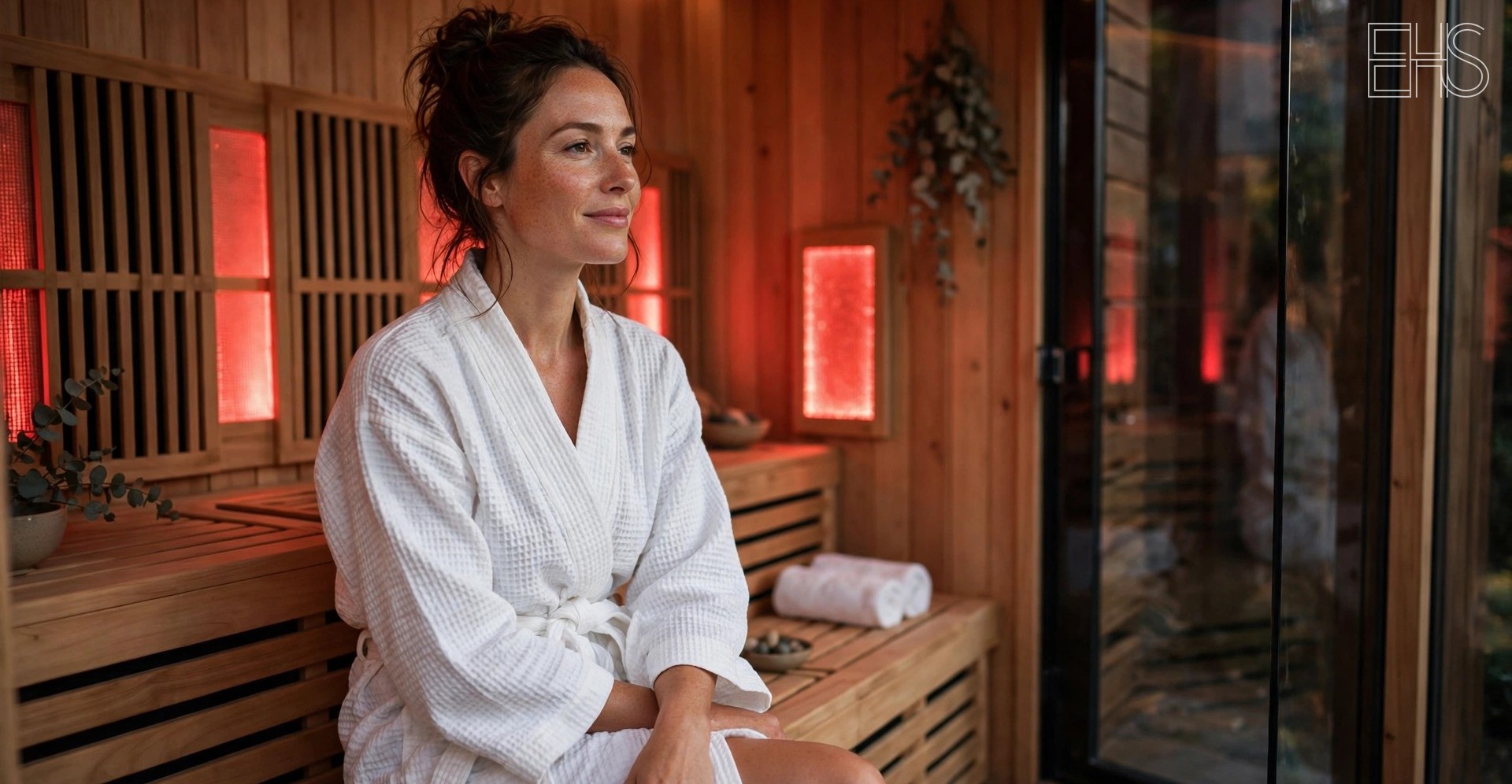
Traditional saunas heat the air around you to 150 to 195°F. Infrared saunas warm your body more directly, so the air stays lower, typically 110 to 140°F in far-infrared cabins, with some full-spectrum designs publishing ceilings of 165°F or higher. The experience is gentler: you sweat without searing air.
Keep your skepticism handy: infrared sauna use is associated with relaxation, temporary muscle-loosening, and the general well-being effects of heat bathing. Claims about deep detoxification or specific effects beyond what heat itself provides run ahead of the evidence. Buy it for the experience, not for miracle promises. Our sauna benefits evidence review grades what the research actually supports.
A note on heat exposure: sauna sessions are not for everyone. Heat plus dehydration can cause dizziness or fainting, and some conditions make prolonged heat exposure risky. Start short and moderate, hydrate before and after, and step out if you feel unwell.
The Three Infrared Types: Far, Mid, and Near
Far infrared is the standard: far-infrared panels (usually carbon) produce the gentle, even heat that defines the infrared sauna experience. Most home infrared cabins are far-infrared, and for most buyers this remains the right choice.
Mid infrared shows up mostly as a secondary heater type in premium full-spectrum units, not as a standalone product.
Near infrared is a different animal: typically delivered by heat lamps or LED arrays rather than panels, often in smaller blanket or single-person setups. Our red-light therapy home guide covers that format. One example is see the Recovery Pod (affiliate link), a lie-down pod that covers the whole body. Judge it on its light specifications, not on sauna criteria.
What to do with this: for a cabin-style home sauna, shop far-infrared. If a listing leans hard on full-spectrum marketing, ask what heater types are actually installed and in what proportion; some advertise the term with only a token LED component.
The 2026 Model Landscape: What Money Buys Now
Representative models with listed prices seen in October 2026. Always verify current rates.
| Representative model | Price band (Oct 2026) | Heater approach | Published EMF | Warranty |
|---|---|---|---|---|
| Maxxus / Dynamic budget cabins | About $800 to $2,450 | Carbon far-infrared panels | Marketing tiers, not third-party certified | 1 to 5 years by component |
| JNH Lifestyles Joyous 2-Person | About $1,300 to $1,900 | Carbon far-infrared | 0.32 mG (Intertek/Vitatech) | 5 years |
| Clearlight Premier IS-2 | About $5,799 to $6,199 (sale) | True Wave far-infrared | Below 1 mG | Lifetime, residential |
| Sun Home Equinox 2 | About $6,099 (sale; $6,799 list) | Halogen + carbon far panels | 0.5 mG (Vitatech) | 7 years heaters/cabinetry |
| Clearlight Sanctuary 2 | About $7,299 to $7,699 (sale) | True Wave full-spectrum | Below 1 mG | Lifetime, residential |
| Sunlighten mPulse line | About $8,699 to $16,399 by model | PulseIQ separate-band emitters | Below 3 mG | 7 years |
The premium tier has moved well past the old $7,000 ceiling, with the mPulse line running roughly $8,700 to $16,400 at list price, and warranty has become a real differentiator, with Clearlight's lifetime residential coverage standing alone against 5 to 7 years elsewhere.
What Matters When Spending $2,000+
Heater quality and coverage. This is the engine of the sauna. Carbon panels remain the modern standard: large surface area, even heat, energy-efficient. In 2026 the premium lines have diverged in how they deliver full spectrum: Sunlighten's mPulse uses a PulseIQ system with separate emitter layers per band (SoloCarbon for far, a Kapton polyimide layer for mid, LEDs for near); Clearlight's True Wave Sanctuary panels are a carbon-and-ceramic hybrid delivering roughly one-third near, mid, and far each; Sun Home's Equinox uses halogen full-spectrum elements paired with carbon far-infrared panels. The near-infrared LEDs in a full-spectrum cabin are a token component, not a light-therapy device: if light exposure is what you want, buy a dedicated light device and judge it on irradiance at a stated distance. See the Recovery Pod (affiliate link), a lie-down pod listed at $2,500, is one example. Beyond design, check placement: back, sides, legs, and ideally floor or front coverage.
Wood type and construction. Hemlock is the common standard: stable, affordable, low-resin. Canadian cedar costs more and smells wonderful, and resists moisture and decay naturally. Eucalyptus and basswood appear in newer lines. Look for tongue-and-groove joinery, solid walls, tempered glass doors, and tight-fitting panels.
Size: buy for your actual body. Capacity ratings are optimistic: a two-person sauna fits two average adults sitting upright, not stretched out, without elbow room. If you are tall or broad, or you want to lie down, size up. Measure your space and add the air gap manufacturers want around the unit.
Electrical needs. Most one- and two-person cabins run on 120V household power, one of their great advantages. But the premium tier has raised the bar: the Sun Home Equinox 2 and the Clearlight Sanctuary 2 both call for a dedicated 120V/20A circuit with a NEMA 5-20P receptacle, not a standard 15A outlet, the Sun Home Eclipse 2 needs a dedicated 120V/30A circuit, and outdoor models like the Sun Home Luminar run 240V (electrician required). If the manual calls for a dedicated circuit, believe it.
Safety certifications. At $2,000+, demand third-party certification: ETL or UL listing on the electrical components, meaning an independent lab verified the wiring. For wood, low-VOC finishes matter: you breathe warm air in an enclosed box. Be wary of units with no certifications.
EMF levels. Infrared heater EMF remains a marketing battleground. The calm version: quality manufacturers test and publish readings, and levels in reputable units are low. Clearlight publishes under 1 mG, Sun Home 0.5 mG (Vitatech-tested), JNH 0.32 mG at the heater surface, and Sunlighten under 3 mG. Budget brands often use their own marketing tiers (low, ultra-low, near-zero) with no certification. Do not pay a premium for zero-EMF claims you cannot verify.
Indoor vs Outdoor
Indoor is the default: spare bedroom, basement, home gym; climate-controlled, private, easy electrical access.
Outdoor infrared is less common than outdoor traditional saunas, but 2026 brought real weather-rated options: Clearlight's Sanctuary Outdoor 2 and Outdoor 5 (roughly $8,599 to $9,699 in October 2026 listings) and Sun Home's Luminar outdoor line (about $10,999 and up). If you go outdoor, buy a model designed for it, add a level pad and rain protection, and get an electrician for the outdoor power. For most buyers, indoor is simpler and gets used more often.
The Price Tiers, Decoded
Bands below reflect October 2026 listings.
| Tier | Price | What you get |
|---|---|---|
| Budget | Under about $2,500 | Carbon panels, hemlock, basic construction. Check certifications; size up one seat past the label. |
| Mid-range | About $2,500 to $7,000 | Better heater coverage, thicker wood, nicer joinery, cedar or eucalyptus options, published EMF data. |
| Premium | About $7,000 and up | Full-spectrum heaters, Canadian cedar, furniture-grade construction, longer warranties, white-glove delivery. Above $10,000 you pay for design, brand, and service as much as function. |
Space Planning Checklist
Before you order, confirm:
- [ ] Exterior dimensions fit your space with the air gap on all sides
- [ ] The unit fits through doorways, hallways, and stairwells (measure the panels)
- [ ] Your outlet matches the spec: 15A standard, 20A dedicated, or 30A for the largest cabins
- [ ] Flooring can handle moisture: a mat or tile underlay is cheap insurance
- [ ] You have a ventilation path: a window or door cracked after sessions prevents mustiness (more on airflow in our sauna ventilation guide)
- [ ] Delivery logistics: curbside, threshold, or white-glove, and whether packaging removal is included
Red Flags
- No ETL/UL certification on a $2,000+ electrical appliance.
- "Medical-grade" or disease-treatment claims in the marketing: a regulatory red flag and an honesty red flag.
- Heater wattage far below competitors for the size.
- Particleboard or MDF in structural walls: in a hot, humid box, these degrade.
- Warranty under 3 years on heaters and electronics at premium prices; good manufacturers stand behind heaters for 5+ years.
- No published EMF test data while competitors publish theirs: transparency is table stakes now.
Getting the Best Price
Sauna pricing is seasonal: the best deals cluster around New Year and late fall, and many brands run 10 to 20 percent promotions several times a year, so waiting six weeks for a sale is worth hundreds of dollars.
Frequently Asked Questions
How hot does an infrared sauna get?
Typically 110 to 140°F (43 to 60°C) air temperature in far-infrared cabins. Because infrared warms your body directly, sessions feel effective at lower temperatures than traditional saunas, and most users settle around 120 to 130°F for 20 to 30 minutes. Some full-spectrum cabins publish higher ceilings. Start low and increase only if you want more.
How long until I feel the effects?
Sweating usually begins within 10 to 15 minutes; deep relaxation typically arrives around the 20-minute mark. There is no benefit to marathon sessions: 20 to 40 minutes is the standard range, and hydration matters more than duration. Keep water within reach; most discomfort in longer sessions is dehydration.
Do infrared saunas help with weight loss?
Sauna sessions raise heart rate and cause water loss through sweat, which shows up on the scale temporarily. Meaningful fat loss requires a sustained calorie deficit; no sauna changes that equation, and research reviews find inconsistent data on fat loss. Treat the sauna as a recovery and relaxation tool, not a weight-loss device.
Can I install it myself?
Most one- and two-person units are designed for DIY assembly: 1 to 2 hours with basic tools. Larger units, or any electrical work beyond plugging in, call for a professional. Note: premium cabins increasingly need dedicated 20A or 30A circuits; that receptacle work is an electrician's job.
How much does it cost to run?
A typical two-person far-infrared sauna draws 1,500 to 1,800 watts. At average electricity rates, a 30-minute session costs roughly $0.30 to $0.60, and daily use adds $10 to $20 to the monthly bill: the lowest running cost of any serious heat practice.
What is the difference between a sauna and a sauna blanket?
Sauna blankets are portable, lower-cost devices that wrap around the body. The experience is different: you lie still, your head stays out, and quality varies enormously across brands. A blanket can be a reasonable trial before committing to a cabin, but it is not a substitute for one in experience or heater quality. A red-light pod is a third format: light at low heat while you lie still, rather than warming the body. See the Recovery Pod (affiliate link) is one example, listed at $2,500; compare it on light specifications, not sauna criteria. (Portable and tent-style options are covered in our portable sauna guide.)