Miraval Arizona is the desert wellness resort that made the category legible to mainstream luxury travelers. Set on 400 acres in the foothills of the Santa Catalina Mountains outside Tucson, Arizona, it has operated since 1995 as a fully all-inclusive resort where the rate covers the room, all meals, and a nightly credit to spend on spa treatments and experiences. It is calmer than a hotel, more considered than a spa break, and deliberately disconnected: on arrival you are handed a small pouch for your phone, a ritual the resort calls the cellphone sleeping bag.
This piece walks through a typical three-night stay: the setting, the all-inclusive structure, the rooms, the daily rhythm, the food, the budget, and who thrives here versus who should look elsewhere. Pricing is hedged throughout because it shifts with season and package, so use every figure as a starting point and verify current rates before booking.
A plain-English note first. Miraval's days are self-directed rather than scheduled for you, which suits some travelers and unsettles others. Desert heat is serious, especially from May through September: outdoor activities in summer are not for everyone. This piece is a travel account, not advice of any kind.
The Setting: Santa Catalina Foothills
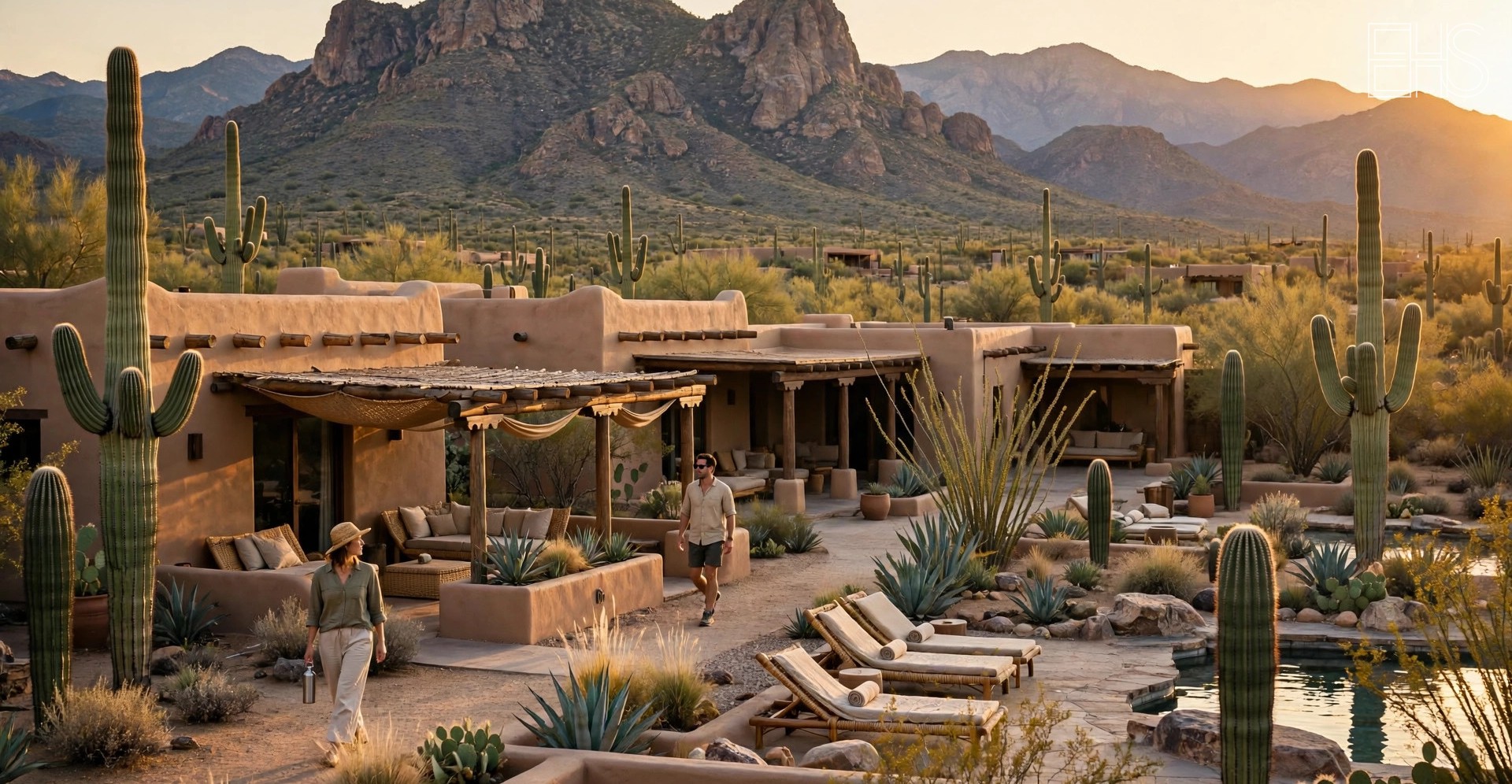
Miraval sits at 5000 East Via Estancia in Tucson, Arizona, against the Santa Catalina Mountains in the Sonoran Desert. The 400-acre property is threaded with desert trails, and the architecture is low, adobe-toned, and deferential to the landscape: saguaro cacti, palo verde, and wide desert views in every direction. It is a short drive from Tucson International Airport, and shared transfers are included in the rate.
The resort's signature idea is intentional disconnection. Public spaces are phone-free zones, and the cellphone sleeping bag handed out at check-in sets the tone: after the initial adjustment, most guests report the absence of their phone as one of the best parts of the stay. Before arrival, Miraval invites you to set an intention for the trip, a small exercise that shapes how you choose from the week's offerings. Guests must be 18 or older.
The All-Inclusive Structure, in Plain Terms
Miraval's rate structure is genuinely inclusive, which is part of why the nightly figure looks high at first glance. The standard package includes accommodations, all meals and snacks, nonalcoholic beverages, shared airport transfers, valet parking, gratuities (the resort is gratuity-free; no tipping anywhere on property), and unlimited access to the complimentary daily schedule: fitness classes, yoga, meditation, wellness lectures, and guided hikes.
On top of that, each guest receives a $175 nightly resort credit to spend on fee-based experiences: spa treatments, equine activities, private wellness sessions, culinary workshops, and specialist workshops. For two guests on a three-night stay, that is $1,050 in credits to allocate. Unused credits expire at checkout, so the practical move is to plan their use before you arrive. Alcoholic drinks are available but cost extra.
The complimentary schedule is extensive: the resort lists more than a hundred classes and activities each week, from sunrise hikes and cardio drumming to photography workshops in the desert and evening stargazing. Private and small-group experiences, the equine work, and the Life in Balance Spa treatments draw on the resort credit or are booked at additional cost.
Rooms, Retreats, and Villas
Accommodation is casita-style: 118 rooms and suites with plush neutral interiors and private patios, blending into the desert rather than towering over it. The top suites add large terraces, private plunge pools, and panoramic desert views. The table below summarizes the categories; figures are approximate and season-dependent, so verify current rates before booking.
| Category | Configuration | Notes |
|---|---|---|
| Guest rooms and suites | Casita-style rooms and suites with private patios | Entry tier; all-inclusive nightly rates typically listed from around $2,000 for two guests |
| Retreats: Solace and Reflection | Studio and one-bedroom layouts | Enhanced privacy for solo travelers and couples |
| Retreats: Unity and Gratitude | Two- and three-bedroom layouts for up to eight guests | Group and family-style stays with shared living space |
| Villas | Two- and three-bedroom villas with expansive private terraces | Top tier, closest to the surrounding desert |
Room rates are quoted for the all-inclusive package, not room-only: the same nightly figure covers meals, the resort credit, classes, transfers, and gratuities. Summer rates run notably lower than the October-to-April peak, when the desert weather is at its best.
A Typical Day
Morning: desert first. Days often begin outdoors: a guided outback hike in the Santa Catalina foothills, sunrise yoga, or a fitness class. Breakfast follows, unhurried, and the food rewards slowing down. Guests who use the resort credit well tend to book a mid-morning spa treatment or private session.
Midday: the spa and the schedule. The Life in Balance Spa, with its saunas, hot tubs, and more than a hundred listed treatments, anchors the middle of the day. The complimentary class schedule runs in parallel: meditation, breathwork, creative workshops, culinary sessions. Lunch is served in the main dining room.
Afternoon: choose your depth. Afternoons are open: the equine experiences (ground-based work with horses, no riding required), the challenge course, aerial yoga, or a quiet hour by one of the three pools. The photography workshops in the desert are a sleeper favorite.
Evening: wind down. Dinner, an evening lecture or meditation, and stargazing under some of the darkest accessible skies near a major city. The device-free culture means evenings are genuinely quiet, and lights go out early across the property.
The Food: Seasonal and Unhurried
Dining at Miraval is built around seasonal, healthful cooking rather than restriction. All meals, snacks, smoothies, and nonalcoholic beverages are included in the rate, and the kitchen's reputation rests on making nourishing food that does not feel like a compromise. The main dining room serves breakfast, lunch, and dinner; a cafe covers smoothies and lighter bites through the day.
The food philosophy matches the resort's broader one: slow down and pay attention. Meals are unhurried, portions are sensible, and the menus change with the seasons. Zero-proof cocktails carry an extra charge, as do alcoholic drinks. Guests with specific dietary needs find the kitchen accommodating, though as with any structured dining program, it is worth confirming arrangements when booking.
What to Budget
Miraval's pricing is best understood as a bundle. Cash rates for the all-inclusive package are typically listed from around $2,000 per night for two guests, which includes the room, all meals and nonalcoholic drinks, the $175 per-guest nightly resort credit, transfers, and gratuities. Recent booking-channel listings have shown nightly rates from around $1,600 in lower-demand periods, while peak-season dates run higher. The resort also participates in the World of Hyatt program, with award nights recently listed from around 60,000 points per night in summer and 65,000 points in cooler months.
The main variables are season, room category, and how you use the resort credit: a guest who books private sessions and equine experiences daily will spend meaningfully beyond the base package, while a guest content with the complimentary schedule can stay close to it. Summer is the value play (with serious heat as the trade), and October through April is the premium window. To compare Miraval's pricing against other top-tier stays, see our luxury wellness retreat costs guide.
Who It Suits, and Who Should Look Elsewhere
Miraval suits guests who want wellness without rigidity: the schedule is rich but self-directed, so it works for independent travelers, couples, and groups of friends who like choosing their own days. It suits first-time wellness travelers, creative types drawn to the workshops, and anyone who suspects a phone-free few days would do them good. Solo travelers are common and well catered for.
Consider looking elsewhere if you want a tightly scheduled, advisor-led week (our SHA guide describes that tradition), a party atmosphere (evenings here are quiet), or a program structured around extensive diagnostic testing. Guests who want every hour arranged may find the freedom disorienting. Our Arizona luxury wellness roundup places Miraval alongside its famous Tucson neighbor, Canyon Ranch, for a direct comparison.
Frequently Asked Questions
Where exactly is Miraval Arizona?
Miraval Arizona Resort and Spa is at 5000 East Via Estancia in Tucson, Arizona, in the foothills of the Santa Catalina Mountains on a 400-acre Sonoran Desert property. It is a short drive from Tucson International Airport, and shared transfers are included in the all-inclusive rate. The brand also operates Miraval Austin in Texas and Miraval Berkshires in Massachusetts.
What is included in the rate?
The standard package includes accommodations, all meals and snacks, nonalcoholic beverages, shared airport transfers, valet parking, gratuities, and unlimited access to the complimentary daily schedule of fitness classes, yoga, meditation, wellness lectures, and guided hikes. Each guest also receives a $175 nightly resort credit for fee-based experiences. Alcoholic drinks cost extra.
How does the $175 nightly resort credit work?
Each guest receives $175 per night in resort credit, accruing across the stay (for example, $525 per guest on a three-night stay). It can be applied to spa treatments, equine activities, private wellness sessions, culinary activities, and specialist workshops, but not to retail or alcohol. Unused credit is forfeited at checkout, so plan its use in advance; spa appointments in particular book up weeks ahead.
Is Miraval adults-only?
Yes. Guests must be 18 or older. The resort's quiet, device-free culture and contemplative programming are designed around an adult clientele, and the property does not accommodate children.
How does Miraval differ from Canyon Ranch?
Both are all-inclusive Tucson desert institutions, but the textures differ: Miraval leans contemplative and self-directed, with a device-free culture, intention-setting, and creative workshops, while Canyon Ranch runs a denser, more activity-led program with a larger spa campus. Our Arizona luxury wellness roundup compares the two side by side.
When is the best time to visit?
October through April brings the classic desert weather: warm days, cool nights, ideal hiking conditions, and the highest rates. May through September is genuinely hot, with lower rates as the trade and a resort that shifts its rhythm toward pools, spa, and indoor programming. Shoulder months on either side balance weather and value.