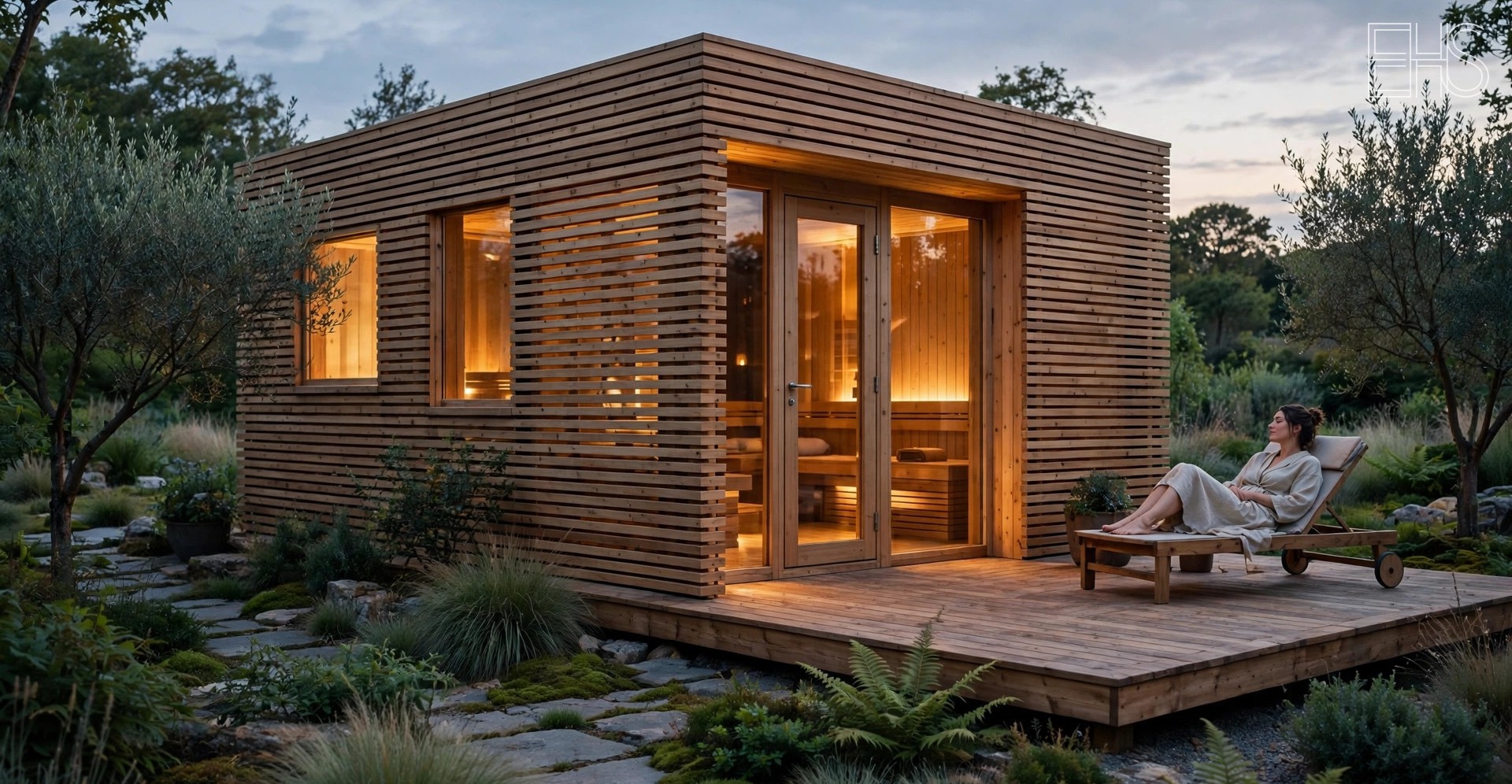
An indoor sauna is convenient. An outdoor sauna is an experience: stepping out of real heat into cold air, the garden quiet around you.
It is also a bigger project than most people expect. An outdoor unit has to survive weather, sit on a real foundation, and get power run to it safely. Get those three things right and an outdoor sauna can serve for twenty years. Get them wrong and you own an expensive wooden box with a damp floor. This guide covers how to choose one well.
Start With Placement, Not the Sauna
The sauna itself is the fun part of the shopping. Placement determines whether the project succeeds, so decide it first.
Walk your property for a spot that is level or can be made level, close enough to the house for straightforward electrical service, and clear of property lines and overhanging trees. Most municipalities treat a sauna like a small outbuilding with minimum setback distances. A quick call to the local building department saves more grief than any other single step; if you have an HOA, read its accessory-structure rules before you fall in love with a model.
Think about the path to the door. It should be short, clear, lit, and non-slip, because long treks in the cold discourage use. A sauna fifty feet from the back door gets used far more than one tucked in a far corner. Privacy matters too: a fence, a hedge, or the sauna's own orientation can handle that, but plan for it rather than discovering the sightlines later.
Drainage is the quiet killer of outdoor saunas. Water pooling under or around the unit rots the foundation timbers and invites mold into the floor. The site should shed water away from the structure, and a gravel bed under the foundation is cheap insurance.
Foundations: What the Sauna Actually Sits On
An outdoor sauna needs a foundation that keeps wood off wet ground, stays level through freeze and thaw, and carries the loaded weight. Three approaches cover nearly every installation:
- Concrete pad. The standard for permanent installations: a 4 to 6 inch reinforced slab, level and slightly above grade. Handles any sauna size, never shifts, costs more up front, and commits you to the location.
- Gravel pad with pavers or deck blocks. Compacted gravel for drainage, with foundation beams resting on pavers or pier blocks. Level, stable, far cheaper than a slab, and removable.
- Wooden deck. If the sauna sits on an existing deck, verify the deck's load rating first. A 4-person sauna with stove can weigh 1,500 to 2,500 pounds loaded. Decks built for patio furniture may need reinforcement.
Whatever you choose, the bottom course should sit on pressure-treated foundation beams, never directly on soil, gravel, or decking. The air gap is what keeps the structure dry underneath.
Wood Types That Survive Outdoors
The wood decision splits in two: the interior, where you sit, and the exterior, which faces the weather.
For the interior, choose low-resin, stable softwoods: Western red cedar or Nordic spruce are the classics. Cedar costs more, resists moisture naturally, and carries the scent people associate with saunas. Spruce is the traditional Finnish choice, pale and clean, at a lower price. The interior of an outdoor sauna sees bigger humidity and temperature swings between sessions than an indoor one, so the upgrade to cedar or thermo-treated wood is worth serious consideration.
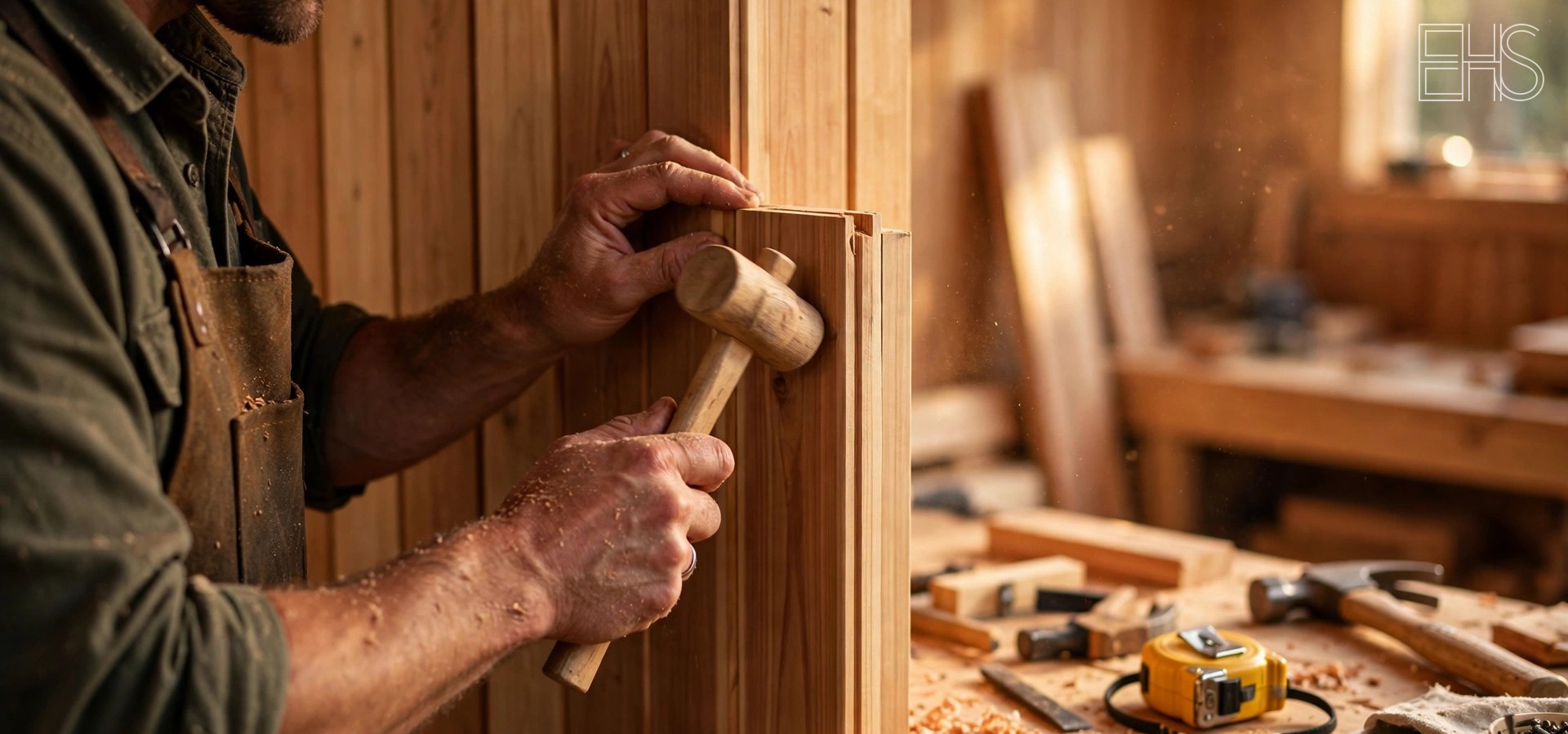
For the exterior, the sauna needs cladding that sheds rain and resists decay. Many quality kits ship with exterior-grade siding or shingles matched to the unit. Thermo-treated wood (heat-treated pine or spruce) is increasingly common: the treatment darkens the wood to a rich brown and improves resistance to moisture and rot without chemical preservatives. Finish the exterior with a UV-protective stain or oil, refreshed every couple of years. Unfinished wood grays within a season or two; cosmetic at first, but neglected wood eventually degrades.
Ask the manufacturer explicitly which parts of the kit are rated for outdoor exposure and which are interior-only. Some sellers market indoor kits with a rain cover as "outdoor-ready," which is not the same thing.
Electric vs. Wood-Fired Stoves
The stove decision shapes the whole experience, and for outdoor saunas both options are genuinely on the table.
Electric stoves are the convenient choice: flip a switch, wait 30 to 45 minutes, bathe. They need a dedicated 220 to 240V circuit run by a licensed electrician, typically 30 to 50 amps depending on stove size, and that wiring has to be outdoor-rated where it runs outside the house. Operating costs are predictable, there is no wood to buy or store, and many municipalities have no objection to them.
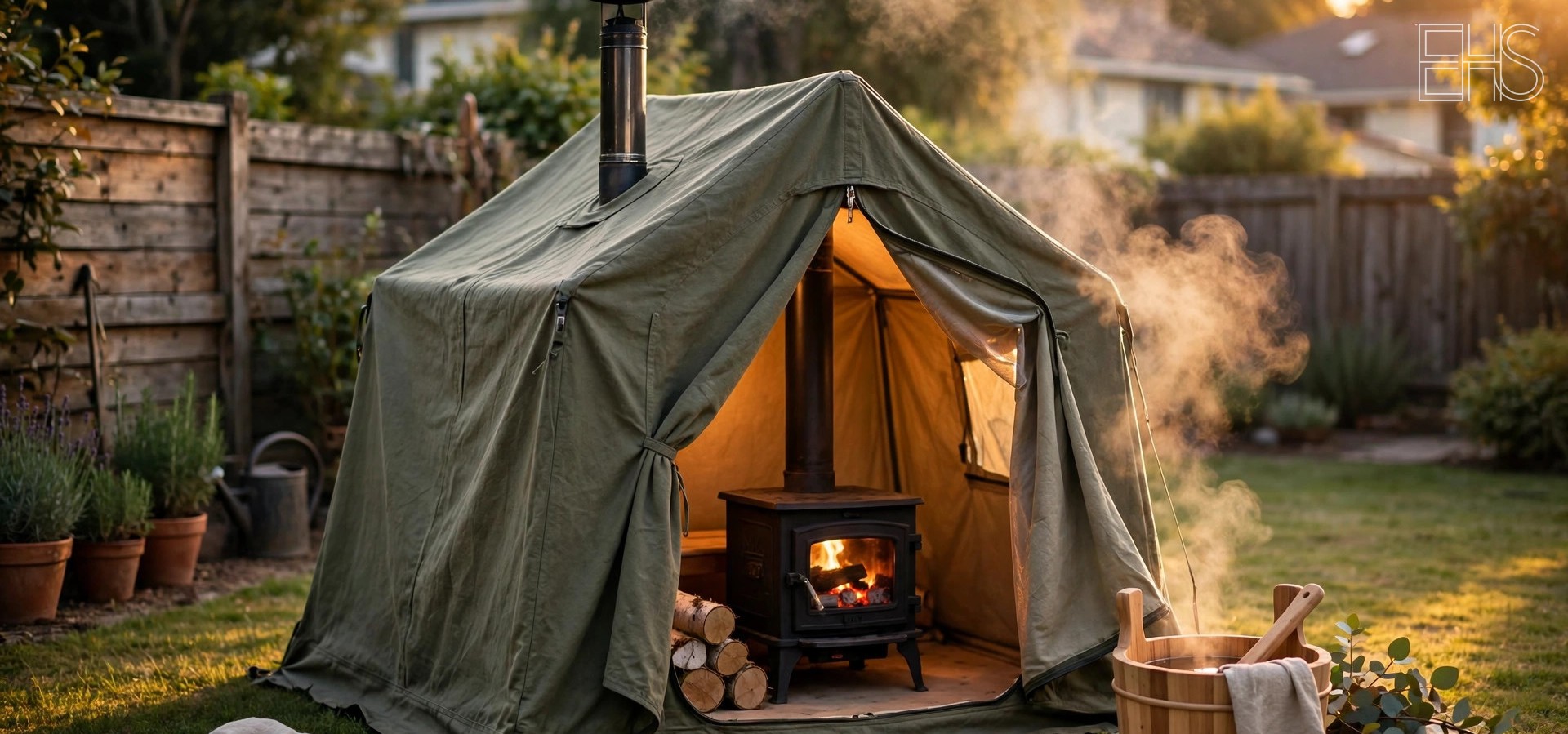
Wood-fired stoves are the traditional choice. The heat feels different: softer, with a gentle rise and fall, and tending the fire is part of the ritual. A wood stove needs a proper chimney through the roof with the clearances the manufacturer specifies, a non-combustible hearth area, and a dry wood supply. Check local burning restrictions, which may limit wood burning on certain days. Wood stoves also demand more of the operator: managing the fire, the temperature, and the cooldown.
| Electric stove | Wood-fired stove | |
|---|---|---|
| Heat-up | Switch on, 30 to 45 min | Build fire, 45 to 60 min |
| Infrastructure | 220 to 240V dedicated circuit, electrician required | Chimney, hearth, wood storage |
| Running cost | Electricity, predictable | Firewood, varies by region |
| Experience | Steady, set-and-forget | Ritual, softer heat curve |
| Best for | Convenience, frequent short sessions | Tradition, off-grid cabins, the full ritual |
Choose by temperament: heat on a Tuesday after work with zero ceremony favors electric; if the fire is the point, burn wood.
Sizing: Buy for Real Bodies
Outdoor sauna capacity ratings suffer the same optimism as indoor ones. Plan bench space honestly:
- 2-person units suit couples who bathe together and sit upright. Tight for two broad adults.
- 4-person is the sweet spot for most families: room for two to lie down on the upper bench, or four seated.
- 6-person and up suits households that entertain, or where the sauna doubles as a social space.
Bench depth matters as much as headcount: an upper bench needs roughly 22 to 24 inches of depth for comfortable lying. Traditional sauna ceilings run around 7 feet, which keeps the heat where the bathers are.
Ventilation and Moisture Management
An outdoor sauna faces a harsher moisture environment than an indoor one. A proper traditional sauna has both an intake vent (low, near the stove) and an exhaust vent (high, on the opposite wall or ceiling). This airflow keeps air fresh during sessions and dries the structure afterward, which is what prevents mold and wood decay over the years.
After each session, leave the door ajar and the vents open until the interior is dry. A sauna that is closed up wet, session after session, will develop problems. Build the drying habit from day one.
The Price Tiers, Decoded
| Tier | Price range | What you get |
|---|---|---|
| Kit, budget | $3,000 to $6,000 | Spruce or hemlock kit, electric stove. Solid starter; verify outdoor-rated materials. |
| Kit, mid-range | $6,000 to $12,000 | Cedar or thermo-wood, better stove, proper outdoor cladding. The value sweet spot. |
| Premium kit | $12,000 to $20,000 | Top-grade cedar, premium stove options, glass fronts, longer warranties. |
| Custom built | $20,000 to $50,000+ | Bespoke design from an architect or sauna builder, integrated changing room. |
These are typical ranges for the sauna and standard components, not installed cost. Electrical work, foundation, and site prep commonly add $2,000 to $8,000 depending on distance from the house and local labor. When comparing quotes, confirm what is included: delivery, assembly, stove, chimney, stones, and electrical are each separate line items with some sellers. Prices move with lumber markets and promotions, so verify current rates before booking or buying.
Maintenance: What Ownership Really Involves
A few hours of care per year, repaid in longevity.
- Exterior finish: Re-oil or re-stain every 1 to 2 years, depending on sun exposure.
- Roof: Check shingles or metal roofing annually; clear leaves and debris.
- Interior: Sand benches lightly once a year; never varnish or seal interior wood, which traps moisture and off-gasses in heat.
- Stove: Electric elements eventually need replacement; wood stoves need annual chimney inspection.
- Stones: Degrade with thermal cycling; restack or replace every 1 to 2 years.
Buyers who skip this discover that weather is patient and wood is not.
Red Flags
- Indoor kit marketed as outdoor with nothing but a rain cover added. Ask for the outdoor materials list in writing.
- No ventilation plan in the design. A sealed wooden box outdoors is a mold project, not a sauna.
- Pressure-treated wood on interior surfaces. Treatment chemicals have no place where you breathe hot air; pressure-treated belongs in the foundation, never inside.
- Vague stove sizing. The stove should be matched to the cabin's cubic footage; an undersized stove runs constantly and never quite gets there.
- No snow or wind load rating for the roof in northern climates.
- Warranty that excludes outdoor exposure on a unit sold for outdoor use. Read the exclusions.
One plain-English note: intense heat is not for everyone. If you live with a heart condition, are pregnant, or simply have doubts about heat exposure, keep early sessions short and moderate, and step out at the first sign of discomfort.
For a deeper look at what the heat itself does and does not do, see the evidence on sauna benefits. If you are weighing heat against cold, our cold plunge versus sauna comparison lays out the trade-offs.
Frequently Asked Questions
How much does an outdoor sauna cost installed?
The sauna itself typically runs from around $3,000 for a basic kit to $20,000 or more for premium and custom builds, with installation commonly adding $2,000 to $8,000 for foundation, electrical, and site work. A realistic all-in budget for a quality mid-range setup is $10,000 to $20,000. Verify current rates before booking contractors, since local labor varies widely.
Do I need a permit for an outdoor sauna?
Often yes, or at least a zoning check. Many municipalities classify saunas as accessory structures subject to setback, size, and sometimes electrical permit rules. Requirements vary enormously by jurisdiction, so a call to the local building department is the only reliable answer.
How long do outdoor saunas last?
A well-built cedar or thermo-wood sauna, maintained with regular exterior finishing and proper drying between sessions, commonly serves 15 to 25 years. Neglected units in wet climates can develop structural problems in under a decade. Maintenance is the variable that matters most.
Can I use an outdoor sauna in winter?
Winter is arguably the best season for it: the contrast between the hot interior and cold air is the heart of the experience, and well-insulated units hold heat fine in freezing weather. Expect longer heat-up times and higher energy use in deep cold, and keep the path to the sauna clear of ice.
Electric or wood-fired: which is cheaper to run?
It depends on local electricity rates and firewood prices. In most suburban settings, electric is comparable or cheaper once you account for buying, storing, and handling firewood. Where firewood is abundant and electricity is expensive, wood wins. Wood adds ritual and heat character that many owners value beyond the economics; electric adds push-button convenience.
How much maintenance does an outdoor sauna need?
A few hours per year: re-oil or re-stain the exterior every 1 to 2 years, check the roof annually, sand benches lightly, and restack or replace stove stones every year or two. The non-negotiable habit is drying the interior after every session by leaving the door ajar with vents open.