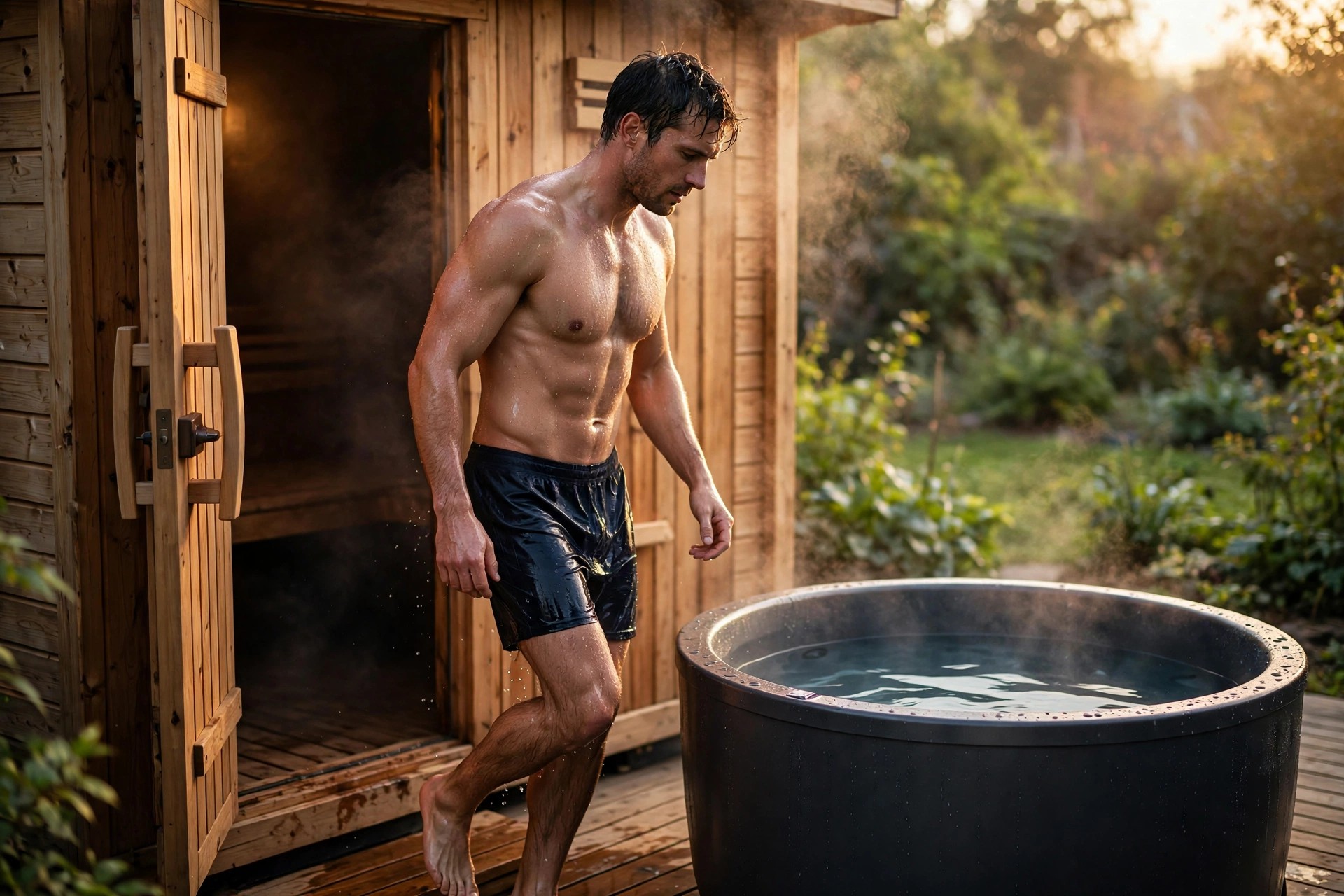
Every cold plunge owner faces the same fork in the road: keep buying ice, or buy a chiller. Ice is cheap to start and punishing to sustain. Chillers are expensive to start and effortless to sustain. The right choice depends on how often you plunge, how much you value convenience, and some honest math about what ice actually costs over a year.
This guide runs the full comparison — upfront costs, ongoing costs, noise, maintenance, temperature control, and the break-even point — so you can decide with numbers instead of vibes.
The True Cost of Ice
Ice feels free. It isn't. Let's do the math for a typical home plunger.
A standard session in a 100-gallon tub needs roughly 20 to 40 pounds of ice to bring tap water down to plunge temperatures, depending on your starting water temperature and target. A 20-pound bag from a store or ice machine typically costs $4 to $7.
At three plunges per week using 30 pounds per session, that's about 90 pounds of ice weekly — roughly $20 to $30 per week, or $1,000 to $1,500 per year. Plunge daily and you're looking at $2,000+ annually in ice alone.
Then add the costs that don't show up on a receipt: - Time: the ice run — driving, loading, hauling, dumping — runs 20 to 40 minutes per session. At three sessions a week, that's 50 to 100 hours a year spent handling frozen water. - Freezer space: storing backup ice means a dedicated chest freezer for serious plungers ($200–$400 plus electricity), or constant store runs. - Water waste: ice setups need full water changes every 2–4 days (see our water care guide for why), so you're also paying for water and the time to drain and refill constantly. - Temperature guesswork: ice gives you approximate temperatures. Some days it's 55°F, some days 45°F, depending on how much you used and how long ago. Consistency — the thing that builds a habit — suffers.
None of this means ice is wrong. It means ice has a price, and the price is mostly paid in ongoing money and friction rather than upfront.
Chiller Costs: Upfront and Ongoing
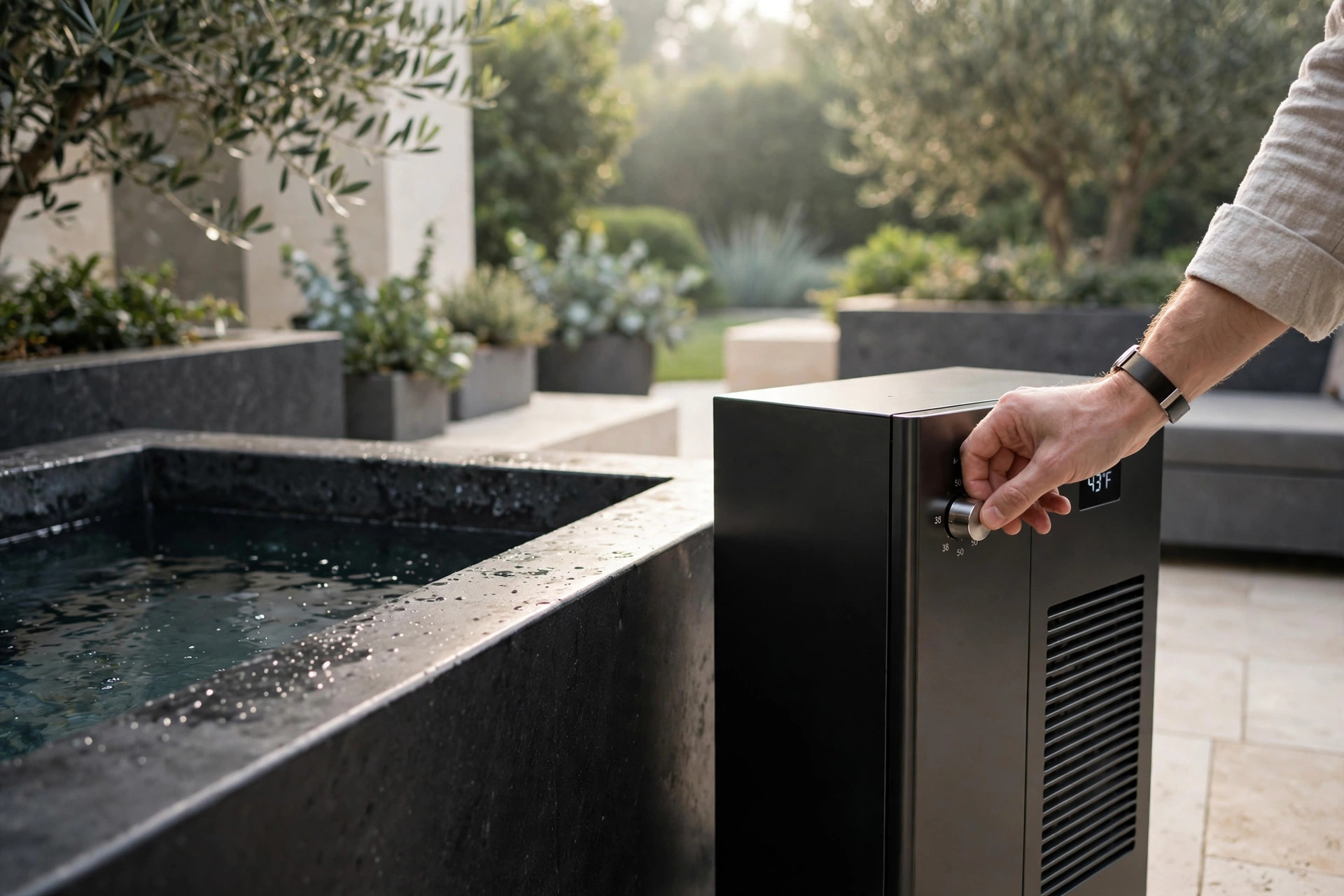
A chiller is a small refrigeration unit that circulates your tub's water and holds it at a set temperature — typically down to 39°F. Here's what one costs:
Upfront: Dedicated plunge chillers run $800 to $2,500 depending on cooling capacity (usually rated 1/3 to 1 horsepower), brand, and included filtration. Budget another $100 to $300 for hoses, fittings, and possibly an upgraded filter if not included.
Electricity: A chiller draws 300–800 watts while actively cooling, cycling on and off to maintain temperature. Real-world running costs land around $20 to $60 per month depending on your electricity rates, ambient temperature, insulation quality, and target temperature. Good insulation and a cover are the difference between the low and high end.
Filters and consumables: $30 to $80 per replacement cartridge, 2 to 4 times per year. Modest sanitizer costs if you dose peroxide. Call it $100 to $250 per year.
Total year-one cost: roughly $1,200 to $3,500 all-in. Subsequent years: roughly $400 to $900. Compare that against $1,000 to $2,000+ per year for a regular ice habit, and the economics start speaking clearly.
For the broader buying picture — which tubs pair with which chillers — our cold plunge buyer's guide covers the tiers, and our decision framework walks through matching equipment to your situation.
Break-Even Math
| Plunge frequency | Annual ice cost (est.) | Chiller year 1 | Chiller annual after | Break-even |
|---|---|---|---|---|
| 1× per week | $350–$500 | $1,200–$3,500 | $400–$900 | 3–5 years (or never) |
| 3× per week | $1,000–$1,500 | $1,200–$3,500 | $400–$900 | 12–24 months |
| Daily | $2,000–$3,000 | $1,200–$3,500 | $400–$900 | 6–12 months |
The pattern is stark: frequency is everything. At once a week, ice is arguably the rational economic choice — the chiller may never pay for itself in pure dollars. At three times a week, the chiller typically breaks even within two years. Daily plungers often break even in under a year.
But the math understates the case for chillers, because it can't price the main variable: adherence. The number-one reason people quit plunging is friction, and ice is almost entirely friction. A chiller converts plunging from a 30-minute production into a 3-minute decision. If the chiller is the difference between plunging 150 times a year and 30 times a year, the "cost per plunge" math isn't close.
Noise: The Factor Nobody Mentions Until It's Too Late
Ice is silent. Chillers are not.
A chiller hums — the compressor and circulation pump produce a steady drone in the 40 to 60 decibel range, roughly comparable to a mini-fridge at the low end and a window air conditioner at the high end. It cycles: running hard after a water change or on hot days, idling quietly once temperature is held.
Placement is the whole game. In a garage or backyard, the hum fades into background noise and nobody thinks about it twice. In an apartment, a bedroom-adjacent bathroom, or a thin-walled home office setup, it can become genuinely annoying — especially since chillers often run at night to maintain temperature.
Mitigation options: place the chiller as far from living spaces as hoses allow, set it on a vibration-dampening mat (compressor vibration through floors is often worse than the airborne hum), and check whether the unit has an eco or night mode that reduces cycling. Some owners build simple ventilated enclosures — just ensure airflow, since chillers need to reject heat to work.
If you're noise-sensitive and your setup forces the chiller within earshot of where you sleep or work, take this factor seriously. It's the most common post-purchase regret we hear about, and it's entirely predictable.
Maintenance Compared
Ice setup maintenance: The equipment needs nothing — there's no equipment. The water needs everything: hauling ice, draining and refilling every few days, scrubbing the tub regularly since there's no filtration. The labor is constant and manual.
Chiller setup maintenance: The water needs little (filtered, sanitized, changed every weeks-to-months). The equipment needs periodic attention: - Rinse the filter cartridge weekly; replace every 3–6 months - Check hoses and connections monthly for leaks or buildup - In freezing climates, winterize properly if the unit sits unused — frozen water in a chiller can crack components - Descale occasionally in hard-water areas - Keep the chiller's air intake clear of dust and debris
Net: chiller maintenance is maybe 15 minutes a week of light tasks versus several hours a week of ice logistics. Different kind of work, dramatically less of it.
Temperature Control and Consistency
This is the chiller's quiet superpower, and it's underrated in most comparisons.
With ice, every session is an experiment. Water temperature depends on how much ice you added, when you added it, ambient temperature, and how long the tub sat. You'll plunge at 58°F one day and 44°F the next without quite knowing why. For habit formation, that variability is corrosive — you never quite know what you're walking into.
A chiller holds your set temperature within a degree or two, 24/7. You set 45°F, it's 45°F at 6 a.m. on a Tuesday in August and 45°F at 9 p.m. on a Friday in January. That consistency does two things: it removes a decision (no "is it cold enough?"), and it lets you progress deliberately — dropping a degree every couple of weeks as you adapt, which is how cold tolerance is actually built. Our evidence review on cold plunge benefits discusses why consistent, progressive exposure matters more than occasional heroic cold.
Who Should Upgrade to a Chiller
- You plunge 3+ times per week. The economics and the friction math both favor the chiller.
- Ice logistics are why you skip sessions. Be honest: if the ice run is the reason the tub sits unused, the chiller isn't a luxury — it's the thing that makes the tub work.
- Multiple people use the tub. Ice costs scale with sessions; a chiller's cost barely moves whether one person or three plunge daily.
- You live in a hot climate. Warm tap water and hot ambient air mean enormous ice requirements — sometimes 60+ pounds per session. Chillers struggle less and cost comparatively less here.
- You value routine over ritual. If you want plunging to feel like brushing your teeth — automatic, not an event — a chiller is the mechanism.
Who Should Stick With Ice
- You're still testing the habit. Don't spend $2,000 before you know you enjoy cold immersion. Three months of ice will answer the question definitively.
- You plunge once a week or less. The economics don't support a chiller, and the ice routine is tolerable at low frequency.
- You're in a cold climate. If your tap water runs near 50°F for half the year, ice requirements are minimal and a chiller adds little.
- You're renting or space-constrained. Chillers need power, drainage considerations, and space. A portable ice barrel needs none of that.
- Budget is the binding constraint. Ice lets you start for under $200. A chiller setup starts around $1,200. Starting cheap and upgrading later is a completely rational path — most committed plungers did exactly that.
Frequently Asked Questions
How loud is a cold plunge chiller, really?
Expect 40 to 60 decibels — like a mini-fridge on the quiet end, a window AC on the loud end. Most of the annoyance comes from placement rather than absolute volume: in a garage it's a non-issue; in a small apartment next to the bedroom it can grate. A vibration-dampening mat under the unit helps more than you'd expect, since transmitted vibration is often worse than the hum itself.
How long do chillers last?
A quality chiller typically lasts 3 to 7 years with basic maintenance — filter care, keeping intakes clear, proper winterization. Cheaper units trend toward the low end; well-built ones with replaceable parts trend higher. The warranty is informative: a one-year warranty is standard, and manufacturers offering longer coverage tend to build accordingly.
Do chillers work in hot garages?
Yes, but sizing matters enormously. An undersized chiller in a 100°F garage will run constantly, struggle to hold temperature, and wear out faster — this is the single most common chiller disappointment. Size the cooling capacity for your hottest conditions, not average ones; insulate the tub well; keep it shaded and covered. When in doubt, buy more capacity than you think you need.
Can I run a chiller on a normal outlet?
Yes — the vast majority of home plunge chillers run on a standard 120V/15A household outlet, drawing roughly what a small space heater uses. No electrician, no special wiring. Just avoid sharing the circuit with other heavy-draw appliances, and use a GFCI-protected outlet (or a portable GFCI adapter) since water and electricity are in close proximity.
Is buying a used or refurbished chiller worth it?
It can be, with caution. Chillers are simple machines and a refurbished unit from the manufacturer (with warranty) at 30–40% off is often good value. Private-party used units are riskier — you can't verify compressor health or remaining lifespan, and replacement parts availability varies by brand. If buying used, factor in a probable filter replacement and a deep clean, and prefer sellers who can demonstrate the unit holding temperature.
What's the coldest a chiller can get the water?
Most home plunge chillers bottom out around 37–39°F (3–4°C). That's colder than almost anyone needs — the commonly used plunge range is 39–55°F. Don't shop on minimum temperature; shop on whether the unit can hold your target temperature in your climate. A chiller that reaches 37°F in a cool basement but can't hold 50°F in a hot garage is worse than one rated slightly warmer but properly sized.
This article is for informational purposes only and is not medical advice. Consult a qualified professional before making health decisions.