Finland has about 5.5 million people and an estimated 3 million saunas. The sauna is not a wellness product there; it is a room, like a kitchen, and a practice older than the country's written history. Understanding the Finnish original clarifies everything else in the sauna market: why stoves are sized the way they are, why ventilation follows a particular pattern, and what löyly actually means beyond a marketing word.
This guide is about the tradition as Finns practice it, and what it teaches anyone building or buying a sauna anywhere else.
A Short History
The sauna's roots in Finland reach back at least two thousand years. The earliest versions were pits dug into a slope, lined with stones heated in a fire: water thrown on the hot stones made steam in an enclosed dugout. Over centuries the form evolved through smoke saunas (savusauna, with no chimney; the smoke itself seasoned the room before bathers entered) to the wood-fired stoves with chimneys that became standard, and eventually to electric stoves in the 20th century.
What did not change was the sauna's place in life. For most of Finnish history it was the cleanest, warmest room in the homestead, and it served accordingly: bathing, of course, but also childbirth, the laying-out of the dead, the curing of meats, and the drying of grain. The sauna was infrastructure before it was leisure. That history explains the cultural weight Finns still give it: the sauna is treated with a particular respect that puzzles outsiders until they understand it was once the most important room in the house.
In 2020, UNESCO added Finnish sauna culture to its Intangible Cultural Heritage list, a formal recognition of what Finns had always known.
Loyly: The Heart of It
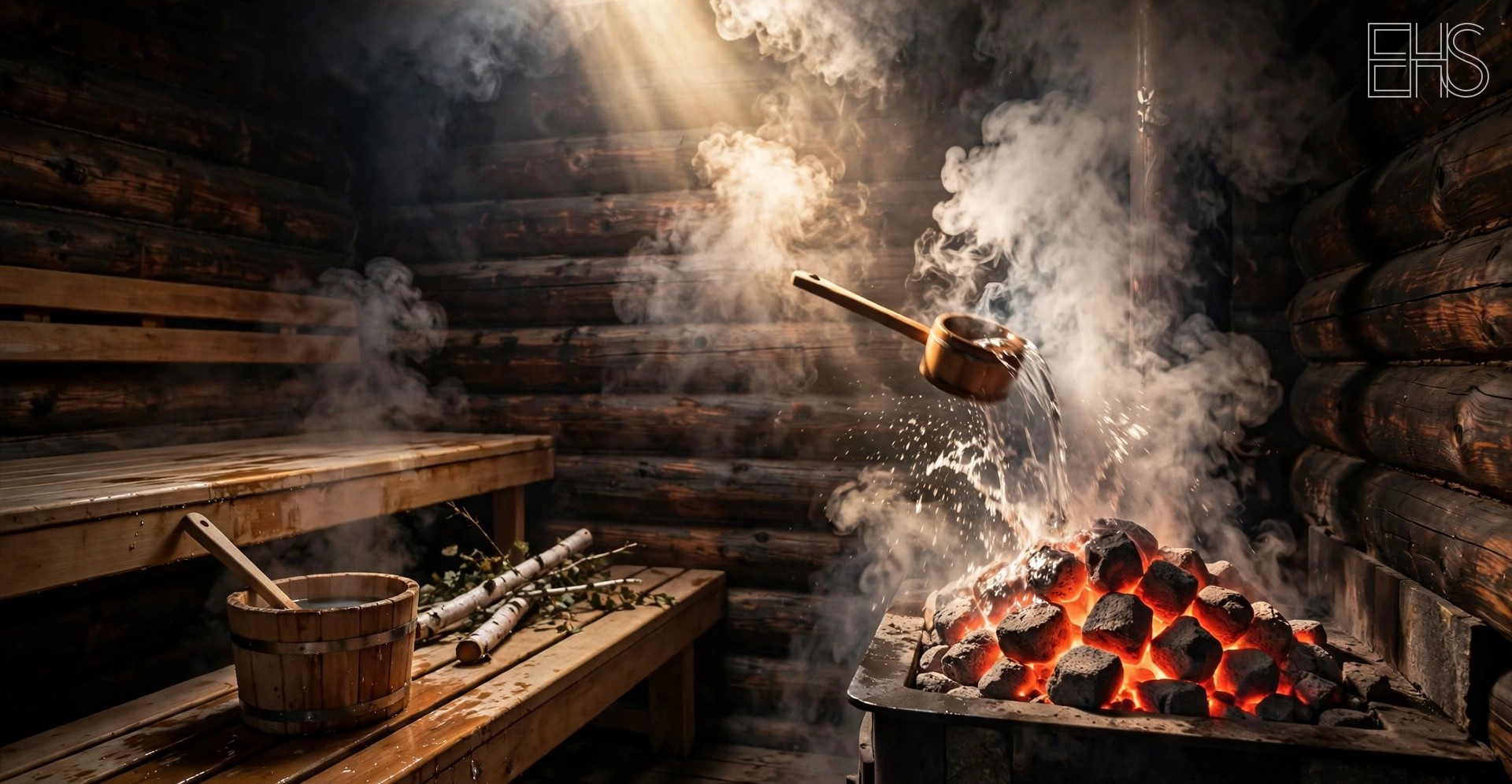
Löyly (pronounced roughly "LOU-lu") is the Finnish word for the steam that rises when water hits hot stones, and by extension for the whole spirit of the heat. It is the central event of the session, and everything about a proper sauna is organized around producing good löyly.
Good löyly has qualities Finns discuss with connoisseurship: it should be soft rather than scorching, enveloping rather than sharp, and it should arrive as a wave that fills the room evenly. Achieving it depends on three things: stones heated thoroughly (not just surface-hot), water thrown in measured ladles (not dumped), and ventilation that carries the steam around the room rather than letting it stratify.
The water itself is part of the ritual. Plain water is standard; many Finns add nothing at all. Birch whisks (vihta), bundles of leafy birch twigs, are used to fan the steam and gently lash the skin, releasing a scent that is, for Finns, the smell of early summer. The whisk is seasonal and perishable, and its use is social as much as sensory: making vihta is a midsummer activity, and offering a guest a fresh one is hospitality.
The Stoves: Wood, Electric, and Smoke
Wood-fired stoves
The traditional choice and still the emotional standard. A wood stove heats the stones with a firebox below and radiates a heat that Finns describe as softer and more alive than electric: the temperature breathes slightly with the fire, and tending it is part of the session's rhythm. The classic Finnish wood stove is a simple steel box with a large stone compartment; the stones, not the metal, are the heat battery.
Wood stoves demand a chimney, clearances, and firewood, and they ask the bather to learn fire management. In return they give the full traditional experience, including the faint smell of birch smoke that no electric stove reproduces.
Electric stoves
The modern standard in Finnish homes, and nothing to apologize for. Electric stoves heat faster, hold temperature precisely, and need no chimney or firewood. Finnish manufacturers make the world's reference electric sauna stoves, and a good one with properly heated stones produces excellent löyly. Most Finns bathing at home today use electric; the tradition adapted without anxiety.
The key specification, in either fuel, is stone capacity. More stones mean more stored heat and better steam: a stove with a generous stone compartment outperforms a higher-wattage stove with a token handful of rocks. When comparing stoves, ask about kilograms of stones, not just kilowatts.
Smoke saunas
The savusauna has no chimney: the fire heats the stones and the smoke fills the room, then vents out before bathers enter, leaving the wood blackened and the air carrying a deep, resinous scent. Sessions in a smoke sauna are cooler and longer, the atmosphere unlike anything else. They are rare outside Finland, require real expertise to operate safely, and represent the tradition at its oldest and most atmospheric.
| Stove type | Heat character | Infrastructure | Session style |
|---|---|---|---|
| Wood-fired | Soft, breathing, traditional | Chimney, firewood, clearances | Ritual; tending the fire |
| Electric | Precise, fast, clean | Dedicated 240V circuit | Convenient; set and go |
| Smoke sauna | Deep, atmospheric, cooler | Specialized building, expertise | Rare; long, social sessions |
The Room: How Finns Build It
Finnish sauna construction follows principles refined over generations:
- Size is modest. The classic Finnish sauna seats 2 to 4 people. Bigger rooms need bigger stoves and more energy; the tradition favors intimacy over capacity.
- Benches are tiered. Two levels are standard: the upper bench for full heat, the lower for milder warmth or for cooling slightly without leaving. Bench height relative to the stove matters: the bather's feet should be above the stones for even heat.
- Ceilings are low. Around 2.1 meters (roughly 7 feet) is typical. Heat rises; a low ceiling keeps it where the bathers are instead of warming empty air.
- Wood is untreated inside. Alder, aspen, and spruce are the classic interior woods: pale, low-resin, comfortable against skin. No varnish, no sealant, ever.
- Ventilation is deliberate. Intake low near the stove, exhaust high on the opposite side. The pattern is not decorative; it is how the room breathes and dries.
These are not aesthetic preferences. Each rule exists because generations of builders converged on what works.
Etiquette: How to Behave in a Finnish Sauna
For visitors to Finland, or guests in a Finn's sauna abroad, the norms matter:
- Shower first. Always. The sauna is for clean bodies.
- Sit on a towel. Hygiene and wood protection.
- No swimwear in traditional settings; Finns bathe unclothed among family and close friends. In mixed or public saunas, follow the posted norms, which vary. When in doubt, ask.
- Quiet voices. The sauna is a place of calm conversation or silence, never loud socializing.
- Ask before throwing water. In someone else's sauna, the host controls the löyly. "Saa heittää?" (may I throw?) is the phrase; the gesture of asking matters more than the words.
- No phones, no cameras. Ever.
- Cool down between rounds. Step outside, shower cool, or plunge if available, then return. Two to three rounds is typical.
None of this is complicated, but observing it signals that you understand the sauna is not a hot tub with better marketing.
What the Tradition Teaches Buyers
Strip away the romance and the Finnish tradition is a buyer's checklist:
- Stones matter more than watts. Stone capacity is the spec to compare.
- Ventilation is structural, not an accessory. Plan it before building.
- Small beats big. A well-built 4-person sauna outperforms a cavernous 8-person box in every way that matters.
- Wood stays unfinished inside. Any seller suggesting interior sealant does not understand saunas.
- The door stays closed during the session and open afterward. Heat in, moisture out.
Buyers who follow these five rules end up with saunas that Finns would recognize. Those who do not end up with expensive wooden rooms that happen to be warm.
Tradition respected its limits, and so should you: sauna heat is not for everyone. A heart condition, pregnancy, or any concern about heat means approaching it gradually, keeping sessions short, and stopping whenever the heat feels like too much.
For the practical side of building one, see infrared versus traditional sauna for the heater decision and the infrared sauna buyer's guide for the simplest home setup. For the honest summary of what heat does and does not do, the evidence on sauna benefits is the place to start. And verify current rates before booking any stove or kit: Finnish manufacturers run seasonal promotions worth waiting for.
Frequently Asked Questions
What is loyly?
Löyly is the Finnish word for the steam produced when water is thrown on hot sauna stones, and by extension the spirit or atmosphere of the heat. Good löyly is soft and enveloping rather than sharp. Producing it well: thoroughly heated stones, measured ladles of water, and ventilation that circulates the steam: is considered a skill.
How hot is a traditional Finnish sauna?
Typically 160 to 195°F (70 to 90°C), measured at head height on the upper bench. Finns generally bathe at the hotter end of the range, often 175°F and above, with humidity raised by regular water on the stones. Beginners should start lower and shorter; the tradition respects acclimatization.
Wood or electric: what do Finns actually use?
Both, without snobbery. Wood stoves remain the emotional and traditional standard, especially at summer cottages, where the fire ritual is part of the experience. Electric stoves dominate in city homes and apartments for convenience. What matters in Finnish opinion is not the fuel but the stones: generous stone capacity and proper heating.
What is a smoke sauna?
A savusauna is a sauna with no chimney: wood burns in an open firebox, smoke fills the room and seasons the blackened wood, then vents out before bathing begins. Sessions are cooler, longer, and deeply atmospheric, with a distinctive resinous scent. They are rare, require expertise to operate, and are considered the most traditional form.
Why do Finns hit themselves with birch branches?
The vihta (western Finland) or vasta (eastern Finland) is a bundle of leafy birch twigs used to fan steam onto the skin and gently lash the body. It increases the sensation of heat at the skin's surface and releases birch's fresh scent. It is seasonal, perishable, and social: making whisks at midsummer and offering one to a guest is hospitality.
Is nudity required in a Finnish sauna?
In traditional private and family settings, Finns bathe unclothed; it is the norm, not a statement. Public and mixed saunas vary: many designate sessions or have posted rules, and swimwear norms differ by venue. The rule for visitors is simple: observe, follow the posted norms, and when uncertain, ask. Nobody minds the question.