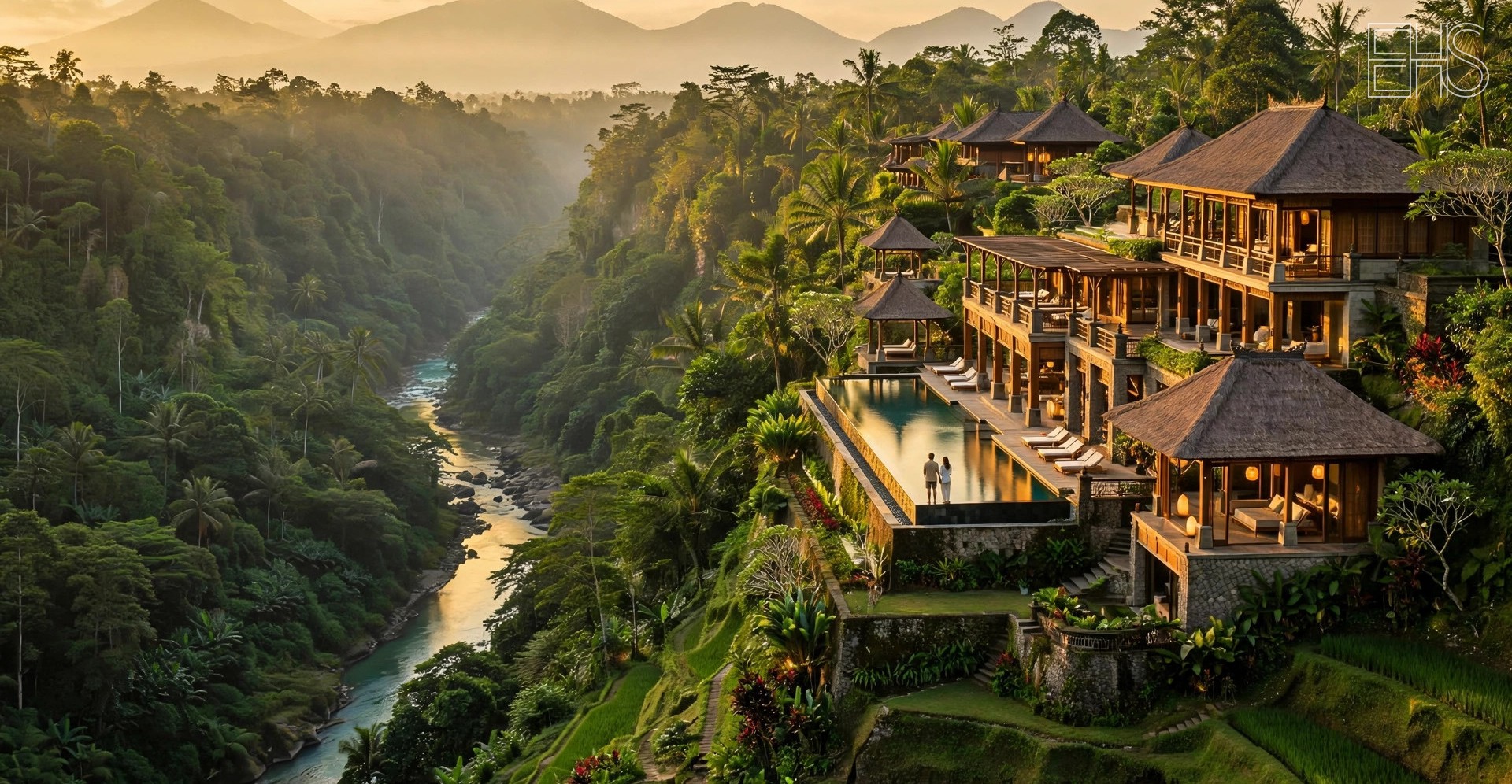
COMO Shambhala Estate skips the beach: a private 22-acre forest above the Ayung River gorge, north of Ubud, where pavilions cascade down a jungle slope toward spring water considered sacred in Balinese tradition. It is the flagship of COMO Hotels and Resorts' wellness arm, now in its third decade after its 20th anniversary in 2025.
The estate's proposition is change, made structural: resident practitioners of Ayurveda, Traditional Chinese Medicine, yoga, and Pilates shape multi-day Wellness Paths; nine treatment rooms and open-air pavilions sit beside a 25-meter lap pool, a spring-fed vitality pool, gyms, and steam and sauna rooms; two restaurants run on COMO Shambhala Cuisine. What follows covers the setting, rooms, wellness offering, programs, dining, and budget, then who thrives here and who should look elsewhere. All rates are hedged; confirm current rates with the property before booking.
A plain-English note first: the steam rooms and sauna run real heat, contrast therapy pairs heat with cold, and the hiking and rafting excursions add real exertion in real humidity. None of that is for everyone. Guests with heart conditions, blood pressure concerns, or pregnancy should go easy in the hot rooms, skip the cold contrast, and favor the pools and walks instead. Read this as a travel write-up, not as advice of any kind.
Key Takeaways
- The setting is the signature. A 22-acre private forest above the Ayung River gorge near Ubud: thatched-roof pavilions of local stone and wood, linked by stone paths, with sacred Kedara Garden spring water used in therapies and rituals.
- Residences, not a hotel block. Thirty rooms, suites, and villas plus five named Residences, Bayugita, Umabona, Wanakasa, Tirta Ening, and Tejasuara, each inspired by a natural element and bookable by room or exclusively; select villas carry private infinity pools and outdoor jacuzzis.
- Wellness Paths replace fixed retreats. Five named paths, Integrated Wellness, Ayurveda, Fit to Perform, Nourish to Glow, and Connect to Rebalance, built from an arrival assessment, daily treatments, movement classes, and the estate's cuisine; à la carte booking also available.
- Ayurveda is the anchor discipline, not the whole menu. Resident practitioners offer Ayurvedic consultations and treatments alongside Traditional Chinese Medicine, hydrotherapy, contrast therapy, and acupuncture, with yoga, Pilates, and meditation in open-air pavilions.
- Budget for the top of the Ubud market. Public rate guides typically list entry rooms from around $680 a night before seasonal surcharges, with Wellness Path packages priced separately on top of the room rate. Verify current rates before booking.
The Setting: A Private Forest Above the Ayung
The estate sits in Banjar Begawan, Desa Melinggih Kelod, Payangan, Gianyar 80571, about 15 to 20 minutes north of Ubud and 90 minutes from Ngurah Rai International Airport (DPS); private transfers can be arranged. The 22 acres sit in private forest above the Ayung River gorge, and water from the Kedara Garden spring, considered sacred in Balinese tradition, is used in the estate's therapies and rituals; guests can arrange a blessing at the spring itself.
Designed by architect Cheong Yew Kuan with interiors by Koichiro Ikebuchi, the estate keeps interiors elegant and simple, teak and Balinese craft, with windows framing the jungle rather than competing with it; guests spend as much time outdoors as in, which is the point.
Beyond the spa: jungle trails, guided walks, white-water rafting on the Ayung, and excursions to Ubud's temples, the Tjampuhan Ridge, and traditional water purification ceremonies. A herb walk covers native plants before guests create their own drinks. A multi-night Bali stay with a deposit on the line makes our wellness travel insurance guide worth reading before you wire anything.
The Rooms: Thirty Keys Across Five Residences
The estate holds 30 rooms, suites, and villas, organized around five named Residences that can be booked by the room or taken exclusively. Each residence is inspired by a natural element: Bayugita (wind song), Umabona (views toward Mount Batukaru), Wanakasa (forest in the mist), Tirta Ening (clear water), and Tejasuara (Sumba stone detailing). Residences come with shared pools and communal lounges oriented toward the jungle or the river.
Room categories run from intimate Garden Rooms through Terrace Suites and the handcrafted COMO Shambhala Suites up to private Pool Villas in one, two, and three bedrooms. Select villas carry private infinity pools and outdoor jacuzzis, and all rooms lean on Balinese-inspired indoor-outdoor bathrooms, teak furnishings, and generous terraces.
The table below summarizes the accommodation tiers, based on the estate's published room descriptions.
| Tier | What you get | Best for |
|---|---|---|
| Garden Rooms | Intimate rooms with jungle views | Solo travelers |
| Terrace Suites | More space, larger terraces, valley outlooks | Couples |
| COMO Shambhala Suites | Handcrafted details, generous living areas | Comfort-first guests |
| Pool Villas, one to three bedrooms | Private infinity pools on select villas, outdoor jacuzzis | Families and groups |
| Residences | Bookable by room or exclusively; shared pool, lounges | Groups wanting a private house |
Guests can use the estate as a spa hotel with no program at all, building days from individual treatments, classes, and excursions. Jungle humidity, temple visits, and long treatment days make packing specific, so see our retreat packing checklist first.
The Wellness Offering: Nine Treatment Rooms and a Spring
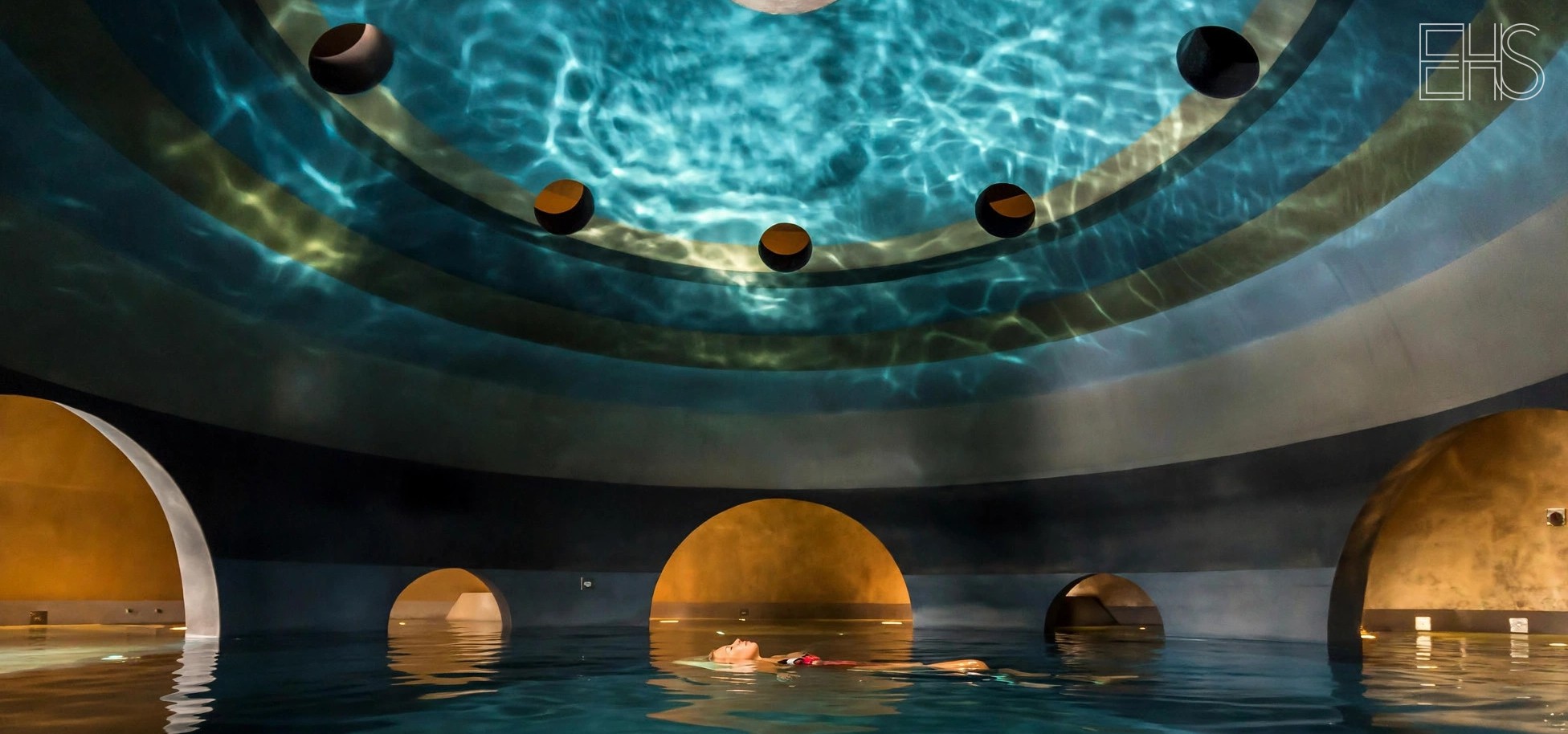
The estate's wellness center, Ojas, refurbished for the 20th anniversary in 2025, runs nine indoor treatment rooms and open-air pavilions, a 25-meter lap pool, a spring-fed vitality pool, gyms, steam and sauna rooms, yoga and Pilates studios, a jungle gym, and a rock-climbing wall, with a library and wellness boutique attached.
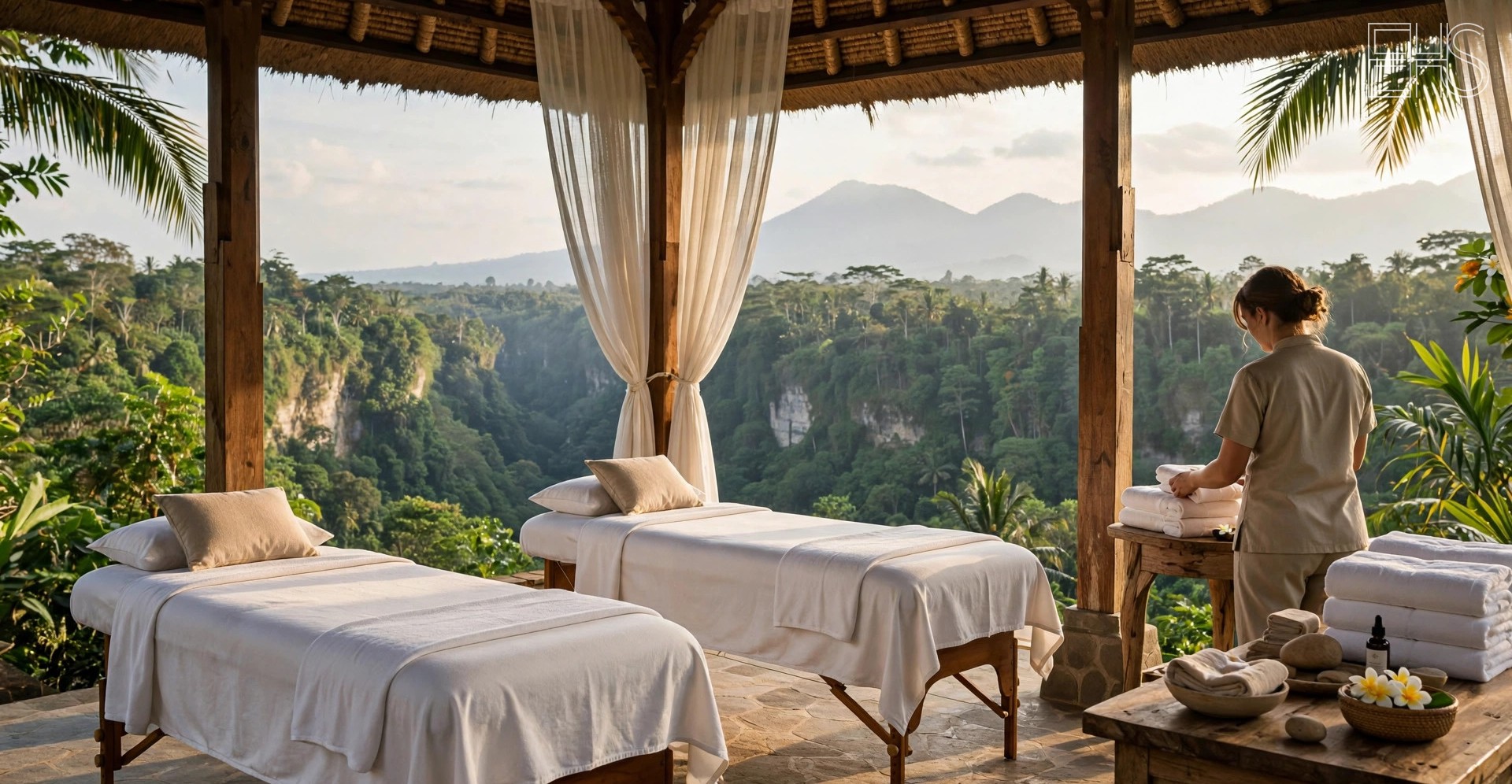
Illustration by EverHealthSpan
The treatment menu runs à la carte as well as inside programs: massages and body treatments, facials, hydrotherapy, contrast therapy, acupuncture, and Ayurvedic treatments including shirodhara. A signature experience is the Tranquility Day in the Water Garden: a personalized massage, private lunch, and guided meditation in one of the estate's quietest corners. Anyone curious about the cold side of contrast therapy should start with a safety-first look at cold plunging; what research says about regular sauna use, honest limits included, is the right primer for the heat side.
The Programs: Five Wellness Paths
Longer stays run on five named Wellness Paths: an arrival assessment, daily treatments, an activity schedule, and COMO Shambhala Cuisine, flexing around the guest rather than following fixed scripts; a dedicated butler service looks after program guests. The table below summarizes the five published paths, based on the estate's current program descriptions.
| Path | What it centers on |
|---|---|
| Integrated Wellness | The broadest arc: an assessment-led mix of treatments, movement, and cuisine |
| Ayurveda | Ayurvedic consultations shaping treatments, diet, and daily routine |
| Fit to Perform | Training, Pilates, guided activity, and recovery work |
| Nourish to Glow | Cuisine-led, paired with treatments |
| Connect to Rebalance | Meditation, gentler movement, and structured downtime |
Guests can skip the paths and book treatments, classes, and excursions à la carte. This guide describes what is offered, not what it does for you: treat heat, cold, contrast therapy, or fasting-style nutrition plans with the same plain-English caution as the rest of this site. Readers comparing Asian programs may also want a look at Chiva-Som, which takes a more clinical framing.
The Food: Glow and Kudus House
The estate runs two restaurants. Glow is the contemporary one: an open kitchen and innovation hub for COMO Shambhala Cuisine, the group's signature nutritionally rich cooking, serving international dishes with a healthy focus. Kudus House is the atmosphere play: Indonesian regional cooking inside a 150-year-old former Javanese residence, open for breakfast and dinner over the Ayung River valley.
Nutrition-focused paths can have menus built around them; confirm the details when booking, since menus vary by season. Both restaurants draw on local ingredients, which keeps the food distinctly Balinese rather than generically "wellness."
What to Budget
The estate sits at the top of the Ubud market: public rate guides typically list entry rooms from around $680 a night before seasonal surcharges, pool villas and exclusive residences well above that, so verify current rates before booking.
Beyond the room rate, allow for Wellness Path packages (priced separately), individual treatments, dining beyond what is included, and transfers. High season runs July to August and December to January. For how this region's pricing compares, see our retreat costs benchmark.
Check Availability
Affiliate link: We may earn a commission if you purchase through this link, at no additional cost to you.
Is It Right for You?
COMO Shambhala Estate suits travelers who want the jungle to do the heavy lifting: couples seeking a wellness-forward stay with real privacy, solo travelers drawn to Ayurveda-led programs, and groups who can take a residence exclusively.
Look elsewhere if you need a beach, or if you want a clinical, measurement-driven program: the estate's approach is rooted in traditional disciplines, movement, and food, not in a laboratory aesthetic. Guests who dislike stairs and slopes should also weigh the terrain honestly. This is a gorge-side estate, and the steps are part of the design. First-time shared-residence bookers may want a guide to retreat etiquette before arrival.
Frequently Asked Questions
What are the Wellness Paths at COMO Shambhala Estate?
The five named paths are Integrated Wellness, Ayurveda, Fit to Perform, Nourish to Glow, and Connect to Rebalance, each built from an arrival assessment, daily treatments, an activity schedule, and COMO Shambhala Cuisine. Guests can also skip the paths and book treatments, classes, and excursions à la carte.
Is COMO Shambhala Estate only for Ayurveda enthusiasts?
No. Ayurveda is the anchor discipline, with resident practitioners offering consultations and treatments such as shirodhara, but the broader menu covers Traditional Chinese Medicine, hydrotherapy, contrast therapy, acupuncture, Pilates, yoga, and meditation. Guests uninterested in Ayurveda can build a stay entirely from fitness, food, and relaxation.
How many nights should I stay at COMO Shambhala Estate?
A stay of four to seven nights gives a Wellness Path room to take shape: an arrival assessment, several treatment days, and time for the pools, trails, and pavilions between sessions. Two or three nights work as a spa-hotel experience with à la carte treatments. Confirm minimum-stay terms when booking.
What does a stay at COMO Shambhala Estate cost?
Public rate guides typically list entry rooms from around $680 a night before seasonal surcharges, pool villas and exclusive residences well above that, and Wellness Path packages are priced separately. High season runs July to August and December to January. These are hedged benchmarks, so verify current rates before booking.
How do I get to COMO Shambhala Estate, and when should I visit?
The estate sits 15 to 20 minutes north of Ubud and about 90 minutes by road from Ngurah Rai International Airport; private transfers can be arranged. Bali's dry season, roughly April to October, brings the most reliable weather, though the estate runs year-round.
Can I visit COMO Shambhala Estate with children or a non-wellness travel partner?
Children under 16 are welcome in the villas and residences, where multi-bedroom layouts and private pools make family logistics workable. Non-wellness companions are well served: rafting on the Ayung, jungle hikes, temple excursions, and two very good restaurants.
This article is for informational purposes only and does not provide medical advice or guaranteed outcomes.