Of all the recovery equipment you can install at home, the float tank is the most committed: a thousand-plus pounds of salt water, a dedicated room, five figures of cost, and ongoing maintenance closer to pool ownership than to owning a gadget. It is also, by most accounts, the most distinctive experience in home wellness: an hour of weightless stillness in warm, dark, silent water.
This guide covers what floating involves, the types of tanks suited to homes, what installation really requires, the honest evidence picture, and the costs beyond the purchase price. Floating is not for everyone, and neither is owning the equipment.
What Floating Is
A float tank, also called an isolation or sensory-deprivation tank, is an enclosed vessel holding about ten inches of water saturated with Epsom salt (magnesium sulfate), typically around 800 to 1,200 pounds of it in 150 to 250 gallons of water. The salt concentration makes the water denser than the human body, so you float effortlessly on the surface. The water is heated to roughly skin temperature, around 93 to 95 degrees Fahrenheit, which blurs the boundary between body and water. The tank is dark and quiet inside. Sessions usually run 60 to 90 minutes.
The experience, as floaters describe it: ten minutes of adjustment, then a long middle stretch ranging from profound relaxation to restlessness to occasional sleep, then a salty shower. Regulars call it uniquely deep rest; skeptics call it an expensive bath. Both contain truth.
Distinguish floating from adjacent experiences. It is not a hot tub: the water is body temperature, and the point is sensory reduction, not heat. It is not a cold plunge: no thermal stress is involved. Our cold plunge versus sauna comparison covers those modalities if you are weighing where to invest.
The Types of Home Tanks
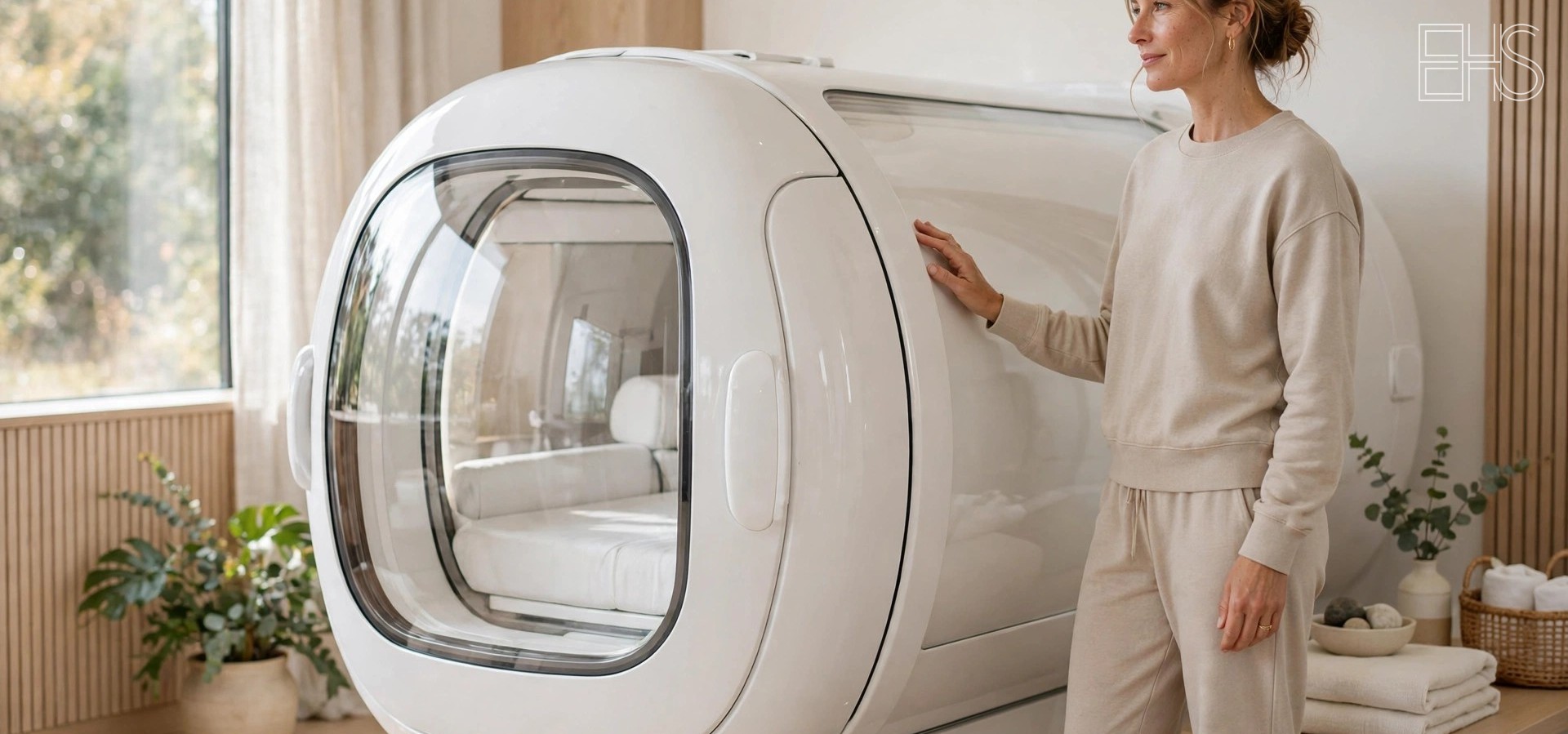
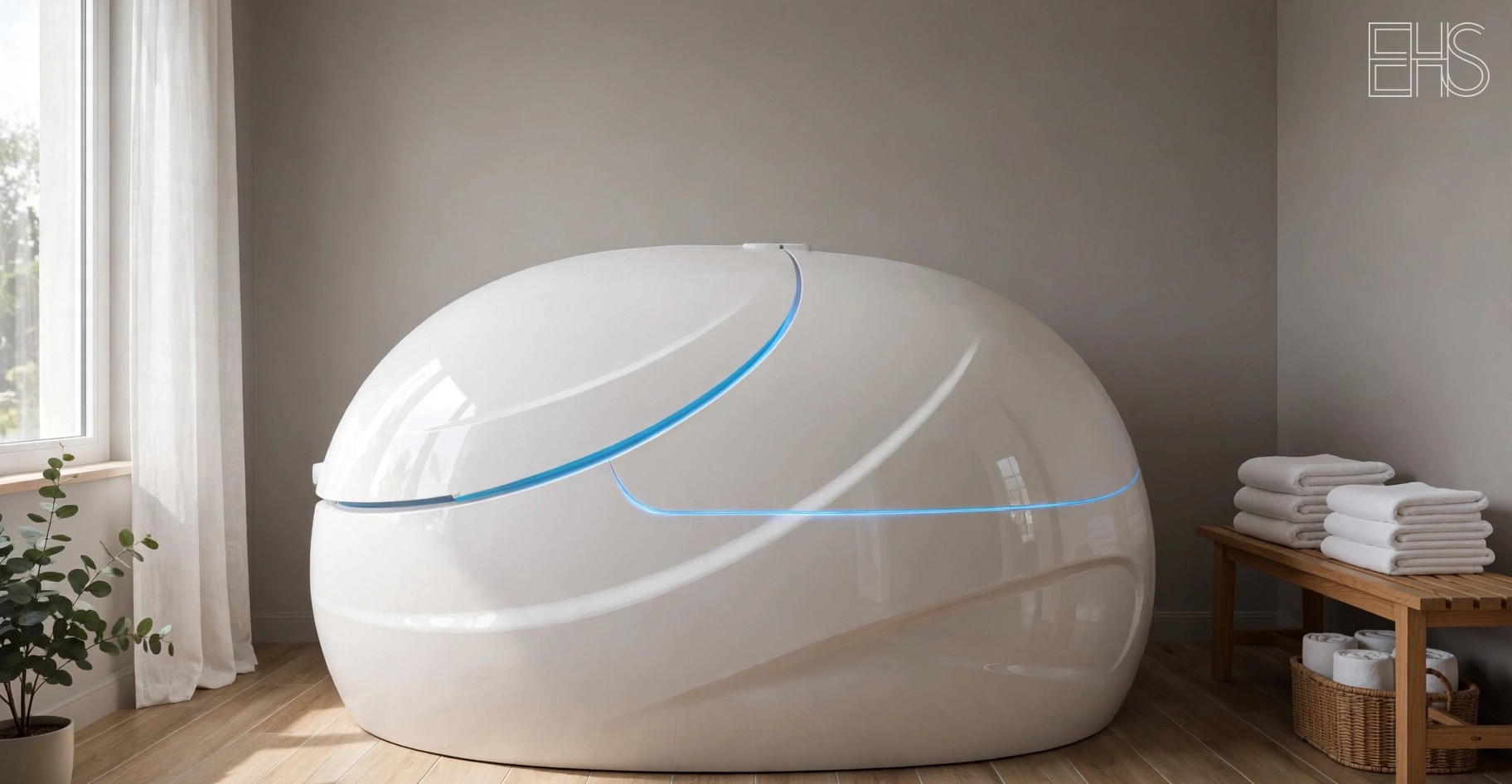
Pods ($12,000 to $25,000): Enclosed, egg- or capsule-shaped vessels with a lid or door. The classic float experience: fully dark, fully quiet, fully enclosed. Pods are the most space-efficient enclosed option and the most common home choice. The enclosure is the point and also what some people dislike; claustrophobia is a real consideration, best discovered in a commercial tank before buying.
Cabins and rooms ($15,000 to $35,000+): Larger rectangular enclosures with more interior volume. Easier entry and exit, less confining, more forgiving for larger users, but demanding more floor space, water, salt, weight, and heating cost.
Open pools ($8,000 to $18,000): Shallow open-top pools without an enclosure. All of the buoyancy, none of the darkness or silence. Cheaper, easier to clean, and less intimidating, but harder to keep at stable temperature. A reasonable compromise for the enclosure-averse.
Convertible and inflatable options ($2,000 to $6,000): Insulated tubs and enclosures approximating the float setup at lower cost. Honest assessment: buoyancy and quiet reasonably well, temperature stability and isolation less so. A defensible trial step before a permanent installation.
As with all equipment at this level, verify current rates before booking a purchase or a site survey, since pricing varies with options, delivery, and installation complexity.
What Installation Really Requires
This is the section most buyers underestimate, so it gets detail.
Space. A pod needs roughly a 5-by-8-foot footprint plus clearance; cabins need more. The room needs a nearby shower, since you rinse before and after every float and salt water travels. A dedicated room is strongly preferable: humidity and salt residue do not coexist happily with gym equipment or finished living areas.
Weight. A filled tank weighs 1,800 to 2,500 pounds or more, concentrated in a small footprint. Ground-floor installation on a concrete slab is straightforward. Upper floors, wooden subfloors, and tricky basements require structural assessment; this step determines whether the project is feasible.
Water and drainage. Filling takes hundreds of gallons, plus a drain capable of handling a full water change. A floor drain is close to essential, and room materials should resist salt water, which corrodes standard plumbing and finishes over time.
Humidity and ventilation. A used tank releases significant moisture; without dedicated ventilation or dehumidification, you are growing mold. Budget for an exhaust fan at minimum, a dehumidifier in most climates.
Electrical. Pumps, heaters, filtration, and lighting need dedicated circuits. Most home tanks run on standard household current, but the circuits should be planned, not improvised.
Total project cost. The tank price is the headline; the project adds delivery, room preparation, plumbing, electrical, ventilation, and the initial salt and water fill. A realistic all-in figure for a pod often runs 30 to 50 percent above the tank price. Get room-work quotes before committing to the tank.
Water Care and Ongoing Maintenance
Owning a float tank means maintaining a small, warm, salty pool. The routine:
Filtration between sessions, typically cartridge or diatomaceous-earth plus UV sterilization on better systems. Sanitization with hydrogen peroxide or bromine/chlorine at low levels; salt alone does not sanitize. Water testing of sanitizer levels and pH becomes a weekly ritual. Salt top-ups replace what leaves on your body and towel; expect to add tens of pounds periodically. Full water changes are infrequent, often once or twice a year with light home use, but each is a half-day project involving hundreds of gallons.
Annual running costs typically land in the low hundreds of dollars for chemicals, filters, salt, and electricity, assuming a few sessions per week. Neglected maintenance shows quickly in cloudy water, odors, or skin irritation. Our cold plunge water care guide covers similar discipline for a smaller body of water.
The Evidence, Honestly Stated
Floating has a modest but genuine research literature, mostly around relaxation and stress reduction. Studies, generally small, report that float sessions reduce self-reported stress and anxiety measures and produce the deep-relaxation physiology you would expect from an hour of warm, dark stillness: slower heart rate, reduced muscle tension, subjective calm. For a relaxation tool, that is a coherent and unsurprising picture.
Evidence for pain-related claims is thinner and more mixed: small, short-term studies report reduced perceived pain, but relaxation and expectation likely account for much of the effect. Claims around creativity, athletic performance, or lasting psychological change rest on very thin evidence.
The honest summary: a well-designed relaxation experience with reasonable evidence for short-term stress reduction and perceived calm, and speculative evidence for everything else. Weekly regulars report something real about their experience; the literature just cannot yet explain it.
Safety and Who Should Be Careful
Floating involves an enclosed body of water, warmth, salt, and stillness, and it is not for everyone. A plain-English rundown: do not float alone at home until you are experienced and comfortable with the setup; the standard safety practice is having someone else in the house. Avoid floating with open wounds or skin infections, both for your sake and the water's. The Epsom salt stings broken skin and irritated areas; shower first and skip sessions when your skin is compromised.
People with low blood pressure sometimes feel lightheaded standing afterward; rise slowly. Those with epilepsy, serious cardiovascular conditions, or any condition involving loss of consciousness should seek qualified guidance before floating. Claustrophobia deserves a commercial trial before any purchase. And alcohol and floating do not mix.
For healthy adults in a well-maintained tank, the main hazards are mundane: slippery surfaces, salt in the eyes (keep fresh water in a spray bottle inside), and post-float chills after dozing off.
Cost Tiers and the Full Picture
| Tier | Typical tank price | All-in project estimate |
|---|---|---|
| Convertible and inflatable | $2,000 to $6,000 | $3,000 to $9,000 |
| Open pools | $8,000 to $18,000 | $12,000 to $25,000 |
| Pods | $12,000 to $25,000 | $16,000 to $38,000 |
| Cabins and rooms | $15,000 to $35,000+ | $20,000 to $50,000+ |
The value question is the starkest in home wellness. At $60 to $100 per commercial session, two sessions a month costs $1,440 to $2,400 a year, so a $20,000 installation breaks even in roughly a decade, before maintenance. The financial case rests on heavy use: three-plus sessions a week, multiple household floaters, or high value placed on midnight convenience. Buy it as a lifestyle commitment, not a savings strategy.
Trying Before Buying
The single best advice in this guide: float commercially at least five times before considering a purchase. Five sessions across a month reveal whether you enjoy the experience, whether the effects justify the ritual, and whether novelty survives repetition. Either discovery is far cheaper at $75 a session than at $25,000 installed.
If the trial convinces you, the sequence is: confirm room and structure, get room-work quotes, choose the tank type with enclosure preference settled by experience, then order. Buyers who regret the purchase almost always skipped the trial or the structural assessment.
Our guide to luxury wellness retreat costs puts the home investment in perspective against destination experiences, and our Arizona luxury wellness resorts roundup includes properties where floating is part of longer stays.
Frequently Asked Questions
Is a home float tank worth it?
Financially, only with heavy use: at $60 to $100 per session, a $20,000 installation takes the better part of a decade to break even against twice-monthly commercial floating. The case for ownership is convenience and frequency, shared across a household. Buy as a lifestyle commitment after extensive trial, not as a savings strategy.
How much maintenance does a home tank need?
Weekly water testing and chemistry adjustments, regular filter cycles, periodic salt top-ups, and one or two full water changes a year: a few hours a month of active maintenance. Comparable to a small pool: manageable as a routine, punishing when neglected.
Will I get claustrophobic?
Some people do, and it is the most common reason for buyer's remorse. Pods are fully enclosed and dark; cabins and open pools are progressively less confining. There is no way to know without trying, which is why multiple commercial sessions, ideally in the tank style you plan to buy, are essential before purchase. Discomfort in a commercial pod will not improve in a home pod.
What does the water actually feel like?
Body-temperature water so saturated with Epsom salt that you float without effort, with a slightly silky, dense quality. The salt leaves a residue on skin that rinses off in the shower. The temperature, around 93 to 95 degrees, is chosen to blur the sensation boundary between skin and water. Most people adjust within ten minutes; the salt taste when water reaches your lips is the universal surprise.
How long do float tanks last?
The vessels themselves are durable: fiberglass and acrylic tanks last decades with reasonable care. Pumps, heaters, filters, and electronics are the wear items, typically needing service or replacement on a five-to-ten-year cycle. Budget for component replacement as part of long-term ownership, and favor manufacturers with available parts and reachable support.
Can I put a float tank in an apartment or upstairs room?
Almost certainly not without major structural work. A filled tank weighs 1,800 to 2,500 pounds in a small footprint and needs dedicated plumbing, drainage, ventilation, and humidity control. Home float tanks are realistically a ground-floor, concrete-slab, dedicated-room proposition.
Educational content only; this guide offers no medical advice. Discuss any health concerns with a qualified professional before buying.