
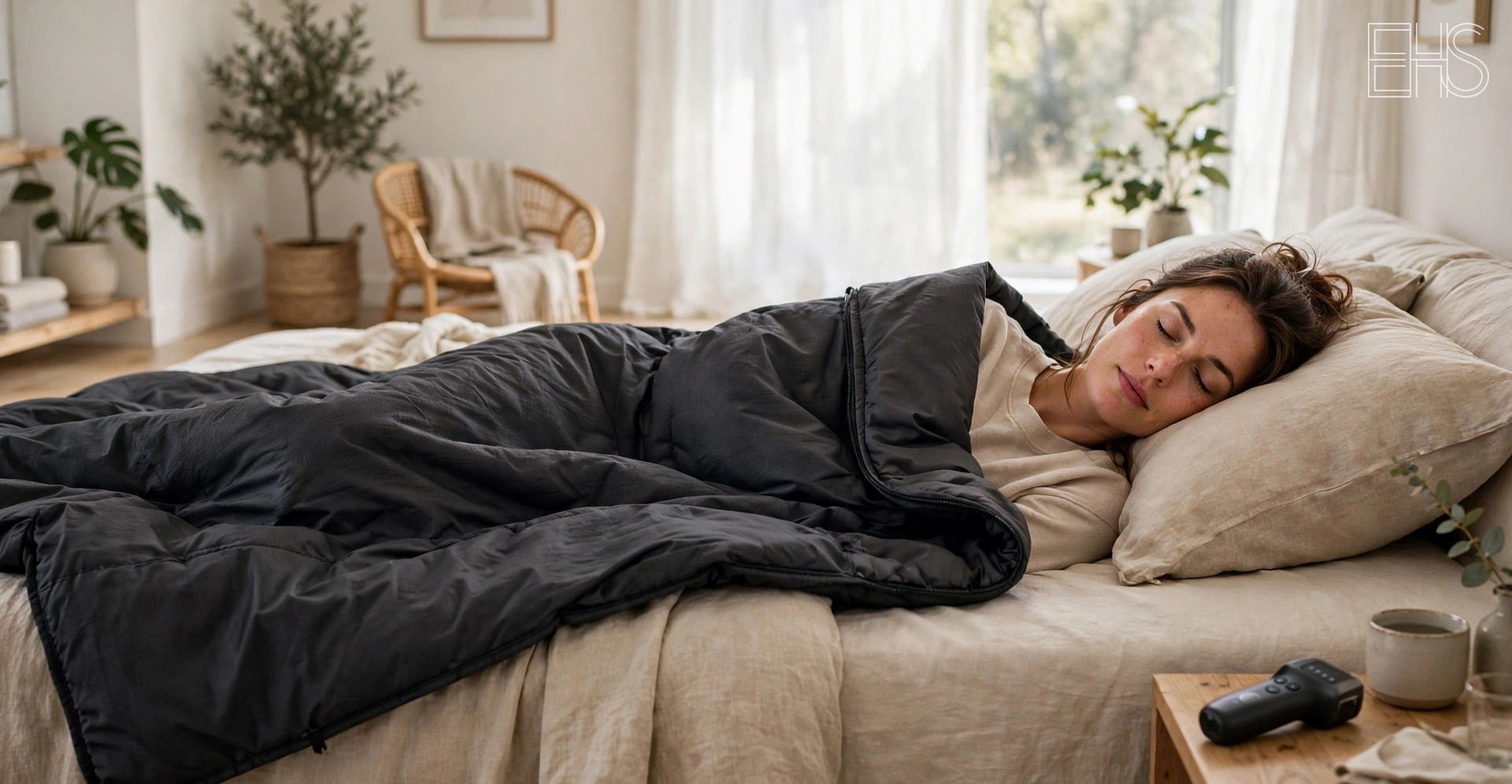
A sauna blanket is the smallest possible answer to a large question: can you get the heat of a sauna without building one? The product is a zip-up bag lined with far-infrared heating elements. You lie inside it on a bed or the floor, head outside the blanket, set a temperature on a handheld controller, and sweat for 30 to 45 minutes. It plugs into a standard outlet, folds away when done, and costs a fraction of a cabin. That pitch is accurate as far as it goes. The interesting part is where it stops.
Key takeaways - A blanket delivers far-infrared heat by direct contact, not a heated room: the sweat is real, but the experience is not identical. - Temperature ceilings cluster near 175°F on paper, yet usable sessions run lower and shorter than a cabin visit. - The price spread, roughly $180 to $700, buys build quality, EMF documentation, controller quality, and warranty terms, not a different kind of heat. - A blanket is not a red-light device: heat and light are different mechanisms, and one does not substitute for the other. - Buy for the lying-down heat ritual and the small footprint, not for the cabin ritual or the high air temperatures of a traditional sauna.
What a Sauna Blanket Actually Is
Think of it as a heated sleeping bag with a controller. Far-infrared elements woven through the blanket warm your body directly rather than heating the air around you: the same basic mechanism as an infrared cabin, minus the cabin. Most models preheat flat for 10 to 15 minutes. You wear loose clothing or use a towel insert, zip the blanket closed with your head outside, and set a level or a temperature on the controller. Sessions typically run 30 to 45 minutes, and most blankets shut off automatically after about an hour.
The format explains both the appeal and the limits. There is no bench, no steam, and no room to stretch out or sit up. What you get is private, lying-down heat in a product that stores in a closet. For renters and anyone testing whether regular heat sessions fit their routine, that tradeoff is the whole point. Our infrared sauna buying guide covers the cabin side of the same decision.
A note on heat exposure: a sauna blanket does not suit everybody. Combined heat and fluid loss can leave you lightheaded or faint, and certain conditions make long heat sessions unwise. Begin with short sessions at a moderate setting, drink water before and after, keep your head outside, and get out if you feel unwell. Never sleep inside a running blanket, and never switch one on while it is folded over itself.
Blanket vs Cabin: The Honest Comparison
The comparison below puts the blanket beside the two formats buyers most often confuse it with: the infrared cabin and the lie-in red-light pod. They look similar in a product photo and behave very differently in use.
| Format | What it delivers | Price band (Oct 2026 listings) | Space and power | Typical session |
|---|---|---|---|---|
| Sauna blanket | Far-infrared heat by contact, lying down | About $180 to $700 | A bed or floor, standard outlet | 30 to 45 minutes |
| Infrared cabin | Far-infrared panels plus warm air, seated | About $800 to $16,000 | A spare corner plus clearance, 120V (some need a dedicated circuit) | 20 to 30 minutes |
| Red-light lie-in pod | Near-infrared and red light at low heat, lying down | Listed at $2,500 | A bed or floor, standard outlet | Short timed sessions per maker guidance |
The red-light pod row deserves a note: a pod looks like a blanket and you lie in it the same way, but it delivers light, not heat (see the Recovery Pod (affiliate link)). If what you want is a sweat, a pod is the wrong product. Our red light therapy home guide explains the light side in detail.
What the Heat Does, and What It Does Not
Heat bathing in general is associated with relaxation, temporary muscle loosening, and the general well-being effects of warm bathing. Our sauna benefits evidence review and heat therapy evidence review grade what the research actually supports, and the honest summary is modest: the evidence base is built mostly on cabin and traditional sauna use, not on blankets. A blanket delivers the same kind of far-infrared heat, but no study has shown that blanket sessions reproduce the outcomes reported for regular cabin sauna use.
The Specs That Separate a Good Blanket From a Cheap One
Temperature ceiling vs usable range. Headline ceilings cluster near 175°F: HigherDOSE lists up to 175°F across nine levels on current V4 listings, and LifePro lists up to 176°F. Older listings for the same brands show lower ceilings, so check the exact model before comparing. More useful than the ceiling is how the controller behaves: a digital display with a set temperature and a timer beats a dial with numbered levels, because you can repeat a session exactly instead of relearning what each level feels like.
EMF documentation. A blanket places heating elements directly against your body, so electromagnetic field readings matter more here than in a cabin, where panels sit at a distance. HigherDOSE publishes third-party low-EMF testing, the strongest documentation in the category. Heat Healer claims zero EMF through Faraday-shielded heating coils, a maker claim rather than a published test result, and some budget listings publish no EMF information at all. If you plan daily use, ask for the test result rather than accepting a label. Our low-EMF infrared saunas explained covers how to read these numbers.
Materials and layers. Most blankets use a polyurethane leather shell over heating elements, with extra layers of charcoal, clay, amethyst, tourmaline, or jade depending on the brand. Treat the extra claims attached to those layers as marketing: they change feel and price more than heat.
Size, power, and warranty. Check the internal circumference against your body, not just the flat dimensions: a 65-inch circumference fits most adults, while narrower budget models can feel tight. Power draw is modest, around 350 to 420 watts for the HigherDOSE blanket on a standard outlet, so no electrical work is involved. LifePro and HigherDOSE each carry a one-year warranty, with HigherDOSE adding a longer return window, and MiHIGH offers a 30-day trial. Read the return terms before buying, since a blanket can only be judged by lying in it.
The Market in Three Tiers
Prices below are October 2026 listings from brand pages and retail comparisons. Always verify current rates before buying: promotions move these numbers by 10 to 20 percent several times a year.
| Tier | Representative model | Price band | Temperature ceiling | Controller | Warranty |
|---|---|---|---|---|---|
| Entry | LifePro BioRemedy | About $180 to $250 | Up to 176°F | Digital display, dual-zone | 1 year |
| Mid | Sun Home, HydraGun | About $499 | Up to 176°F | Digital display | Varies by brand |
| Premium | HigherDOSE V4 | About $699 | Up to 175°F | Nine levels, handheld | 1 year, extended return window |
None of the blanket brands named here currently has an approved affiliate program on file with us, so this guide names them without purchase links.
Heat Is Not Light
Most blanket guides skip this section, and it is where buyers make the expensive mistake. Far-infrared heat warms tissue. Red and near-infrared light devices operate at much lower heat and are used for light exposure, not for sweating. The two categories share a word, infrared, and a lying-down format, and little else.
If you are shopping because you want the sweat and the wind-down of a sauna, stay in the blanket category. If you are shopping because you read about light exposure and want that instead, look at light devices on their own terms: see the Recovery Pod (affiliate link), a foldable full-body pod in the same lie-in format, built for light. Do not buy one expecting the other.
Who Should Buy One, and Who Should Skip It
Buy a blanket if you rent or lack space for a cabin, if you want lying-down heat after training or at the end of the day, or if you are testing whether regular heat sessions stick before committing to a cabin. Start at the entry tier unless EMF documentation or build quality matters enough to justify the premium price. Skip the category if you love the cabin ritual itself, feel confined in tight spaces, or actually want a full home sauna: a blanket postpones that purchase without replacing it.
Frequently Asked Questions
Do sauna blankets work as well as a real sauna?
They deliver the same kind of far-infrared heat but a different experience: a cabin surrounds you with warm air while you sit upright, while a blanket presses heat against your body as you lie still. The research base for heat bathing comes mostly from cabin and traditional sauna use, not from blankets, so no blanket maker can honestly claim identical outcomes. Judge a blanket on whether you enjoy regular lying-down heat, not on borrowed sauna statistics.
How hot should a beginner set a sauna blanket?
Start at a low to middle setting for 20 to 30 minutes and build up over several sessions. HigherDOSE lists nine levels up to 175°F and LifePro lists up to 176°F, but beginners rarely need the top of the range. Preheat the blanket flat for 10 to 15 minutes, wear loose clothing or use a towel insert, and keep your head outside. Step out and cool down if you feel dizzy, nauseous, or uncomfortably hot.
Are sauna blankets safe?
Used as directed, they are a straightforward heat product with a few real cautions. Combined heat and fluid loss can leave you lightheaded or faint, so drink water before and after and never fall asleep inside a running blanket. EMF exposure is higher by proximity than in a cabin, so prefer brands that publish third-party test results. Check for electrical certification, keep the cord and controller dry, and never use a blanket folded over itself while switched on.
Can a sauna blanket replace red light therapy?
No, because heat and light are different mechanisms. A blanket delivers far-infrared heat that makes you sweat; a red-light device delivers near-infrared and red light at low heat for light exposure. They share the word infrared and sometimes the lying-down format, but one does not substitute for the other. If light exposure is what you want, look at light devices directly, such as see the Recovery Pod (affiliate link).
What should I wear inside a sauna blanket, and how do I clean it?
Wear loose, breathable clothing and socks, or use a towel insert inside the blanket: both protect your skin from direct contact with the heated surface and absorb sweat. After a session, wipe the interior with a damp cloth and mild spray and let the blanket air out fully before folding it away. Never machine-wash the blanket, and never store it damp, since trapped moisture damages the heating elements and the shell.
Is the $699 blanket worth it over a $180 one?
It depends on what you value. The premium price buys stronger EMF documentation, more consistent build quality, and a longer return window. The entry price buys the same basic heat mechanism with a digital controller and a higher temperature ceiling, at the cost of thinner documentation and a shorter warranty. If you are unsure the habit will stick, start cheap: an abandoned $180 blanket costs less than an abandoned $699 one. Always verify current rates before buying, since both ends of the market run frequent promotions.
This article is for informational purposes only and does not provide medical advice or guaranteed outcomes.