Not everyone can install a cedar cabin in the garden. Renters, apartment dwellers, and the merely curious have a different entry point: the portable sauna. These range from tent-like enclosures with portable stoves to fold-flat infrared pods, and they promise real heat without construction, permits, or a five-figure commitment.
The promise is partly true. A good portable sauna delivers a genuinely satisfying heat session. But the category spans thoughtful engineering and outright junk, and knowing the difference matters more here than in any other corner of the sauna market.
The Three Types of Portable Sauna
Sauna tents with portable stoves
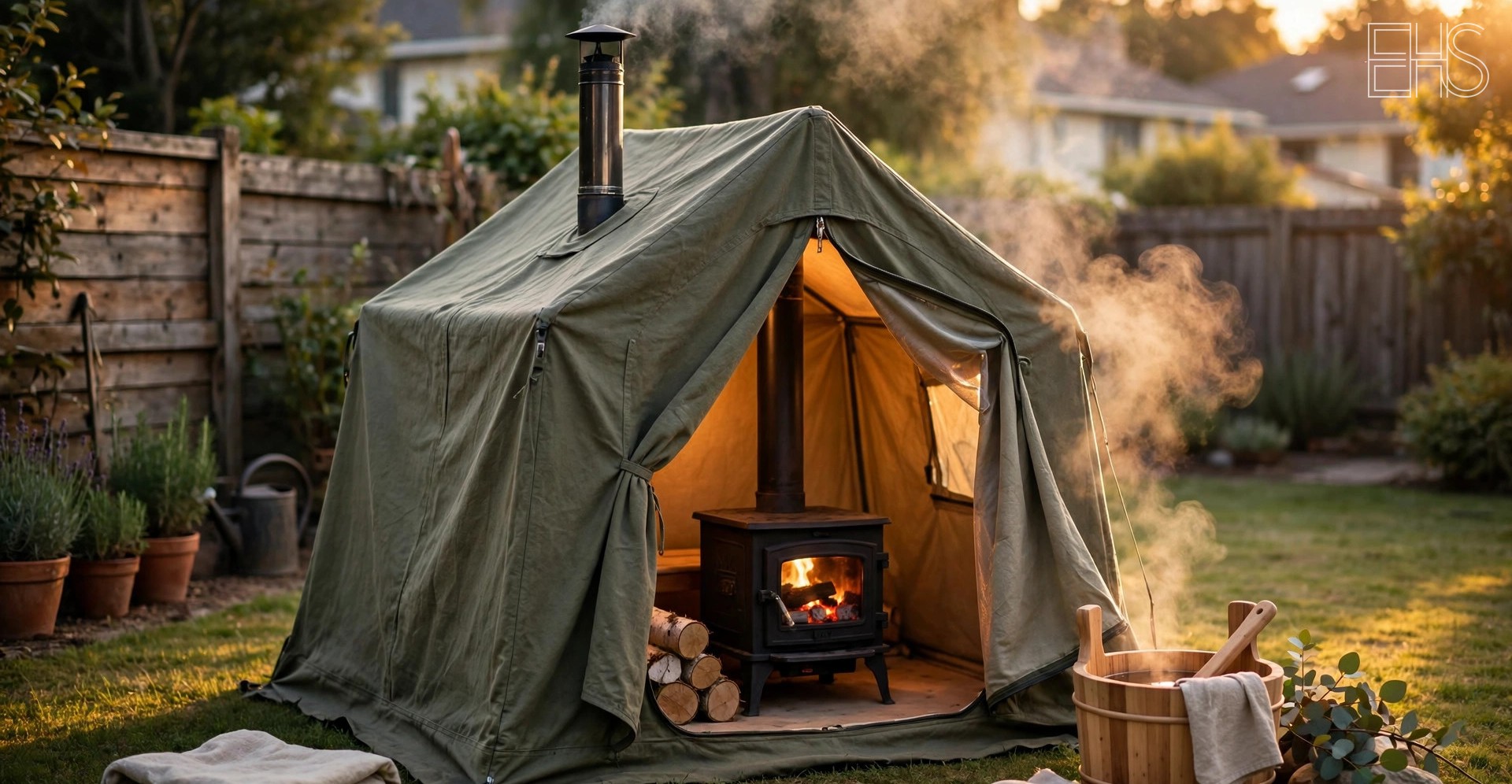
The most traditional portable option: a tent of heat-resistant fabric over a light frame, heated by a small portable wood stove with a chimney poking through a roof port. These are the choice of winter campers, ice fishers, and anyone who wants a real wood-fired session miles from an outlet.
The heat is real: 160 to 190°F is achievable, and the stove-and-stones setup produces proper steam. The trade-offs are setup time (30 to 60 minutes to pitch and heat), the bulk of carrying a stove and pipe, and the open-flame safety demands of a wood burner inside a fabric structure. Quality tents use multi-layer insulated fabric and proper stove jacks; cheap ones are single-layer shells that bleed heat and sag.
Typical cost: from around $500 to $2,500 for tent plus stove. The stove is often sold separately, so confirm what the price includes.
Portable steam saunas (pop-up pods)
The familiar Amazon shape: a small fabric enclosure, big enough to sit in with your head poking out the top, heated by an external steam generator connected by a hose. Assembly takes minutes, storage takes a closet shelf, and prices start startlingly low.
The experience is gentle: moist heat around the body at modest temperatures, head cool and breathing room air. It is closer to a steam tent than a sauna, and the distinction matters for expectations. These are the right product for someone who wants regular warm sessions in a small apartment and understands the limits. They are not a substitute for a real sauna, and marketing that suggests otherwise should be read skeptically.
Typical cost: from around $100 to $400. At the bottom of this range, steam generator reliability is the common complaint; read reviews for longevity, not just first impressions.
Foldable infrared saunas
A middle category: collapsible cabins or blanket-style enclosures using infrared panels or heated fabric. They fold flat-ish for storage, plug into a standard outlet, and heat up in 10 to 15 minutes. Better models use proper carbon panels; cheaper ones use heated fabric with uneven coverage.
These suit the buyer who wants dry infrared heat, has no space for a cabin, and will use it several times a week. The experience is closer to a small infrared cabin than to a tent, but the collapsible construction means thinner insulation and more heat loss than a rigid unit.
Typical cost: from around $300 to $1,500, though prices move fast in this heavily promotion-driven category, so verify current rates before booking any specific model.
How They Compare
| Sauna tent + wood stove | Pop-up steam pod | Foldable infrared | |
|---|---|---|---|
| Heat type | Wood-fired, dry with steam | Steam generator, moist | Infrared panels, dry |
| Typical temperature | 160 to 190°F | 110 to 140°F around body | 120 to 150°F |
| Setup time | 30 to 60 minutes | 5 to 10 minutes | 10 to 15 minutes |
| Power needed | None (wood) | Standard outlet | Standard outlet |
| Portability | Car-camping portable | Closet-storable | Folds flat-ish |
| Typical cost | $500 to $2,500 | $100 to $400 | $300 to $1,500 |
| Best for | Outdoor ritual, off-grid | Apartments, gentle sessions | Regular home use, no space |
What to Look For (and What to Avoid)
In sauna tents
- Fabric: Multi-layer, insulated, heat-resistant fabric with a reflective inner layer. Single-layer tents lose heat fast and feel flimsy in wind.
- Stove jack: A proper heat-resistant port for the chimney, correctly positioned. Improvised chimney exits are a fire risk.
- Frame: Sturdy poles that hold the tent's shape under snow or wind load. Collapsed tents mid-session are a known cheap-tent experience.
- Stove sizing: The stove should match the tent volume. Undersized stoves run flat-out and never reach temperature.
- Ventilation: Adjustable vents for fresh air. A sealed tent with a wood stove inside is a carbon monoxide question, not just a comfort one. Never run a wood stove in a tent without ventilation, and consider a battery CO detector for good measure.
In pop-up steam pods
- Steam generator quality: This is the part that fails. Look for established sellers with replaceable parts and real warranties, not anonymous listings.
- Chair: Sessions run 30 minutes in heat and moisture, so the chair should be sturdy and comfortable, not a folding afterthought.
- Fabric durability: Heat- and moisture-rated fabric that wipes clean. Thin nylon degrades fast.
- Temperature control: A real thermostat beats a three-setting dial.
In foldable infrared units
- Panel type: Carbon panels over heated fabric. Ask what the heating elements actually are.
- EMF transparency: As with full-size infrared saunas, reputable makers publish test data. See our infrared sauna buyer's guide for the full discussion.
- Structural honesty: "Folds flat" often means "folds flatter." Check folded dimensions against your actual storage space.
The Honest Limitations
Portable saunas are compromises, and honest sellers say so. A tent will never match a cabin's heat retention; a steam pod will never match a tent's temperature; a foldable infrared unit will never match a rigid cabin's build quality. What they offer instead is access: heat sessions for people whose housing, budget, or life stage rules out the permanent installation.
Set expectations accordingly and most buyers are satisfied. Expect a portable unit to replace a real sauna and disappointment follows.
There are also practical limits worth naming. Tents need outdoor space and tolerant neighbors (wood smoke). Steam pods add real humidity to a room; ventilate afterward or the apartment pays. Foldable units still need a dedicated corner during use and a storage spot after. "Portable" describes the purchase, not the daily reality.
Safety Notes Specific to Portable Units
- Never leave a wood stove unattended in a tent, and keep the chimney's clearances exactly as specified.
- Carbon monoxide awareness applies to any combustion in an enclosed space. Ventilate, and a battery CO detector is cheap reassurance.
- Electrical: steam generators and infrared units draw real current; plug into a sound outlet, not a daisy-chained power strip.
- Children and pets around hot stoves, steam hoses, and guy lines need supervision; portable setups lack the fixed barriers of permanent installations.
A plain-English word on safety: portable or not, sauna heat is not for everybody. Those with heart conditions, those who are pregnant, and anyone concerned about heat exposure should start gently, keep sessions short, and never push through discomfort.
If the portable route is a stepping stone, the infrared sauna buyer's guide covers the simplest permanent indoor option, and cold plunge versus sauna explains the heat-and-cold pairing many portable owners eventually adopt.
Frequently Asked Questions
Do portable saunas actually work?
Good ones do. A quality sauna tent with a properly sized wood stove reaches genuine sauna temperatures and produces real steam. Pop-up steam pods and foldable infrared units deliver milder, more limited sessions that many owners enjoy regularly. The category's reputation problem comes from the cheapest listings, not the concept.
Are sauna tents safe?
They are as safe as their setup. The risks are specific and manageable: chimney clearances must be exact, ventilation must stay open with a wood stove burning, and the stove should never be left unattended. Buy from makers with proper stove jacks and clear instructions, use a CO detector, and treat the tent with the same respect as any wood stove installation.
Can I use a sauna tent in winter?
Winter is when sauna tents shine. The contrast is the point, and tents heat well in cold air because the stove is sized for the small volume. Setup in snow takes longer, guy lines need secure anchors, and insulated flooring or mats underfoot are worth bringing. Many tent owners consider winter the prime season.
How long do portable saunas last?
It varies enormously by type and quality. A well-made tent with a good stove can serve for many years of regular use; the fabric is usually the first thing to age. Steam pods are the most disposable: budget models often last 1 to 2 years of regular use before the generator or zippers fail. Foldable infrared units fall in between, with panel and hinge durability as the variables.
Can renters use portable saunas?
Steam pods and foldable infrared units are the renter-friendly options: no construction, no plumbing, standard outlets, and they pack away. Sauna tents need outdoor space, which rules out most apartments but suits renters with yards. Check lease terms about moisture and electrical loads; a steam pod's humidity in a small apartment is the most common landlord-relevant issue.
Portable sauna vs. gym sauna: which is better?
A good gym sauna beats a cheap portable unit on heat quality and costs nothing per session beyond membership. But gym saunas come with schedules, strangers, and hygiene variables, while a portable unit offers privacy and zero commute. Many owners keep the portable for daily convenience and still enjoy the gym's real sauna on weekends. The honest answer is that they complement more than they compete.