There are luxury hotels, and then there is Royal Mansour Marrakech: a palace estate commissioned by King Mohammed VI and opened in 2010, built not as a building with rooms but as a private medina within a medina. Fifty-three three-storey riads hide behind carved cedar doors across a five-hectare estate inside the city walls, a short walk from Jemaa El Fna. The wellness heart of the estate is a 2,500-square-meter spa centered on a traditional hammam and a 22-meter indoor pool under a Moorish-arched glasshouse.
Here is a realistic run-through of a stay: the estate, the riads, the spa and hammam, the dining, a typical day, the budget, and who thrives here versus who should look elsewhere. Rates are hedged throughout because they move with season and riad category, so treat each figure as a starting point and verify current rates before booking.
A plain-English note first. The hammam is real heat: hot rooms, steam, and cold water in sequence. That is not for everyone. Anyone with a heart condition, blood pressure concerns, or pregnancy should sit the hot rooms out and use the relaxation spaces instead. This guide is a travel write-up, not advice of any kind.
Key Takeaways
- The concept is the differentiator. A self-contained medina of 53 private three-storey riads, each with a courtyard, rooftop terrace, and (in most categories) a private plunge pool. Your riad is your private house.
- The spa is why wellness travelers book. 2,500 square meters of hammam, a soaring white-lacework atrium, a 22-meter indoor pool under glass, and rituals built on Moroccan traditions: black soap, kessa exfoliation, wraps with argan, saffron, and rose.
- The dining is destination-grade. Chef Yannick Alléno oversees La Grande Table Marocaine and La Grande Table Française, plus garden and poolside dining at Le Jardin.
- Budget realistically. Entry riads are typically listed from around €1,100 a night in shoulder season, with larger riads well into four figures. Rituals, transfers, and in-riad dining add up quickly.
The Setting: A Medina Within the Medina
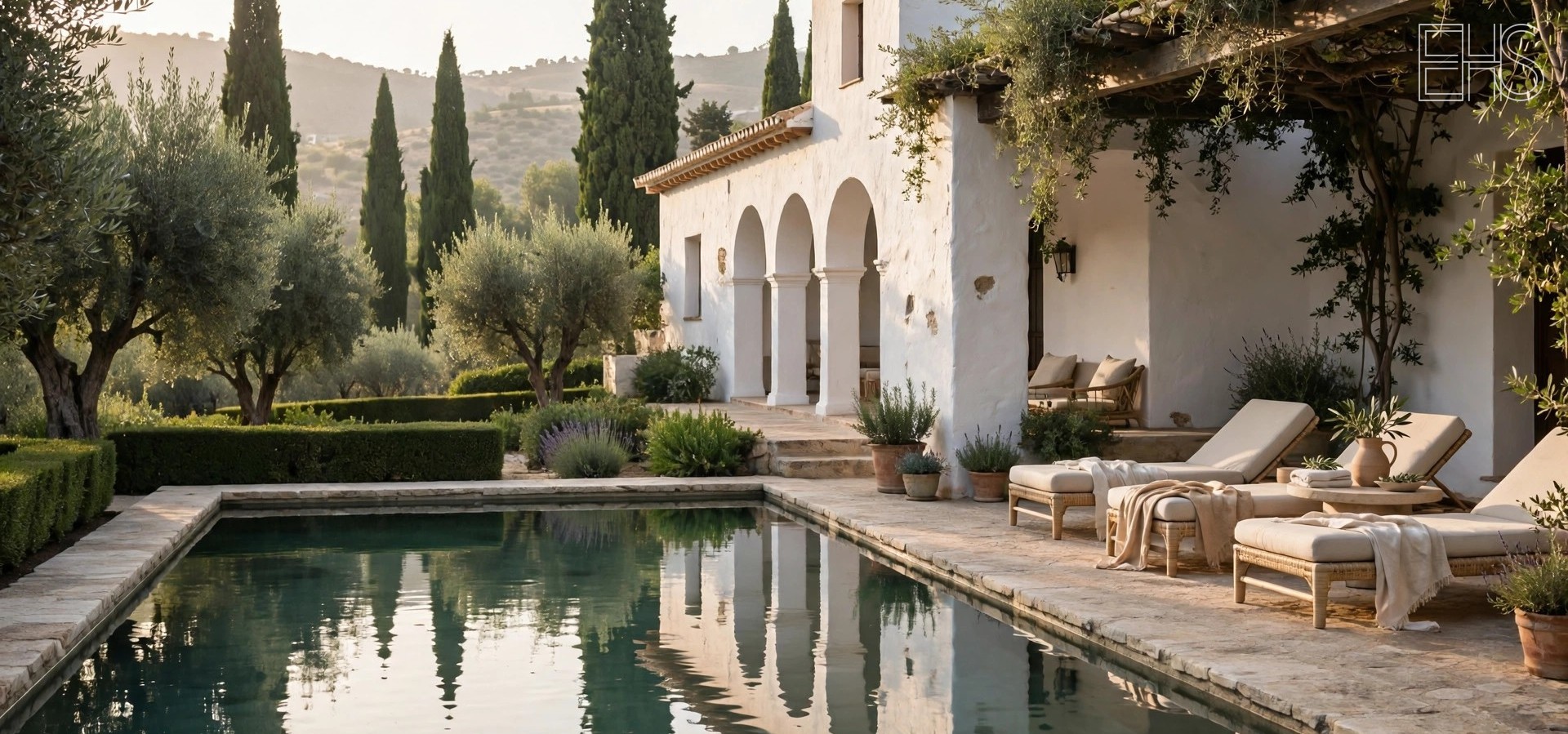
Royal Mansour sits inside the walls of the old city, at the foot of the ramparts, a few minutes on foot from the bustle of Jemaa El Fna. The estate was built from scratch as an homage to Moroccan architecture: winding lanes instead of corridors, riads instead of rooms, and craftsmanship from more than a thousand artisans, including zellige mosaics, hand-carved cedar ceilings, and the intricate white metal latticework that recurs in the spa.
The design brief, widely reported at the 2010 opening, was to celebrate the history of Marrakech by building a smaller, idealized version of the city itself. The Atlas Mountains provide the backdrop on clear days, and the gardens, expanded with a 1.5-hectare addition called Le Jardin, give the estate its green lungs.
The wellness model is sanctuary, not schedule. There are no prescribed programs, no group itineraries, no fixed meal plans. The offer is privacy plus ritual: your own house, your own pool, and one of the great hammams of Marrakech waiting when you are ready.
The Riads: Fifty-Three Private Houses
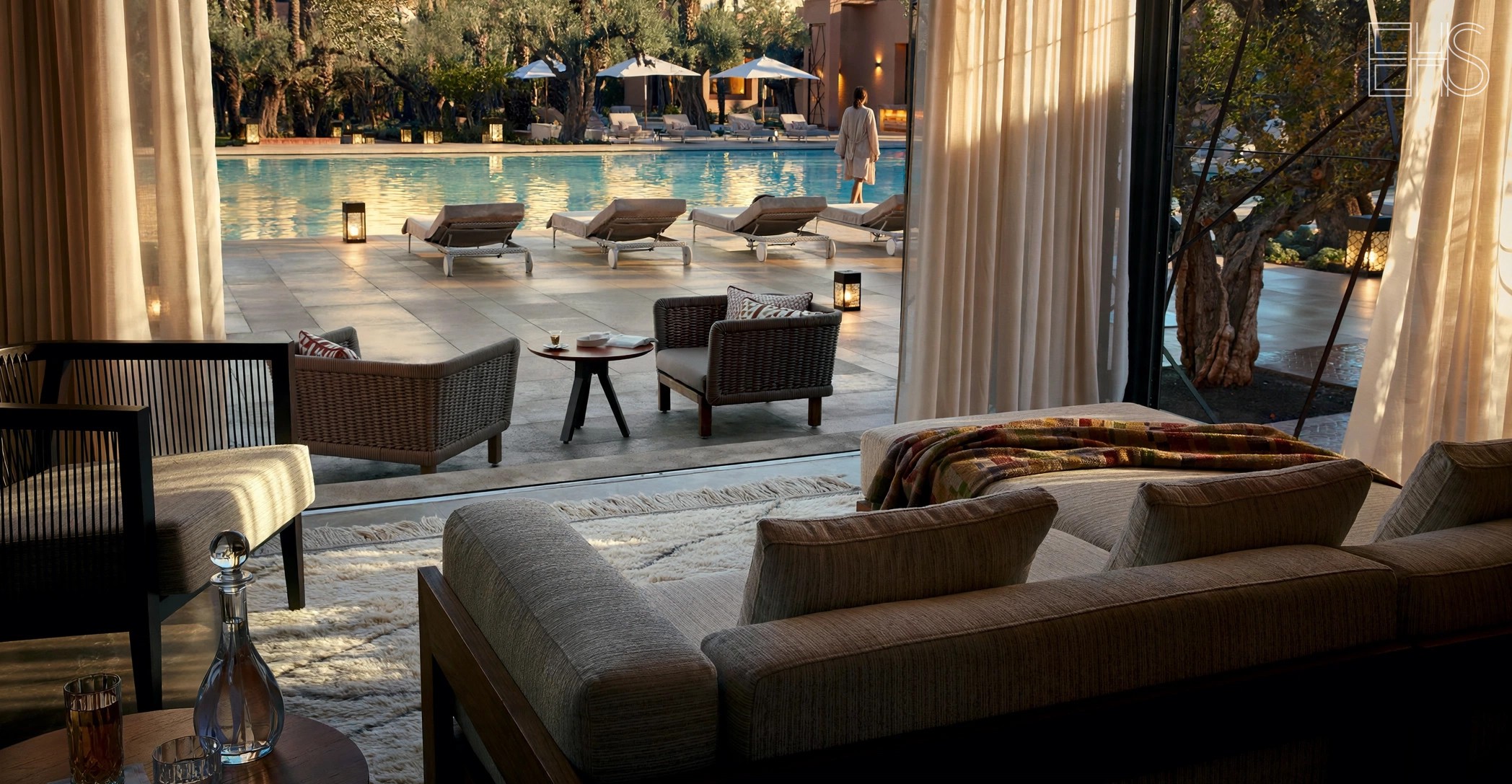
Each of the 53 riads is a three-storey private house organized around a central, open-air courtyard, with its own lounge, bar area, and dining space, and a rooftop terrace above. Most categories include a private plunge pool on the terrace, angled to catch the Marrakech light, and the larger riads add outdoor dining areas and separate bathrooms.
Categories run from one-bedroom riads through two- and three-bedroom layouts, suiting couples, families, and groups traveling together. Interiors lean into Moroccan craftsmanship at its most opulent: damask curtains, engraved mirrors, silk carpets, onyx and gold detailing, mother-of-pearl inlay. The difference is the privacy envelope: service arrives through hidden entrances and underground passages, so staff presence registers as exactly what you wanted appearing, rather than corridor traffic.
Readers planning a first wellness-hotel stay will find our guide to choosing a wellness retreat useful for deciding between a structured program property and a sanctuary-style stay like this one.
Riad Categories at a Glance
The table below summarizes the riad categories as they are publicly listed, so you can match the layout to your party size before comparing prices. Furnishing details can shift between categories, so confirm the specifics of the riad you are offered at booking.
| Category | Typical layout | Best for |
|---|---|---|
| One-bedroom riad | Courtyard, lounge, rooftop terrace with plunge pool | Couples seeking maximum privacy |
| Two-bedroom riad | Larger courtyard, separate dining area, terrace pool | Two couples or a family traveling together |
| Three-bedroom riad | Grandest layouts, outdoor dining, the largest terraces | Groups or celebrations wanting a flagship house |
All pricing is approximate and seasonal; verify current rates before booking.
The Spa: 2,500 Square Meters of Hammam and Light
The spa is the crown jewel. Entered through its own private driveway, it opens into an atrium of white wrought-iron latticework: three storeys of lace-like metal, marble, fountains, and diffused daylight. Vogue's global spa guide called the complex a 27,000-square-foot sanctuary and judged it among the finest spas in the city.
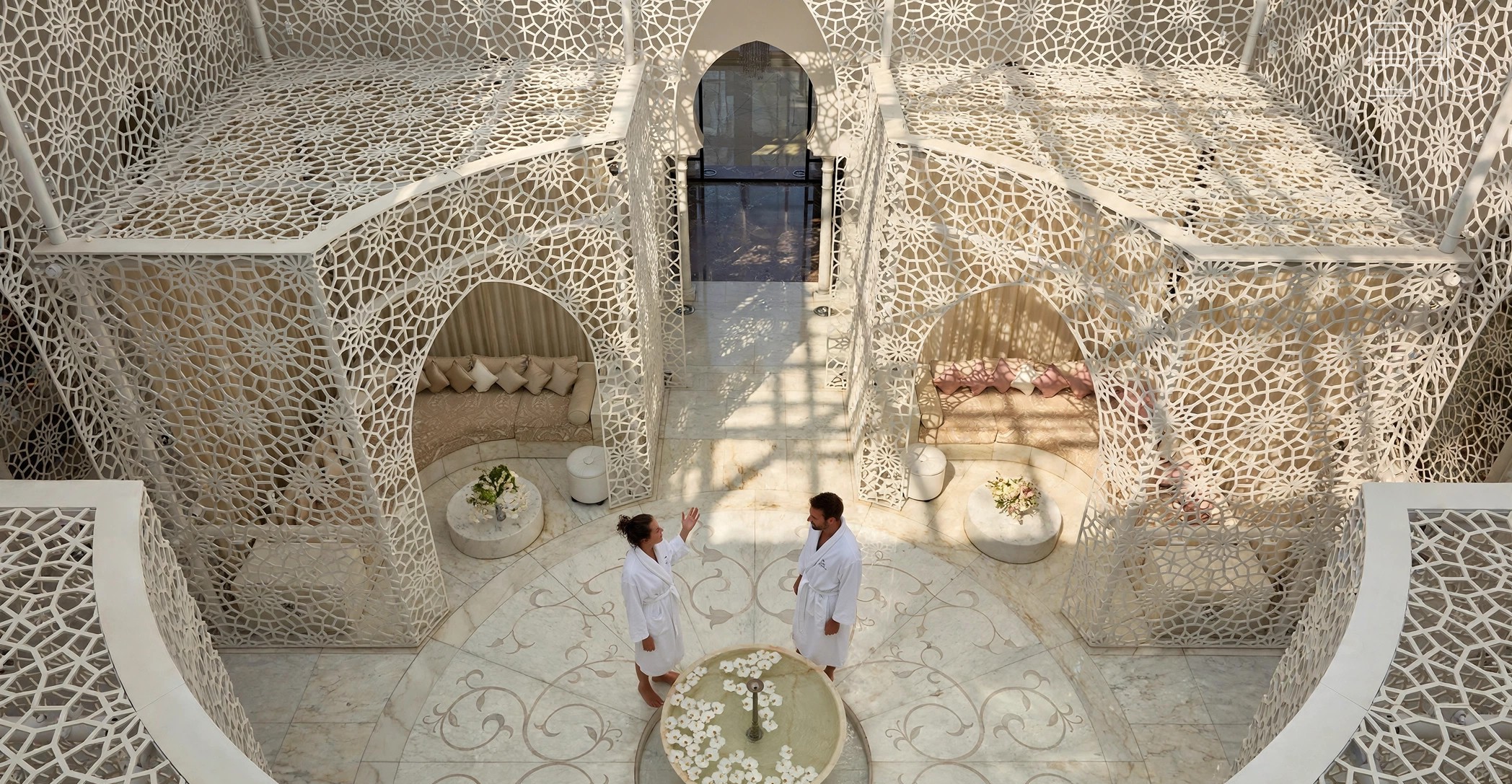
Illustration by EverHealthSpan
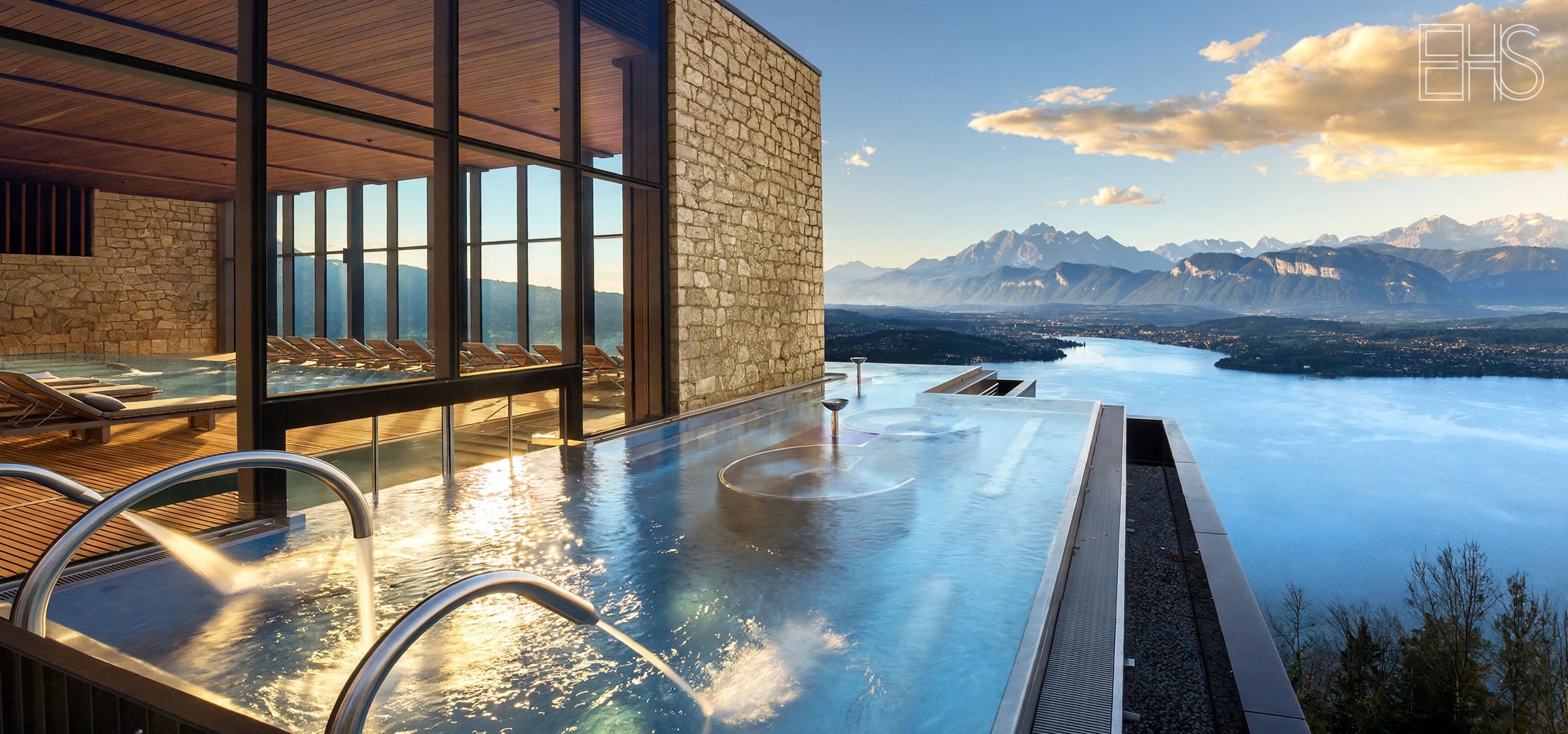
The hammam is the ritual core, with hot rooms, mild rooms, and cold rooms used in sequence, the classic Moroccan progression of steam, water, and light. Signature rituals build on hammam tradition: black soap cleansing, kessa mitt exfoliation, and nourishing wraps with argan, saffron, and rose, plus clay body wraps sourced from the Atlas Mountains. A separate 22-meter indoor pool sits in its own orangery-style glazed pavilion shaped as a Moorish arch, alongside a fitness center, beauty salon, and nail studio.
There is no fixed program to follow; the spa is à la carte. A sensible first visit runs hammam first, then the heat progression, then a ritual or massage, then the relaxation rooms and pool. Readers interested in the traditions behind the heat will find background in our sauna evidence review and contrast therapy protocols.
A Typical Day
Morning: the lanes and the terrace. Breakfast where you like it: the courtyard, the rooftop terrace, or a restaurant. Many guests walk the estate's lanes before the city heat builds, then settle into the riad's private plunge pool.
Midday: the hammam. The spa's heat sequence anchors the middle of the day, when the medina is hottest. Hammam, exfoliation, a wrap or massage, then the indoor pool and relaxation rooms. Lunch follows, long and unhurried.
Afternoon: the medina or the garden. The concierge arranges excursions into the souks, the Atlas foothills, or the Agafay Desert, or guests claim the gardens and Le Jardin's poolside pavilions. In-riad spa rituals can be arranged for guests who prefer not to cross the estate.
Evening: dinner at Alléno's tables. Aperitif at the Lobby Bar or Tea Lounge, then dinner at La Grande Table Marocaine or La Grande Table Française. The rooftop terrace, with the Atlas fading into dusk, is the classic nightcap setting.
The Food: Two Grande Tables
The culinary program is overseen by chef Yannick Alléno, the three-Michelin-starred chef from Paris, and it ranks among the strongest hotel dining lineups in North Africa. La Grande Table Marocaine presents Moroccan gastronomy at its most refined, while La Grande Table Française covers French gastronomic cooking. Guests can also dine privately in their riads, inside or on the rooftop terrace.
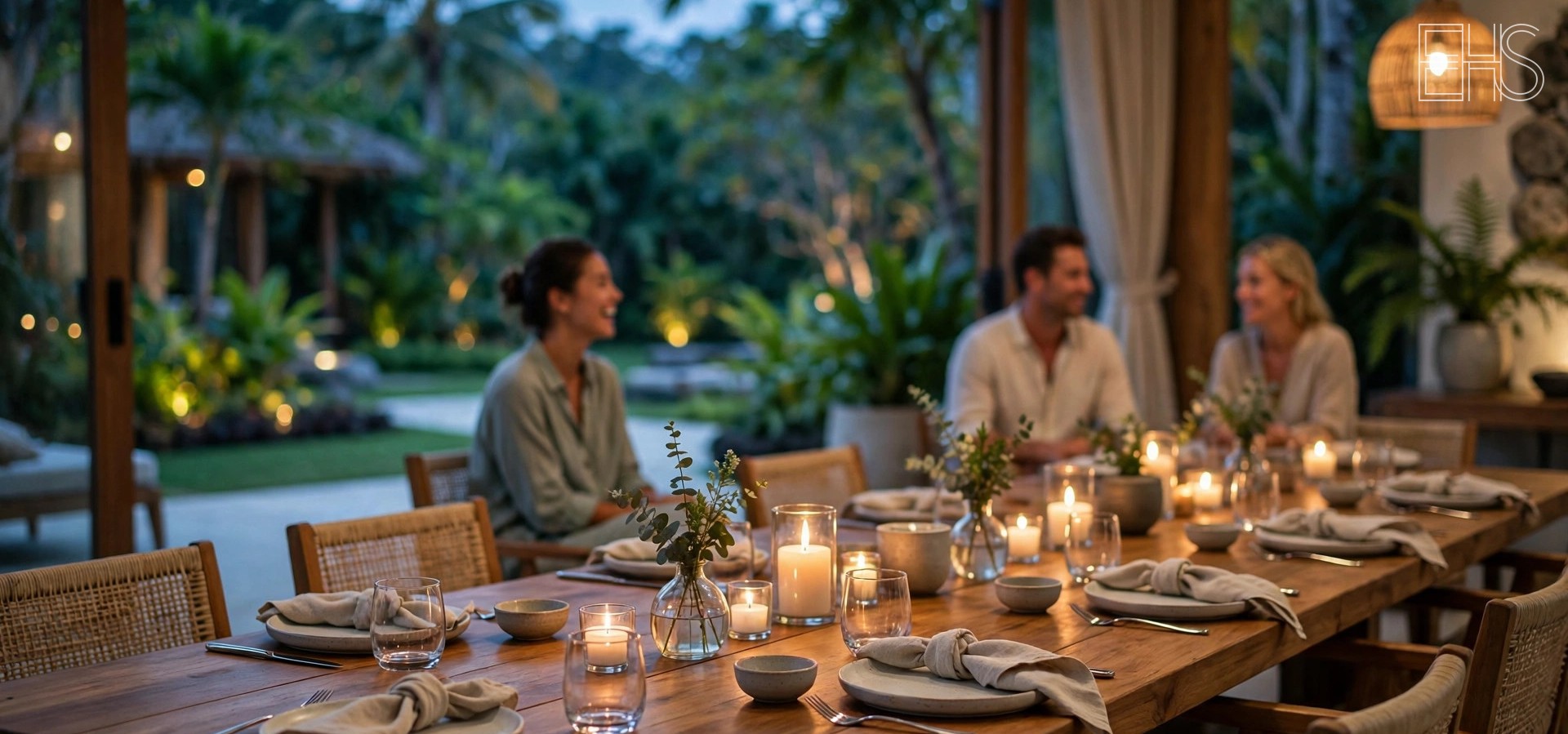
Le Jardin, the estate's 1.5-hectare garden addition, brings outdoor dining under Alléno's direction around a 600-square-meter pool with seven private pavilions. The Lobby Bar, the Tea Lounge, and a cigar and spirits bar cover the drinking and lighter-bite options.
What to Budget
Royal Mansour sits at the very top of the Marrakech market. Entry one-bedroom riads are typically listed from around €1,100 a night in shoulder season, rising in peak periods; two- and three-bedroom riads climb well into the four figures. These are hedged benchmarks from publicly listed rates that move with season, so verify current rates before booking.
On top of the nightly rate, plan for rituals and massages, in-riad dining, airport transfers, and excursions. A realistic all-in budget for two guests over four nights, with a moderate spa and dining program, lands in the low five figures in euros. Our luxury wellness retreat costs guide places this pricing in context across the top tier, and our packing guide covers what to bring for a hammam-centered stay.
Check Availability
Affiliate link: We may earn a commission if you purchase through this link, at no additional cost to you.
Who It Suits, and Who Should Look Elsewhere
Royal Mansour suits travelers who want wellness through privacy and ritual rather than structure: couples marking an occasion, honeymooners, and seasoned luxury travelers who find conventional suites limiting. It suits guests who value craft and architecture as part of the experience, food-focused travelers (the two Grande Tables justify the trip on their own), and anyone who wants one of the great hammams of Marrakech on their own schedule.
Consider looking elsewhere if you want a structured retreat week with prescribed programming and group sessions (our European retreats roundup covers program-built properties), if you want beach access (Marrakech is inland; the Atlas and desert are the excursions), or if you expect a kids-club-centered holiday. As our retreat etiquette guide notes, a palace property rewards guests who arrive with a little local custom under their belt: modest dress in the medina, unhurried mealtimes, and quiet in the spa.
Frequently Asked Questions
What is the best way to book Royal Mansour Marrakech?
Compare the estate's own booking channel with trusted travel platforms, since Marrakech luxury pricing shifts with season and the same riad category can list differently across channels. The property carries real bookable inventory on Expedia with consistently high guest scores; you can check current rates and availability on Expedia.
What makes the riads different from a normal hotel suite?
A riad is a private three-storey house, not a room behind a corridor door: a central open-air courtyard, its own lounge, bar and dining areas, and a rooftop terrace with a plunge pool in most categories. Service arrives through hidden entrances and underground passages, so there is no corridor noise and no shared lobby.
What does the spa include?
The 2,500-square-meter spa includes a traditional hammam with hot, mild, and cold rooms used in sequence, a soaring white-lacework atrium, a 22-meter indoor pool in a Moorish-arched glass pavilion, and relaxation areas. Signature rituals are built on Moroccan traditions: black soap cleansing, kessa exfoliation, and wraps with argan, saffron, and rose.
How much does a stay cost?
Entry one-bedroom riads are typically listed from around €1,100 a night in shoulder season, with two- and three-bedroom riads well into the four figures per night. These are hedged benchmarks from publicly listed rates that move sharply with season, so verify current rates before booking. A four-night stay for two with a moderate spa and dining program realistically lands in the low five figures in euros.
Is the hammam suitable for a first-timer?
The hammam is welcoming for first-timers because the staff guide you through the sequence, but the heat is real: hot rooms, steam, and cold water in succession. That is not for everyone. Anyone with a heart condition, blood pressure concerns, or pregnancy should skip the hot rooms and use the relaxation rooms and pool instead.
What should I wear and observe around the property?
Resort-smart dress works for the estate, with modest cover for excursions into the medina and souks. Swimwear belongs at the pools and spa, not in the lanes or restaurants. Mealtimes are unhurried and the spa is a quiet zone, so lower voices and phones away. Our wellness retreat etiquette guide covers palace-property customs in more detail.
This article is for informational purposes only and does not provide medical advice or guaranteed outcomes.