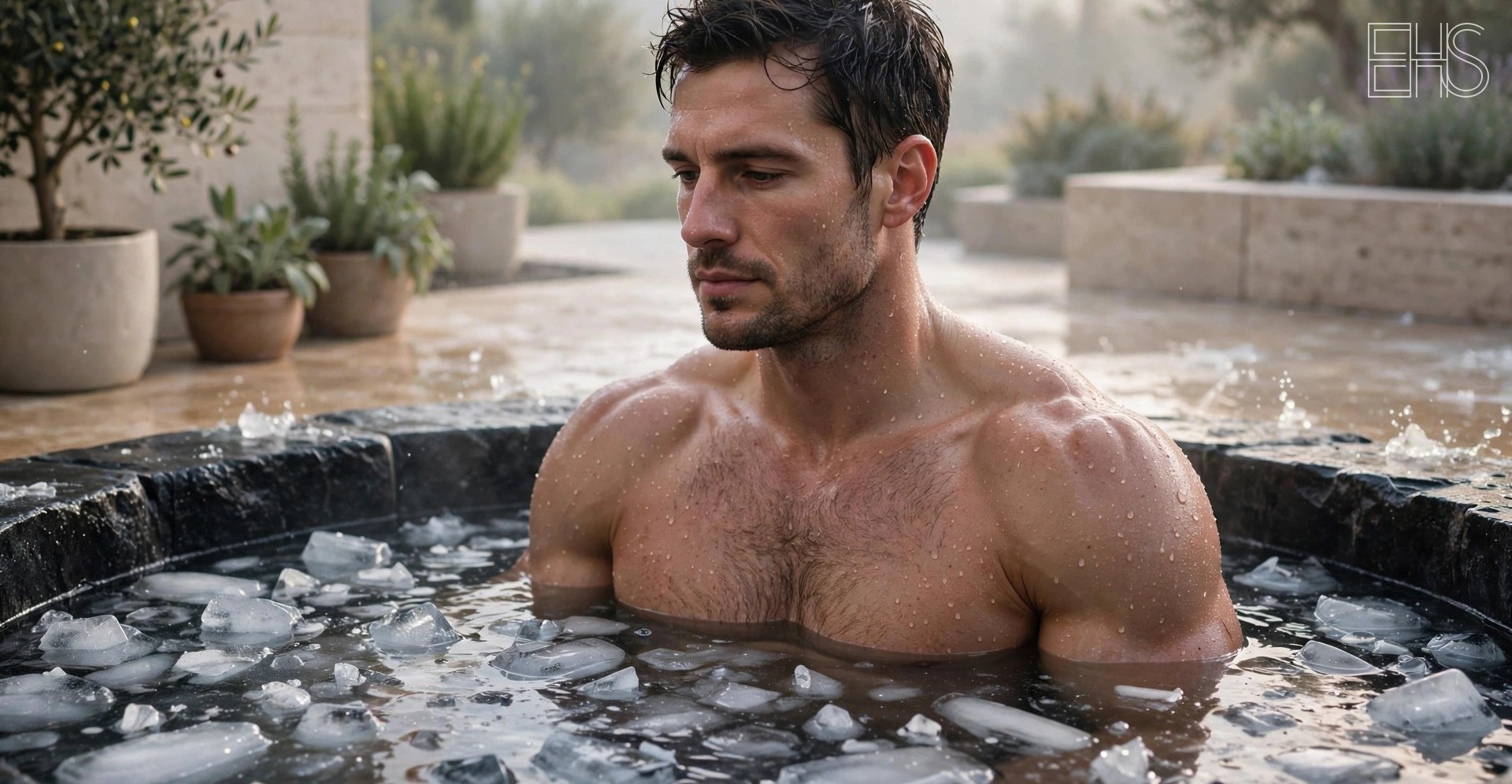
Cold plunging has gone from athlete ritual to mainstream wellness habit in under a decade. Along the way, the claims got ahead of the science: boosted immunity, accelerated fat loss, cured inflammation, rewired dopamine. Some have genuine evidence behind them. Others are marketing wearing a lab coat.
This is the sober version: what studies suggest, what they don't, and where the honest uncertainties lie. This guide was refreshed in October 2026 to include the largest synthesis to date: a January 2025 PLOS ONE systematic review and meta-analysis covering 11 studies and 3,177 participants.
Key takeaways - The largest review so far (PLOS ONE, 2025; 11 studies, 3,177 adults) found cold-water immersion reduced perceived stress about 12 hours after a session, with small improvements in sleep quality and quality of life: and no significant pooled effect on mood or immune markers. - The most consistently supported benefit is modest relief of post-exercise muscle soreness. Most claims beyond that are plausible but unproven. - New data complicates the inflammation story: inflammatory markers rise, not fall, in the first hour after immersion. - Nothing new has established any longevity or disease-prevention benefit from plunging.
How to Read Wellness Research
Before the specifics, a quick primer on why this literature is hard to interpret:
- Small samples. Many cold-immersion studies involve 10 to 30 participants, which produces noisy results.
- Short durations. Most trials last days to weeks, never years: the timeframe you care about for a daily habit.
- Athlete-heavy populations. Much of the research studies trained athletes, not average adults plunging before work.
- Hard to blind, plus publication bias. Participants always know their group, which inflates placebo-susceptible outcomes like soreness and mood; exciting positives get published, boring nulls don't.
None of this means the research is worthless. It means confidence should be calibrated: strong for short-term, directly measured effects; weak for long-term health claims.
What the Last Year Added
The PLOS ONE review (Cain and colleagues, 2025) is the most ambitious synthesis so far: 11 studies, 3,177 adults, only chest-level immersion (cold showers, ice baths, cold plunges). Headline findings: stress dropped significantly 12 hours after immersion but not at any other time point; sleep quality and quality of life improved in the pooled data; mood and immune markers did not move significantly. Inflammatory markers rose immediately and one hour after immersion: the opposite of the "cold kills inflammation" pitch.
A June 2025 study in Applied Sciences tested 30 men aged 30 to 50, half of them regular winter swimmers, half with no cold exposure, all immersed once in 4C water. Twenty-four hours later, the winter swimmers showed significantly lower adrenaline and noradrenaline than controls; dopamine did not change. Small, male-only, single-immersion: interesting, not proof.
What the Evidence Suggests
Post-exercise muscle soreness: moderate support
The best-supported claim. Multiple studies and at least one Cochrane-style systematic review have found that cold-water immersion after intense exercise reduces perceived muscle soreness in the 24 to 96 hours afterward, compared to passive recovery. The effect is real but modest, and it shows up mostly in subjective soreness ratings rather than objective recovery of muscle function: strength and performance recovery show smaller, less consistent effects.
Practical takeaway: if soreness limits your next session, plunging afterward likely helps you feel better.
Alertness and mood: plausible, short-term, with a new caveat
Cold exposure triggers a substantial release of norepinephrine: studies have measured increases of 200 to 300% lasting an hour or more after cold immersion. Norepinephrine drives alertness and focus, which is why plungers report feeling "electric" afterward.
Here is the new caveat: the 2025 PLOS ONE meta-analysis pooled the available randomized evidence on mood and found no significant effect. One 2021 trial did find a 15-point drop on a mood questionnaire after a single 20-minute sea immersion at 13.6C, versus 2 points in controls. But pooled across studies, the effect did not hold. The widely cited case report of a woman whose depressive symptoms improved with cold-water swimming is exactly that: one case.
Practical takeaway: a plunge is a credible alternative to a second coffee, not a treatment for mood disorders. Anyone dealing with depression or anxiety should work with a qualified professional, not a tub.
Stress: new evidence, genuinely interesting
This is the claim that gained the most from the 2025 review. The pooled analysis found a significant reduction in perceived stress 12 hours after immersion: a large effect size statistically. But it appeared at no other measured time point: not immediately, not at 1 hour, not at 24 or 48 hours. A single delayed window is an odd pattern, and it needs replication in larger, longer trials before anyone builds a stress-management program around it.
Practical takeaway: the most intriguing new signal in the literature, but still a hypothesis: not a benefit you can bank on.
Immune function: intriguing but thin
A handful of studies suggest regular cold-water swimmers show changes in certain immune markers: white blood cell counts, for instance. But immune markers aren't immune outcomes. The 2025 meta-analysis found no significant pooled effect on immune function. Its narrative synthesis did note one study in which regular cold-shower takers reported 29% less sickness absence: an interesting outcome measure, but a single study, and it measured showering, not plunging.
Practical takeaway: "boosts immunity" is marketing language. Some immune markers shift with regular exposure; whether that changes your odds of catching a cold is unknown.
Inflammation: the marketing has it backwards at first
Cold immersion does appear to blunt certain inflammatory responses acutely: which is partly why it helps soreness. But the 2025 review added a wrinkle: pooled data showed inflammatory markers rising immediately and one hour after immersion, an acute response to the cold stress itself. The "cold reduces inflammation" line is, at minimum, more complicated than it sounds.
And the nuance the marketing skips: post-exercise inflammation is part of the adaptation signal. Some research suggests habitual cold immersion right after resistance training may slightly blunt long-term strength and muscle gains.
Practical takeaway: plunge after endurance work or for soreness relief. Lifters chasing maximum adaptation might want to separate plunging from training by several hours, or plunge on rest days.
Metabolism and brown fat: real mechanism, small effect
Cold exposure activates brown adipose tissue and shivering thermogenesis, both of which burn calories. This is genuine physiology. But the magnitude in typical plunge sessions (a few minutes, a few times a week) is small in calorie terms: studies on cold-induced metabolic changes generally use longer or more intense exposures than a home plunge.
Practical takeaway: plunging supports an active metabolism the way a brisk walk does: real, but not a weight-loss strategy.
Sleep: slightly better than we thought
Some plungers report better sleep, possibly via the post-plunge drop in core body temperature (which mimics the body's natural pre-sleep cooling). The 2025 review's pooled data showed improved sleep quality: an upgrade to "early but positive." Two caveats: the sleep data was restricted to men, and an energizing plunge right before bed may do the opposite.
Practical takeaway: morning plunging is a plausible sleep-support habit; the evidence is young and male-skewed.
Longevity: essentially unknown
No study has shown that cold plunging extends lifespan or healthspan in humans. Full stop. Any longevity framing is extrapolation from mechanisms (stress-response pathways, metabolic effects) that are interesting but unproven in this context. It's not fine to present it as established.
The Claims to Retire
Here is a verdict sheet on the most repeated cold-plunge claims, grounded in the January 2025 PLOS ONE meta-analysis and the wider evidence base. Skim the table for the short version; the sections above carry the detail.
| Claim | Verdict |
|---|---|
| "Flushes toxins / detoxes" | No meaningful evidence. Your liver and kidneys do this. |
| "Cures inflammation" | Misleading. Markers rise acutely after immersion; habitual post-training plunging may blunt adaptation. |
| "Boosts testosterone" | Essentially no credible evidence. |
| "Rewires dopamine for motivation" | Wildly overstated reading of one small study on dopamine metabolites. |
| "Prevents illness" | One cold-shower study found fewer sick days; no good evidence for plungers. |
| "Cures depression or anxiety" | The largest pooled analysis found no significant mood effect. Not a treatment. |
| "Extends lifespan" | Zero human evidence. |
What Would Change Our Minds
Good science updates. The evidence that would move these grades looks like this: large randomized trials (hundreds of participants) in general populations, lasting months to years, measuring objective outcomes like illness rates, cardiovascular markers, and strength over time, with pre-registered methods. Until that literature exists, treat every big claim as provisional.
The 2025 review echoes this: effects appear time-dependent and context-specific, and the field needs longer, higher-quality trials.
The Honest Bottom Line
Cold plunging is a low-cost, low-risk practice with genuine short-term effects: less perceived soreness, a real alertness lift, an intriguing but unconfirmed stress signal, and a ritual many people find psychologically valuable.
What's missing is evidence for the grand claims: disease prevention, transformed immunity, longevity. Buy the plunge for what it demonstrably does, enjoy the ritual for what it is, and keep the skepticism you brought to this article.
A plain-English note: cold exposure is not for everyone. People with heart conditions, circulation disorders, or uncontrolled high blood pressure should skip it or read our cold plunge safety guide before getting in.
If you're considering a tub, our buying guide covers what to look for, and our decision framework helps you match a setup to your space and budget.
Frequently Asked Questions
Is there any high-quality long-term research on cold plunging?
No. That remains the central gap even after the 2025 PLOS ONE review: small, short-term studies, mostly in athletes and mostly in men. No large, long-term randomized trial has tested habitual cold immersion in the general population against hard health outcomes. The review's own authors call for high-quality, long-term trials in diverse populations. Until those exist, treat big claims as provisional.
Why do so many smart people swear by it if the evidence is thin?
Several honest reasons: the short-term effects (alertness, soreness relief) are genuinely noticeable; the ritual itself has psychological value; and demanding daily habits correlate with other healthy behaviors, which confounds self-assessment. But pooled mood effects did not move, so the buzz is better understood as alertness than a lasting mood fix.
Does cold water immersion help or hurt muscle growth?
Occasional plunging is unlikely to matter much either way, but habitual immersion immediately after resistance training may slightly reduce strength and hypertrophy adaptations over time. If maximizing muscle growth is your goal, separate plunges from lifting sessions by 6+ hours or plunge on rest days. The 2025 review added a wrinkle: inflammatory markers actually rise in the first hour after immersion, so the mechanism is messier than "cold suppresses the adaptation signal."
What's the minimum effective dose?
Research protocols vary widely, but the common range studied is 2 to 5 minutes at 50 to 59F (10 to 15C), with some studies going colder. There's no established dose-response curve: colder and longer isn't proven better, and very cold, long exposures add risk without clear benefit. The 2025 review included exposures as short as 30 seconds at chest level and still found signals: the entry bar is lower than ice-bath culture implies.
Are ice baths and chilled tubs equivalent for benefits?
For the physiological effects studied, what matters is water temperature and immersion time, not how the water got cold. A $200 barrel with ice and a $6,000 chilled tub produce the same cold exposure. The expensive unit buys convenience and consistency, not a different biological effect. Our buying guide compares the tiers if you want the practical tradeoffs.
Should I trust before-and-after bloodwork posted by influencers?
Be cautious. Single-person anecdotes, unblinded and uncontrolled, with no baseline stability data, prove essentially nothing. Biomarkers fluctuate naturally. This caution applies double to cold immersion, where the newest data shows immune and inflammatory markers move in directions the marketing gets wrong: a marker moving on one influencer's panel says nothing about real outcomes.