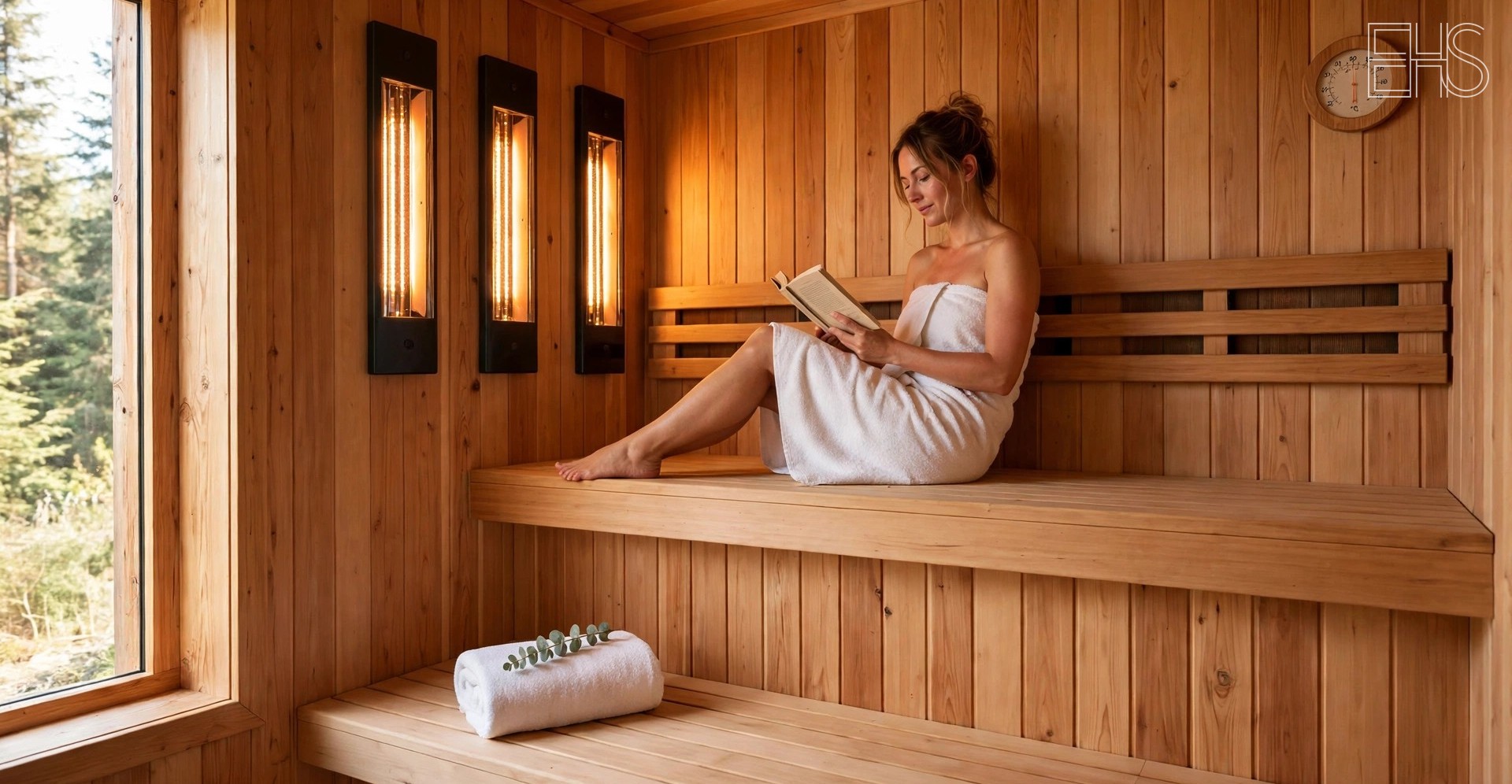
Infrared sauna brands look interchangeable in photographs: cedar boxes, glass doors, glowing panels. The differences that matter are harder to photograph: heater coverage decides whether the cabin warms evenly, the EMF figure depends on where and how it was measured, and electrical requirements decide whether a cabin plugs into a spare outlet or needs an electrician first. This guide compares the brands buyers actually shortlist, on the specifications that change daily use.
One note before the details: heat exposure is not for everyone. Start with shorter sessions at lower temperatures, drink water, and skip the session on days you feel unwell.
Key takeaways - Heater coverage matters more than heater type alone: panels behind the back, along the sides, and under the bench warm a cabin more evenly than one large panel. - Full-spectrum claims differ in construction: some brands layer separate emitters per band, others use a hybrid panel, and the difference is coverage, not a magic wavelength. - EMF numbers are not comparable across brands unless the measurement distance and method match: published figures range from under 1 mG to under 3 mG. - Electrical needs split the market: most one- and two-person cabins run on standard household power, while premium models increasingly call for a dedicated 20A circuit. - Warranty length is the clearest quality signal: lifetime residential coverage stands apart from five to seven year terms. - Verify current rates and specifications before buying: models and prices are revised without notice.
The Brands at a Glance
The table below lines up the infrared brands buyers compare most often, with typical listed prices and published specifications. Prices are approximate and move often, so verify current rates before buying.
| Brand and representative model | Heater approach | Published EMF figure | Typical listed price | Warranty |
|---|---|---|---|---|
| Sunlighten mPulse Believe to Empower | Separate emitter layers per band | Under 3 mG | From around $8,700 to $16,400 | 5 to 7 years, model dependent |
| Clearlight Premier IS-2 and Sanctuary 2 | Carbon and ceramic hybrid panels | Under 1 mG | From around $5,800 to $7,700 | Lifetime, residential |
| Sun Home Equinox 2 | Halogen elements plus carbon panels | 0.5 mG, third-party tested | From around $6,100 | 5 years, residential |
| JNH Joyous line | Carbon panels | 0.32 mG at the heater surface | From around $1,300 to $1,900 | 5 years, limited |
| Maxxus and Dynamic entry cabins | Carbon panels | Varies by model, often unpublished | From around $800 to $2,450 | 1 to 5 years, model dependent |
A note on the word infrared, since it causes a real buying mistake: an infrared sauna delivers heat, while a red-light device delivers light at low heat. The shared word hides different tools. Shoppers after light should judge light devices by light criteria, such as see the Recovery Pod (affiliate link), a lie-down pod that covers the whole body.
Heater Coverage: The Spec That Decides Comfort
An infrared cabin warms the person, not the air, so panel placement is the whole game. A cabin with panels only behind the back leaves the front cooler than the back, and the session feels uneven at the same thermostat setting. The brands above diverge exactly here. Sunlighten's mPulse line separates the bands across distinct emitter layers: carbon for far infrared, polyimide for mid infrared, and LEDs for near infrared. Clearlight's Sanctuary panels combine carbon and ceramic in a single hybrid panel. Sun Home pairs hotter halogen elements with carbon far-infrared panels for background warmth.
None of these constructions is automatically better. What matters is whether panels cover the back, both sides, the legs, and ideally the front. A two-person cabin with six to eight panels spread around the bench warms more evenly than a larger cabin with the same panel count stretched thin. When comparing models, count panels and note their positions on the spec sheet, and treat a single headline wattage figure as uninformative. Our infrared sauna buyers guide walks through heater layouts model by model.
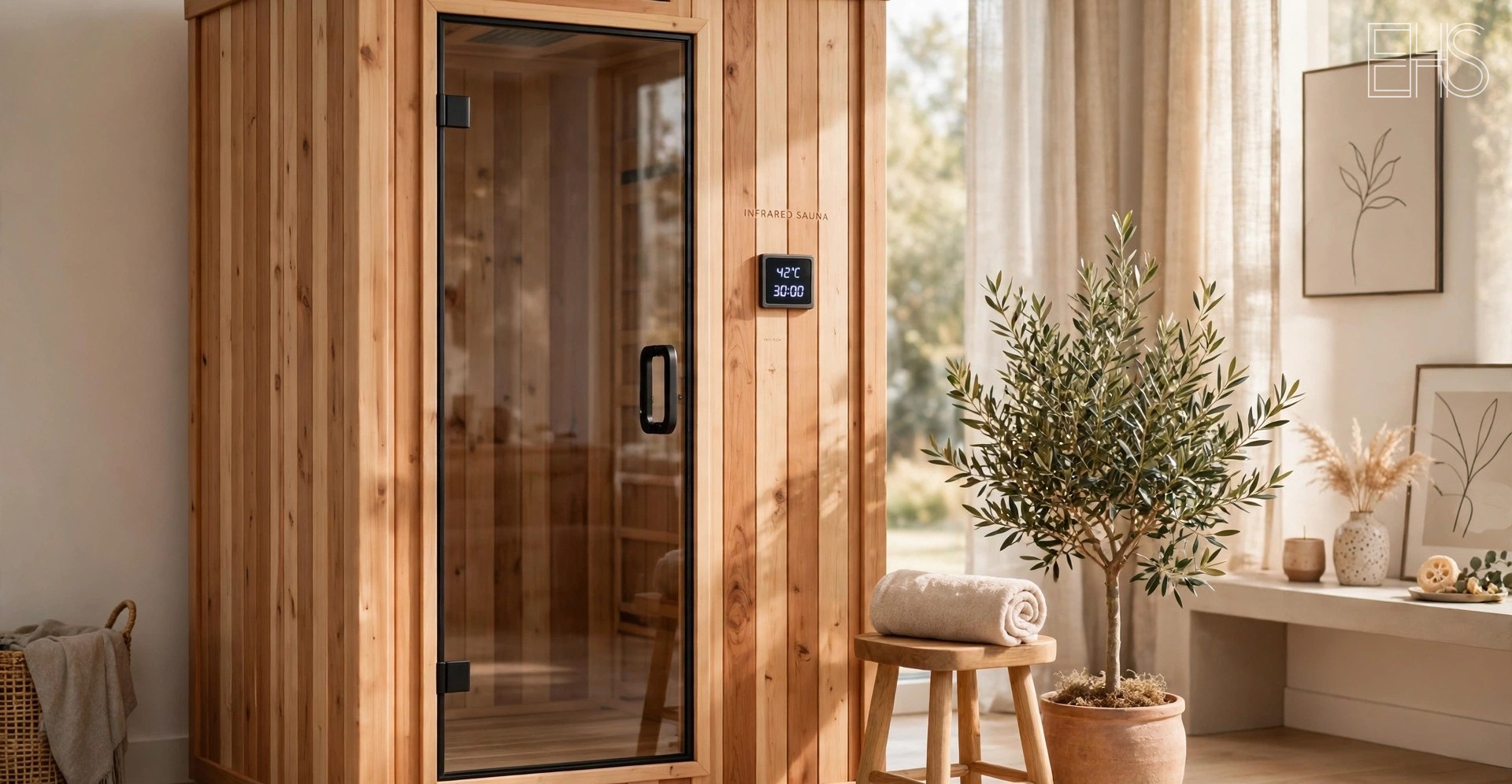
Illustration by EverHealthSpan
EMF Claims, Decoded
EMF has become the infrared market's loudest marketing battleground, and the numbers resist direct comparison. Published figures run from JNH's 0.32 mG, taken at the heater surface, through Sun Home's 0.5 mG from an independent lab and Clearlight's under 1 mG, up to Sunlighten's under 3 mG. These figures were not measured at the same distance or with the same instrument, so ranking brands by them is unreliable, and a brand that publishes no method cannot be compared with one that does.
In short: reputable brands test and publish readings, and the published levels are low across the board. Budget cabins that advertise "near-zero" or "ultra-low" EMF without a test method or third-party lab deserve skepticism, not a premium. If EMF figures influence your choice, ask the seller for the measurement distance and whether testing was independent, then compare only figures measured the same way. Our low-EMF infrared guide decodes the labels in full.
Size, Power, and Placement
Size and power decide more purchases than heater technology does. Most one- and two-person cabins run on standard 120V household power, one of the format's real advantages over a traditional sauna. Premium two-person models tighten the electrical rules: the Equinox 2 from Sun Home and Clearlight's Sanctuary 2 ask for their own 120V/20A line with a matching receptacle rather than a standard 15A outlet, while Sun Home's Eclipse 2 asks for 120V/30A. Outdoor models such as the Sun Home Luminar line and the Clearlight Sanctuary Outdoor models run on 240V and need an electrician plus a level pad and rain protection.
Bench length matters as much as the headcount label: our two-person versus four-person guide shows how a 48-inch bench holds two upright sitters but not two stretched out, so check the longest unbroken bench run, not the number on the box. Infrared cabins still need ventilation; our sauna ventilation guide covers airflow by cabin type, and our installation guide covers electrical, drainage, and clearance together.
What the Price Tiers Actually Buy
The table below groups the market by price tier. Prices are approximate; verify current rates before buying.
| Tier | Typical listed range | What the money adds | Where it gives way |
|---|---|---|---|
| Entry (Maxxus, Dynamic) | From around $800 to $2,450 | A working cabin at the lowest price, simple controls | Thinner panels, sparser coverage, shorter warranties |
| Mid-range (JNH) | From around $1,300 to $1,900 | Better fit and finish, published EMF figures | Fewer panels, basic app features |
| Premium (Clearlight, Sun Home) | From around $5,800 to $7,700 | Even coverage, third-party EMF testing, longer warranties | Higher price, dedicated circuits on some models |
| Flagship (Sunlighten mPulse) | From around $8,700 to $16,400 | Separate emitters per band, largest cabins, premium materials | The steepest price, with diminishing practical returns |
The step from entry to premium buys even heat and longer coverage, worth paying for with several sessions a week. The step from premium to flagship buys band separation and finish, and its value depends on how much the buyer cares about that distinction. A cabin that heats unevenly at any price is a poor purchase; one that heats evenly at the mid-range price is a good one. Warranty terms sharpen the comparison: Clearlight's lifetime residential coverage stands alone against five to seven years elsewhere.
Heat Is Not Light
The confusion between infrared heat and red light deserves its own section because it drives real mistaken purchases. An infrared sauna session is a heat session: the cabin warms the body, you sweat, and the session ends when the heat has done its work. A red-light session is a light session: the device emits red and near-infrared light at low heat, you lie still, and the session ends on a timer. Buying a sauna when you wanted light exposure wastes thousands; buying a light device when you wanted a sweat disappoints just as surely.
If the light side interests you, evaluate it separately: coverage area, published irradiance at a stated distance, and session length, rather than any sauna specification. Our red light therapy home guide covers the light side in detail. One example of the format is see the Recovery Pod (affiliate link), a lie-down pod that covers the whole body. Judge it on its light specifications, not on sauna criteria.
What to Verify Before Ordering
Listings move often, so check these specifics on the current product page: panel count and positions, not just wattage; EMF measurement distance and independent testing; circuit requirements; bench dimensions as built, not the headcount label; warranty terms for panels separately from electronics and woodwork; and delivery terms. Readers comparing heat formats more broadly should also read our sauna benefits evidence review, which grades what the research supports without overstating either side.
Frequently Asked Questions
Which infrared sauna brand heats most evenly?
Evenness comes from panel coverage, not brand name: panels behind the back, along both sides, and at leg or floor level warm the whole body, while a single rear panel leaves the front cooler. Premium models spread panels around the bench, which is why they feel more even than entry cabins. Before ordering, count panels and note their positions.
Do EMF figures let me compare brands directly?
No, not unless the measurement method matches. Published figures are taken at different distances and points, some in-house and some by independent labs. A lower number measured at the heater surface does not beat a higher number measured at the bench. Ask each seller for the measurement distance and whether testing was independent, and compare only figures gathered the same way.
Can I plug any infrared sauna into a normal outlet?
Most one- and two-person cabins run on standard 120V household power, but premium models increasingly do not. The Equinox 2 from Sun Home and Clearlight's Sanctuary 2 need their own 120V/20A line, Sun Home's Eclipse 2 needs 120V/30A, and outdoor models run on 240V. Check the manual before ordering, and budget for an electrician where a dedicated circuit is required.
What is the difference between an infrared sauna and a red-light device?
An infrared sauna is a heat device: panels warm the body, you sweat, and the session is governed by temperature and time. A red-light device is a light device: it emits red and near-infrared light at low heat while you lie still under a timer. They are different tools that happen to share the word infrared. Shoppers after light exposure should judge light devices by light criteria, such as see the Recovery Pod (affiliate link).
What warranty and delivery details deserve a check before buying?
Split the warranty into its parts: panels, electronics, and woodwork are often covered on different terms, and exclusions for outdoor exposure, improper wiring, and commercial use are common. Compare the panel term specifically: Clearlight's lifetime residential coverage differs sharply from five to seven year terms elsewhere. Confirm whether delivery is threshold drop-off or inside placement.
This article is for informational purposes only and does not provide medical advice or guaranteed outcomes.