Cold water is indifferent to confidence. The same plunge that leaves a fit athlete feeling electric can genuinely endanger someone with a heart condition, and the difference between a safe session and a frightening one comes down to decisions made before you step in: who gets in, how cold the water is, how long you stay, and how you get out. This guide maps the risks in plain language and the habits that make plunging safer for the people it suits.
Key takeaways - The main short-term hazard is the cold shock response: an involuntary gasp, rapid breathing, and a spike in heart rate and blood pressure during the first minute or two. - People with heart conditions, uncontrolled high blood pressure, circulation disorders such as Raynaud's, and several other conditions should not plunge without reading the risks below. - Most incidents trace back to mistakes: too cold too fast, too long, plunging alone, or treating the session as a test of toughness. - A conservative start: 50 to 59F (10 to 15C) for one to three minutes, with someone else present and a warm exit plan ready. - Colder and longer is not proven better. The safest sessions are short, planned, and boring.
What Cold Water Actually Does to the Body
The moment cold water hits your chest, the body launches what researchers call the cold shock response: breathing turns involuntary and fast, the heart rate jumps, and blood vessels in the extremities constrict to defend core temperature. In healthy people this passes within a minute or two as breathing settles. The gasp reflex is the part to respect: an involuntary inhalation at the wrong moment can pull water into the airway, which is why experienced practitioners enter slowly, keep the head above water, and focus on steady exhales during the first minute. The first minute is when the shock response peaks; controlled breathing through it is the whole skill.
Blood pressure rises meaningfully during immersion, sometimes sharply: manageable for healthy adults, a different proposition for anyone with cardiovascular conditions or uncontrolled hypertension. Very long sessions at very low temperatures can push toward hypothermia, whose early signs (uncontrollable shivering, clumsiness, confusion) are easy to underestimate mid-session. And cold hands become clumsy hands, which is how minor slips happen around the tub.
Who Should Not Plunge
- People with heart conditions, including coronary artery disease, heart failure, arrhythmias, and a history of heart attack or stroke. The combined hit of cold shock and the blood-pressure spike is the wrong stress test for a compromised system.
- People with uncontrolled high blood pressure. Plunging raises blood pressure further, and the rise is larger and faster from a high baseline.
- People with circulation disorders, including Raynaud's phenomenon and peripheral artery disease. Cold triggers the vessel constriction these conditions already struggle with.
- Pregnant people. Cold shock is a significant physiological stressor, and there is essentially no safety data for pregnancy.
- People with cold urticaria, an allergy-like reaction to cold that can range from hives to, in rare cases, a severe whole-body response.
- People with a history of seizures. A sudden, intense autonomic stressor is a plausible trigger, and losing consciousness in water carries obvious consequences.
- Children and older adults with frailty. Less safety data exists at both ends of the age range, and smaller bodies and slower recovery make cold shock and hypothermia harder to tolerate.
- Anyone with open wounds or skin infections, and anyone who is intoxicated or taking substances that blunt awareness or coordination.
Medications that affect blood pressure, heart rate, circulation, or alertness deserve a second thought too. If you fall into any of these categories, plunging is either off the table or something to approach with real caution.
The Risk Picture at a Glance
A rough sorting aid, not a personal risk assessment:
| Profile | Relative risk | Suggested stance |
|---|---|---|
| Healthy adult, moderate session | Low | Follow the protocol below |
| Healthy adult pushing extremes (near freezing, 10+ minutes) | Elevated | Risk rises without proven benefit |
| Controlled blood pressure, on medication | Elevated | Discuss with a qualified professional first |
| Heart condition, uncontrolled hypertension, Raynaud's, pregnancy | High | Avoid, or proceed only with genuine caution |
| Open wound, intoxicated, cold urticaria, seizure history | High | Skip the session |
| Plunging alone, any profile | Elevated | Always have someone present or nearby |
The Safe-Plunge Protocol: Before, During, After
Before. Eat lightly rather than plunging on an empty stomach. Skip alcohol; it impairs judgment and increases heat loss. Check the water temperature with a thermometer rather than guessing. Have someone present, set a timer while you are warm and rational, and lay out your exit in advance: towel, dry clothes, warm drink, heated space.
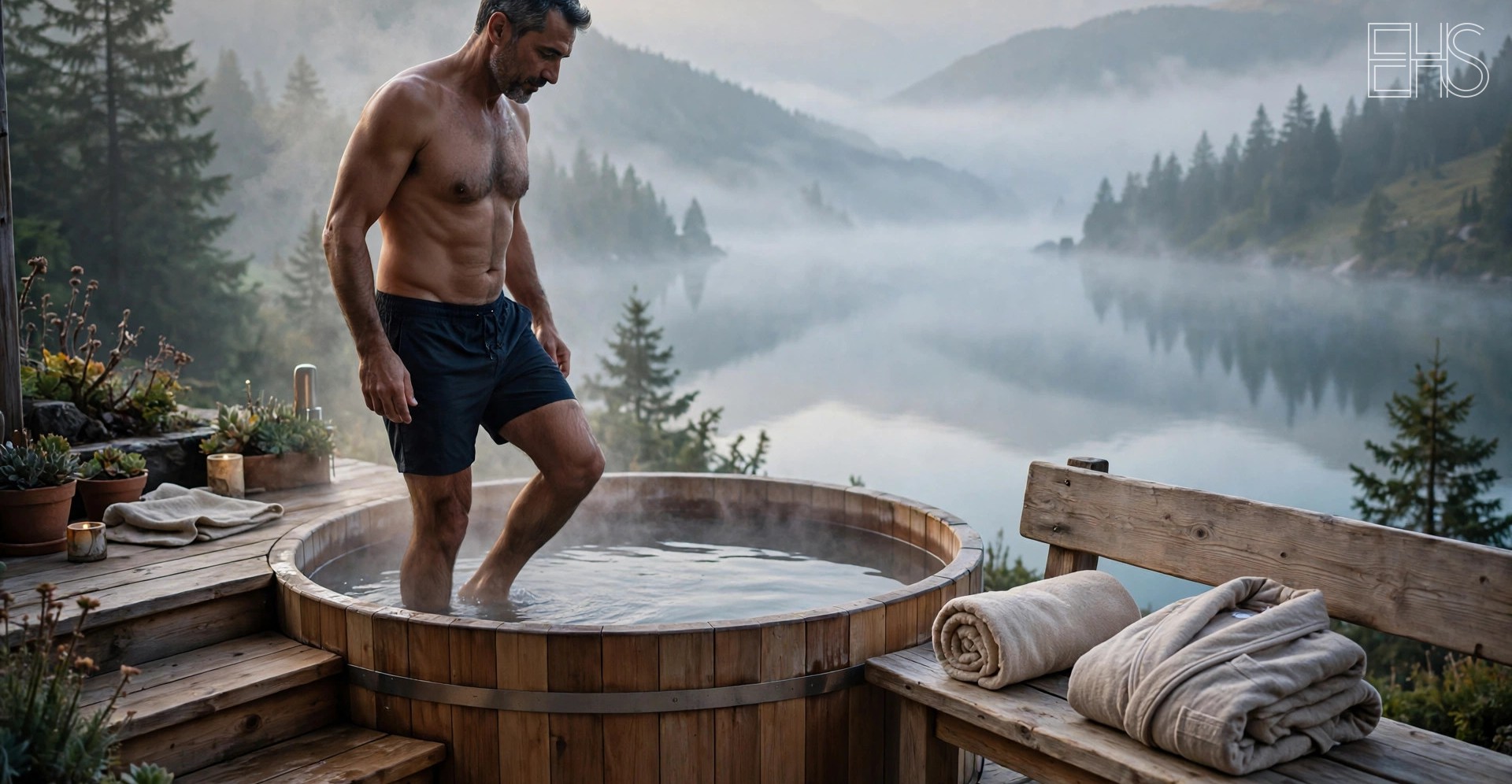
Entry. Enter feet first and slowly, pausing at the waist before going deeper. Keep your head above water at all times; the gasp reflex makes head dunking the riskiest move in the book. Focus on long, slow exhales during the first 60 to 90 seconds, when the shock response peaks. If your breathing will not settle, get out.
During. Stay within the time you set; shorter than planned is always fine. Exit signals: shivering that will not ease, numbness turning to pain, dizziness, nausea, or any chest discomfort. Any one of them ends the session immediately, no debate, no finishing the timer.
After. Exit carefully; wet, cold feet on hard surfaces are a slip hazard. Warm up gradually rather than jumping into a very hot shower. A warm shower, dry clothes, and something warm to drink are the standard recovery. If you feel faint, sit until it passes.
The alone rule. Do not plunge alone; it is the simplest safety measure in this entire guide. If anything goes wrong in cold water, the difference between a story and an emergency is a person standing there.
First-Timer Progression: A Conservative Ramp
New plungers commonly start too cold and stay too long. A gentler ramp teaches you what your responses look like:
| Week | Water temperature | Session length | Notes |
|---|---|---|---|
| 1 | 55 to 59F (13 to 15C) | 1 to 2 minutes | Focus on calm breathing |
| 2 | 50 to 55F (10 to 13C) | 2 to 3 minutes | Add time before adding cold |
| 3 | 50 to 55F (10 to 13C) | 3 to 5 minutes | Past 5 minutes: risk up, benefit unclear |
| 4+ | 45 to 50F (7 to 10C), if desired | 3 to 5 minutes | Colder is preference, not evidence |
Below about 40F (4C) is experienced-practitioner territory with diminishing returns and rising risk. Cold showers or contrast sessions are reasonable ways to build tolerance before a full tub routine; our contrast therapy protocols walk through the structure.
Equipment Choices Change the Safety Equation
Stable temperature, clean water, and easy entry and exit are delivered very differently across setups.
| Setup | Temperature control | Water sanitation | Typical price range |
|---|---|---|---|
| Purpose-built chilled tub | Precise, holds setpoint | Built-in filtration and ozone/UV on better models | Around $3,000 to $6,000+ for quality units; verify current rates |
| Inflatable plunge tub with ice | Drifts warmer over the session | Manual: chemicals or frequent changes | Around $100 to $500; verify current rates |
| Stock tank or barrel with ice | Drifts, uneven cold spots | Manual | Around $150 to $400 plus ice; verify current rates |
| Chest freezer conversion | Can get dangerously cold, uneven | Manual, often poor | Around $300 to $800 to convert; verify current rates |
Purpose-built tubs win on safety for three boring reasons: the temperature stays where you set it, the water stays cleaner, and the steps and covers are designed for wet humans. Chest freezer conversions are the setup most often involved in the worst stories: near-freezing water, sharp internal edges, and lids that can be hard to push open from inside. Our choosing guide covers sizing and features, and the buyers guide compares current models with hedged pricing.
Clean Water Is Safety, Not Just Comfort
Untreated plunge water grows things you do not want to soak in: skin and ear infections and stomach bugs from accidental ingestion are documented outcomes of poorly maintained water, and the risk climbs when multiple people share the tub. Keep the water covered when not in use, shower before getting in, test and treat it regularly, and change it on a schedule rather than when it looks cloudy. Our dedicated water care guide covers filtration, sanitizers, and maintenance schedules in detail.
Red Flags: Marketing That Should Make You Pause
Be skeptical of any brand or influencer promising specific health outcomes, recovery timelines, or mood transformations; the honest science is far more modest. Be equally wary of challenges that frame extreme cold or extreme duration as a badge of seriousness. A product page that never mentions contraindications, water care, or exit safety is telling you what it values, and any advice suggesting everyone is a candidate regardless of health status deserves to be ignored.
Frequently Asked Questions
Can I plunge every day, or should I take rest days?
Daily plunging is common among enthusiasts, and nothing in the research suggests a moderate daily session is inherently unsafe for a healthy adult. What matters more than frequency is dose: short sessions at moderate temperatures, with attention to how you feel afterward. If you notice persistent fatigue or dread before sessions, cut back. Frequency is adjustable, not a streak to protect.
Is it safe to plunge after a sauna?
Contrast sessions are popular and generally well tolerated by healthy adults, but alternating extremes stresses the cardiovascular system more than either one alone. Keep both exposures moderate and hydrate between rounds. People with cardiovascular risk factors should be especially conservative, since the swing from heat-dilated to cold-constricted vessels is the kind of rapid change compromised circulation handles poorly.
What should I do if I feel panicky during a plunge?
Panic is the cold shock response overwhelming your coping, and it happens to beginners more often than anyone admits. Slow your exhales deliberately and stay still. If calm breathing does not return within a minute or so, exit the tub.
Are ice baths at a spa or gym safer than plunging at home?
Commercially maintained tubs usually have better sanitation and a staff member nearby, which are genuine advantages. But shared water means hygiene depends entirely on the venue's maintenance, and crowded events can pressure you to stay in longer than planned. Home plunging gives you control over temperature, duration, and cleanliness. The protocol matters more than the venue.
How cold is too cold for a home plunge?
For most people, anything below about 50F (10C) is colder than necessary, and water approaching freezing adds risk without researched benefit. Beginners should stay at 55 to 59F (13 to 15C) until short sessions feel easy. Very cold water accelerates the cold shock response and makes an orderly exit harder. If your setup cannot hold a moderate temperature, shorter sessions are the compensation, not colder ones.
Should children or teenagers cold plunge?
There is very little safety data for young people, and children cool faster than adults because of their higher surface-area-to-mass ratio, which makes hypothermia a bigger concern. Teenagers in organized sports sometimes plunge in supervised settings, but that is not a model for unsupervised home use. Curious younger family members are better served by cool showers with an adult present.
This article is for informational purposes only and is not medical advice. Cold immersion is not for everyone. If you have any health condition, consider speaking with a qualified professional before plunging.