A cold shower costs nothing and takes three minutes. A cold plunge setup costs hundreds to thousands of dollars and occupies a permanent corner of a garage or garden. The marketing suggests they do the same thing at different scales. The physics, the physiology, and the research record say something more interesting: they are different exposures that happen to feel similar for the first thirty seconds.
One note before the details: cold water exposure is not for everyone. Ease in gradually, keep early sessions short, and skip the days you feel unwell.
Key takeaways - Immersion cools the body measurably faster than showering, because full-body contact with cold water moves heat away far more efficiently than intermittent spray. - Nearly all published research on cold water used immersion (tubs, baths, winter swimming), so the evidence for tubs cannot be assumed to apply to showers. - A cold shower still delivers the alertness response and is a low-commitment way to test the habit. - A plunge tub earns its price when you want consistent temperature, timed sessions, and a ritual that survives winter. - Months of cold showers is the most useful experiment before spending on a tub.
The One Difference That Actually Matters
A shower wets you. A plunge surrounds you. That distinction drives nearly everything else.
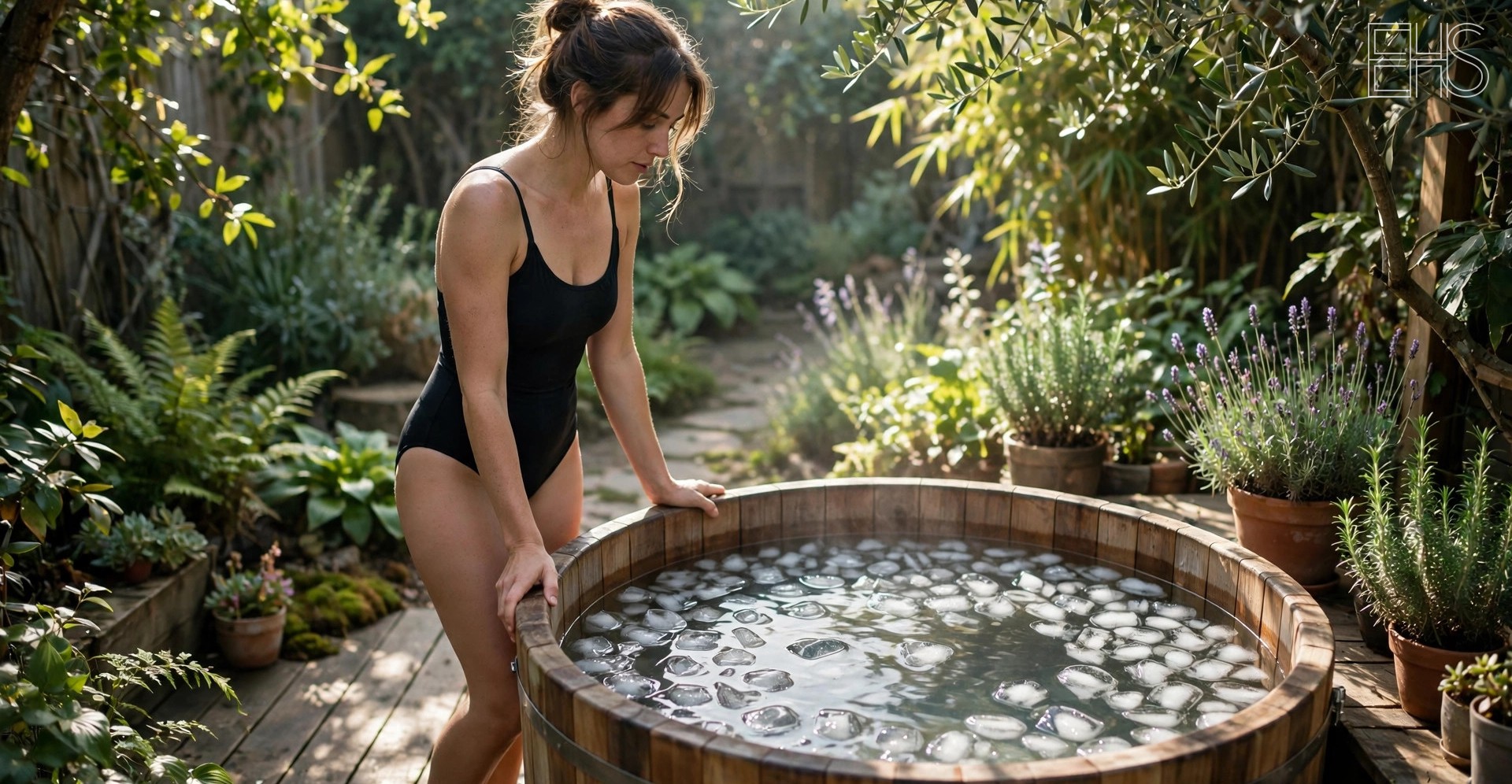
In a tub, cold water touches almost the entire skin surface at once and stays there. Water conducts heat away roughly twenty-five times faster than air, cold receptors across the torso and limbs fire simultaneously, and core temperature begins its slow descent.
A shower delivers cold water to patches of skin in rotation: the stream hits your shoulders, you turn, it hits your back, and between bursts, exposed skin meets warm bathroom air. The subjective sensation is intense, because cold receptors fire hard when the stream first lands, but the total heat removed is far smaller than immersion removes.
In a published review of personal cooling strategies, whole-body water immersion at 15 to 25°C cooled core temperature at roughly 0.13°C per minute, the fastest rate of any practical method studied. A separate study testing cold-shower cooling found it helped compared with doing nothing, but judged its cooling rate unacceptable next to the cold-water immersion standard.
There is a second, subtler difference. Immersion applies hydrostatic pressure to the whole submerged body, the gentle squeeze of water you feel around your chest. Researchers note that immersion effects include this pressure component, which showering lacks entirely. A shower and a tub are not the same stimulus with different volumes of water. They are different stimuli.
What the Studies Tested (Mostly Tubs)
Almost every study of cold water exposure used immersion: tubs, baths, winter swimming, laboratory limb immersion. Our evidence review of cold plunge benefits covers the record, but the headline matters here: the largest synthesis to date, a 2025 PLOS ONE meta-analysis of 11 studies and 3,177 participants, included only chest-level immersion, and found reduced perceived stress about 12 hours after a session, small sleep improvements, and no pooled effect on mood or immune markers.
None of that was measured after a cold shower. Shower-specific trials are rare and mostly measure cooling after overheating, not the alertness effects people actually chase. That does not mean showers do nothing. It means anyone who claims the evidence supports cold showers is borrowing findings from a different practice.
The Honest Case for the Cold Shower
Showers have genuine advantages that have nothing to do with matching a tub.
It is free and immediate. No delivery, no corner of the house. You can start tonight.
It tests the habit cheaply. Two weeks of cold showers answers the real question before you spend anything: do you enjoy cold exposure, or just the idea of it? Enthusiasm that survives a January shower tends to survive tub ownership too.
It delivers the alertness response. The awake, focused feeling after a plunge is a response to cold on skin and forced controlled breathing, not water depth. A genuinely cold shower, face and chest included, triggers a version of the same response. Studies report norepinephrine rising 200 to 300% after cold immersion; whether a shower produces the same magnitude is unmeasured, but the wakefulness is real either way.
It pairs naturally with heat. Our contrast therapy protocols work with any hot and cold sequence, and a hot shower followed by cold shower cycles is the most accessible contrast setup there is. The limits are equally honest: temperature is whatever the tap gives you, and consistency is hard to maintain because every shower feels improvised.
What the Tub Adds
A plunge tub is not a more expensive shower. It is a different category of tool, and its advantages are about control and ritual rather than intensity.
Temperature you can hold. A chiller-paired tub sits at a set temperature every session, turning cold exposure from an event into a practice. Ice-cooled tubs drift with the weather but within a narrower band than tap water. Our ice versus chiller comparison runs the ownership math for both cooling routes.
Stillness. Immersion lets you sit quietly with the sensation instead of fidgeting under a stream. Close your eyes, slow the exhale, and let the first ninety seconds pass without moving. That stillness is what long-term plungers value most, and a shower cannot reproduce it.
Consistency through seasons. Tap water in July is a different substance than tap water in January. A tub, especially a chilled one, removes the calendar from the equation. That consistency is what turns cold exposure from a summer experiment into a repeatable practice.
The honest costs. A tub also adds real burdens: water care, the energy draw of a chiller, winterization outdoors, and a permanent footprint. Our guide to choosing a cold plunge walks through placement, sizing, and the commitment questions before you buy.
Cold Plunge vs. Cold Shower, Side by Side
The table below compares the two practices across the dimensions that matter for a home routine, drawn from typical equipment specs and the cooling-rate research above.
| Dimension | Cold shower | Cold plunge tub |
|---|---|---|
| Heat removal | Low; intermittent skin contact | High; full-surface, sustained contact |
| Temperature control | Whatever the tap delivers | Set and held (chiller) or managed (ice) |
| Session format | Standing, active, 1 to 3 minutes | Seated, still, 2 to 5 minutes |
| Hydrostatic pressure | None | Yes; the water's gentle squeeze |
| Research base | Thin; mostly post-overheating cooling studies | Moderate; most cold-water research used immersion |
| Setup cost | Nothing beyond the existing shower | From around a few hundred dollars (ice-cooled) to several thousand (chiller-paired); verify current rates before buying |
| Ongoing effort | Zero | Water care, ice or electricity, seasonal maintenance |
| Winter reliability | Tap water runs colder, sessions harder to face | Chiller-paired tubs hold temperature year-round |
The shower wins on every practical dimension except the ones that determine the experience: stillness, consistency, and the full-surface exposure the research actually studied.
The Cost Question, Answered Honestly
The tub's case has to survive the numbers. Prices are approximate; verify current rates before buying, since the market reprices frequently.
| Tier | Approximate cost | Recurring cost | Best for |
|---|---|---|---|
| Cold showers only | $0 | $0 | Testing the habit for a month or two |
| Stock tank or barrel with ice | From around $100 to $300 | Bagged ice, water changes | The committed budget route; real immersion, real chores |
| Dedicated tub with ice | From around $800 to $2,000 | Ice, water care supplies | Serious practice without electricity needs |
| Dedicated tub with chiller | From around $3,500 to $15,000 | Electricity, filters, sanitizer | Set-and-forget temperature, year-round use |
The meaningful comparison is the first row against the second. If cold showers have not become a habit you look forward to after a month, skip the tub: spending money does not manufacture motivation. If they have, a simple ice tub is the logical next experiment, not the chiller-paired flagship. Upgrade when the ice routine, not the cold, becomes the limiting factor.
Getting More From a Cold Shower
If you are staying with the shower for now, pick one routine and repeat it: start warm and end cold, or go straight in cold. Aim the cold at your face and chest first, then down the back. Two to three minutes is plenty; twenty slow exhales is a complete session. Track whether you look forward to it by week three. That answer predicts tub ownership better than any buying guide.
The Verdict: When the Tub Earns Its Place
Buy the tub when cold exposure is already a protected practice and the shower's specific limits are what stand in your way: stillness, consistent temperature, winter reliability. Keep the shower when you are experimenting, when budget or space is tight, or when the idea still feels like a dare. And if you are buying the tub to become the kind of person who plunges, save your money. Become that person in the shower first. The tub will still be there in March.
Frequently Asked Questions
Can a cold shower replace a cold plunge entirely?
For the alertness effect, largely yes: both trigger the cold-water response that leaves people feeling awake and focused. For the effects reported in studies, no, because those studies tested immersion, not showers. Treat them as overlapping but distinct practices, not interchangeable versions of one thing.
How cold should the water be for a cold shower to count?
Cold enough that you want to get out: that is the honest threshold. Winter tap water usually runs in the 50s Fahrenheit, sometimes lower, and three minutes there is a genuine cold exposure. In summer, tap water can run warm enough that a "cold" shower barely drops below body comfort; only a tub or a late-evening shower holds a real chill then.
Is three minutes under a cold shower as good as three minutes in a tub?
They are different exposures, so "as good" is the wrong comparison. Three minutes in a tub at the low 50s removes far more heat and holds the full body under continuous cold; a shower is intense on whichever patch is wet and mild everywhere else. If your goal is the afterglow and the habit, the shower does the job. If your goal is the effects measured in immersion studies, only immersion delivers the studied stimulus.
Why do plunge tubs cost so much if cold water is cold water?
The water is the cheap part. What you are buying is control: temperature held every session, filtration that keeps water usable for weeks, insulation, and a structure rated for hundreds of pounds safely. A $150 stock tank proves the point: it holds cold water fine, and what it lacks is everything around the water that makes a tub effortless.
Should I start with cold showers before buying a tub?
Yes. They are the cheapest test of whether the habit survives February, and a month costs nothing. Our guide to choosing a cold plunge puts the habit test first in its decision framework, and our safety guide covers the precautions for any cold exposure, shower or tub.
Can I alternate between showers and a tub?
Absolutely, and many people do. The tub is the main practice; the shower is the travel version, the morning shortcut, or the contrast partner after a hot bath. Because the two exposures differ in intensity, alternating keeps the habit alive on days when a full plunge session feels like too much logistics. Consistency across months matters more than the perfection of any single session.
This article is for informational purposes only and does not provide medical advice or guaranteed outcomes.