The first cold plunge is mostly a negotiation with yourself. The water looks ordinary, the tub is only waist deep, and yet standing beside it in swimwear on a cold morning feels like a much bigger decision than the thermometer suggests. Most beginners who quit do so in the first two weeks, because they went in too cold, stayed in too long, and had no plan. This guide is that plan.
Our cold plunge safety guide covers who should sit cold immersion out entirely. One caution first: cold immersion is not for everyone. Start gently, keep the first sessions short, and sit out any day you feel unwell.
Key takeaways - Start warmer and shorter than you think: around 15C (59F) for 30 to 60 seconds. - Change one variable at a time: colder water, longer time, or more sessions, never all three. - Breathing is the skill: slow exhales matter more than minutes on the clock. - A thermometer and a timer turn guessing into a protocol.
Before Your First Plunge
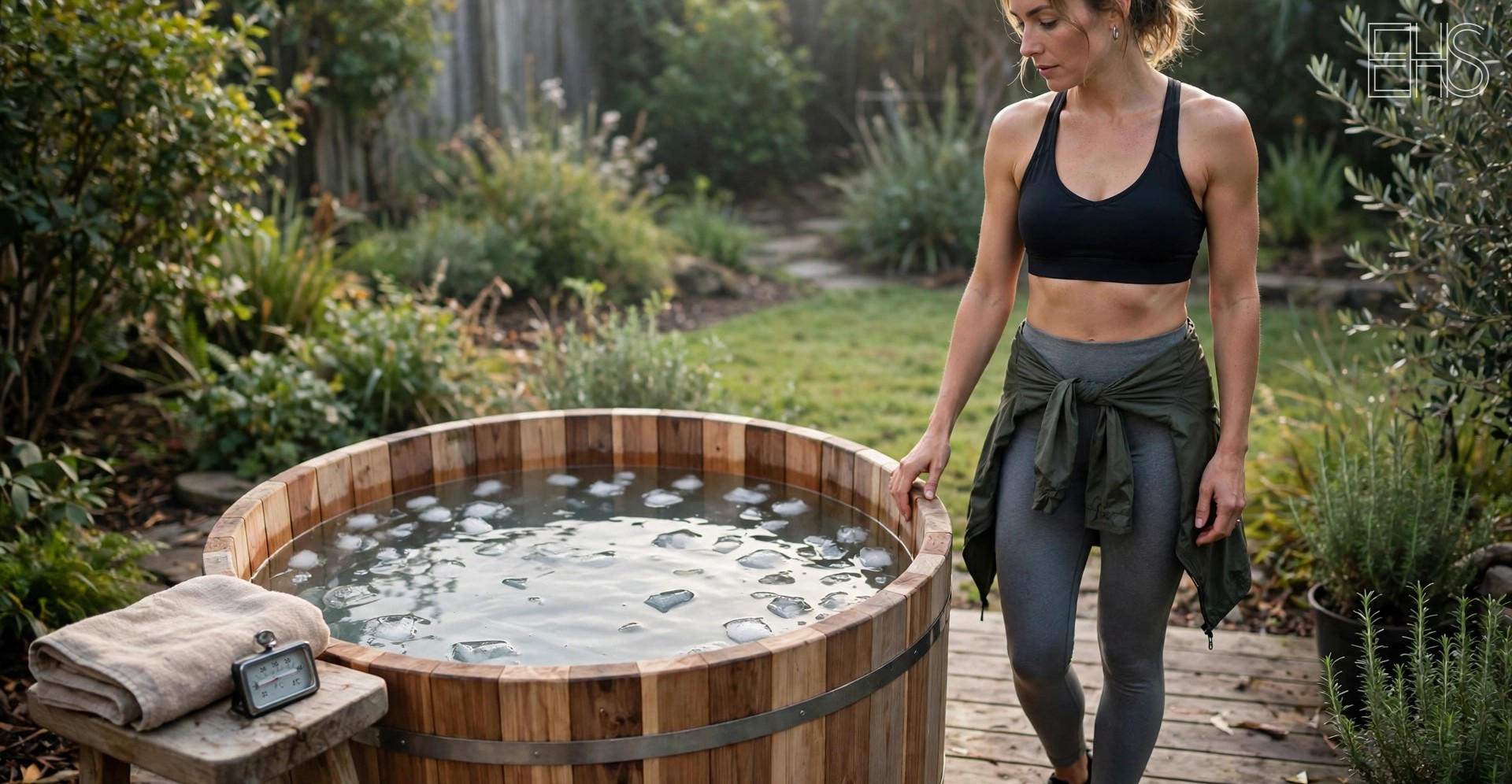
A good first session is mostly preparation: a tub deep enough to cover you to the shoulders while seated, a thermometer, a timer you can see or hear from the water, a towel and warm layers within arm's reach, and something warm to drink afterwards. Lay everything out before you get in.
A beginner starting point is 15C to 16C (59F to 61F), which feels properly cold without the shock of near-freezing water. Ice from the freezer or bagged ice gets you there; a chiller holds the temperature steady between sessions. Our guide to choosing a cold plunge compares ice, inflatable tubs, and chilled systems.
For a chilled setup that holds a steady temperature while you learn, the Renu Cold Stoic 2.0 (affiliate link) pairs an integrated chiller with filtration and ozone. List pricing starts around $9,499; verify current rates before buying.
Keep a regular time of day for the month. Morning sessions suit most beginners because the water is coldest overnight. Late evening sessions can leave some people wide awake, so keep plunges a few hours before bed. Tell someone in the house, and keep your phone within reach.
The First-Month Protocol
The table below is the whole plan: each week changes one thing, and the columns show the target for the end of that week.
| Week | Water temperature | Time in the water | Sessions per week | What to notice |
|---|---|---|---|---|
| 1 | 15C to 16C (59F to 61F) | 30 to 60 seconds | 2 | Breathing settling within the first minute |
| 2 | 13C to 15C (55F to 59F) | 60 to 90 seconds | 2 to 3 | Shivering after, not during, the plunge |
| 3 | 11C to 13C (52F to 55F) | 90 seconds to 2 minutes | 3 | Hands and feet adapting faster |
| 4 | 10C to 12C (50F to 54F) | 2 to 3 minutes | 3 to 4 | Calm exit, steady breathing |
Week one is about the entry, not the clock. Lower yourself in slowly and focus on exhaling. Thirty seconds counts; sixty seconds is a strong first session. Get out, dry off, and move around gently. The continued cooling you feel afterwards, the afterdrop, is normal.
Week two drops the temperature a couple of degrees and adds a third session if the first week felt manageable. The gasp reflex should be smaller by now. If it is not, stay at week one temperatures for another week.
Week three is where most beginners notice the change: the same water that felt shocking in week one now feels cold but workable, and the first minute passes faster. Stop watching the timer and notice how you feel afterwards: steadier energy, easier rewarming, less dread.
Week four brings you to the range most regular plungers settle in: 10C to 12C (50F to 54F) for two to three minutes, three or four times a week. That is a complete beginner protocol and a fine long-term routine.
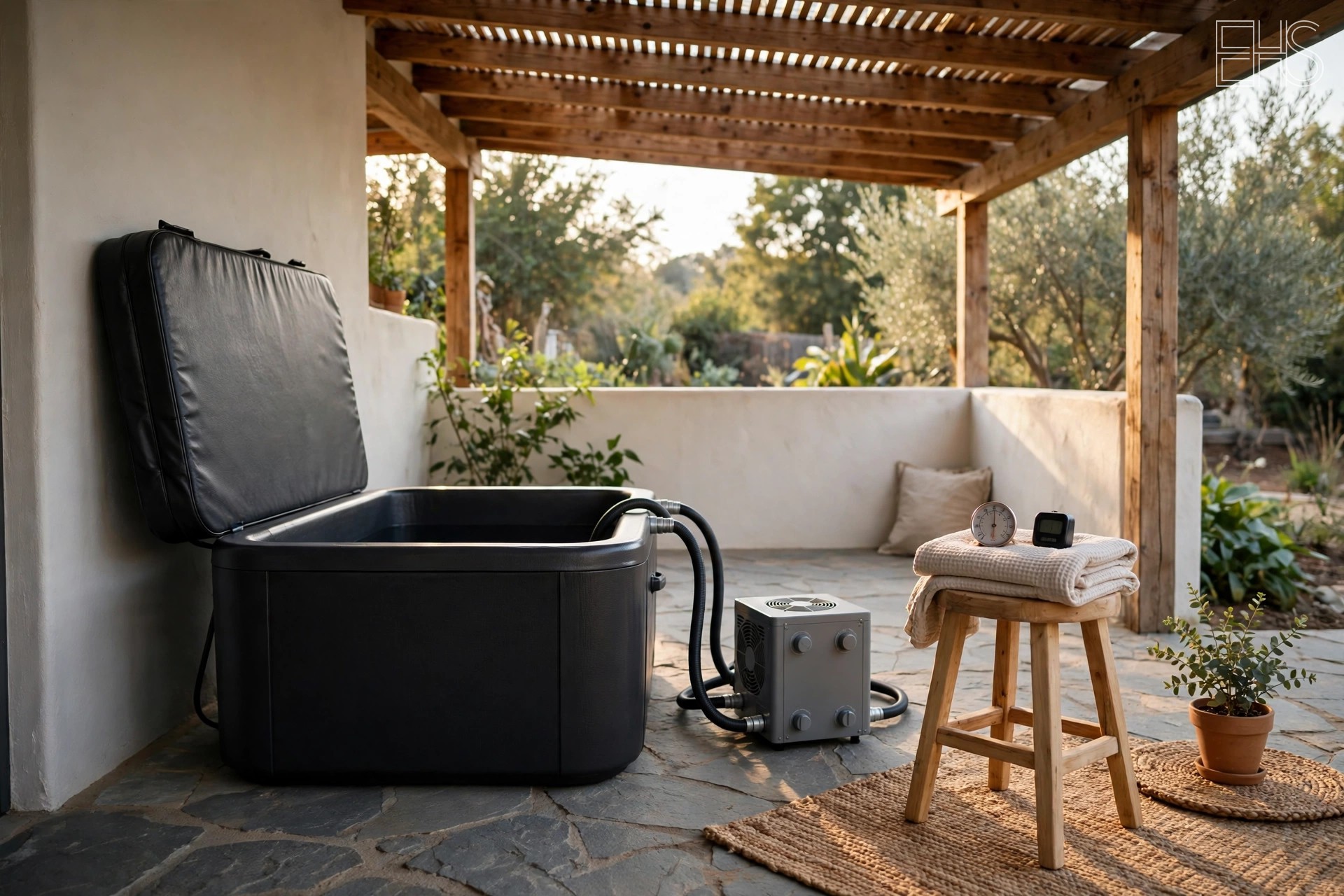
Illustration by EverHealthSpan
Breathing and the First Sixty Seconds
The first minute decides the session. Cold water triggers a gasp reflex and a burst of fast breathing, and the skill of plunging is mostly letting that pass. Before you get in, take three slow breaths, exhaling longer than you inhale. Step in on an exhale. Once seated, breathe out slowly through pursed lips and let the inhale take care of itself.
Do not hyperventilate before getting in. Fast breathing beforehand can leave you lightheaded as the cold hits. Do not hold your breath under water, and do not put your head under in the first month. If your breathing has not settled by ninety seconds, the water is too cold for today.
Counting helps: count ten slow exhales and the session is often over before the counting is. Or pick a fixed point, the fence, the trees, the far wall, and keep your eyes there. The adjustment arrives, usually within ninety seconds, and it feels like the water going quiet.
Choosing Your Setup
The setup you start with shapes how easy the first month feels. The table below compares the common options on cost, temperature control, and effort. Prices are approximate and vary by brand and region, so check the current rate before buying.
| Setup | Typical cost | Temperature control | Effort per session | Best for |
|---|---|---|---|---|
| Ice and a stock tank or barrel | Low, plus ice | Manual, drifts warmer | High, hauling and melting ice | Testing the habit before spending |
| Inflatable tub with ice | A few hundred dollars | Manual, drifts warmer | Medium, ice plus setup | Small spaces and renters |
| Chilled tub, e.g. Renu Vero (affiliate link) | From around $7,200 | Thermostat steady | Low, set and step in | A daily routine without ice runs |
| Cold shower | No extra cost | Limited, rarely below 15C | None | A zero-commitment trial |
An ice setup is the honest way to test the habit before spending serious money: a stock tank, a barrel, or an inflatable tub plus bagged ice will get you to 15C. Our inflatable tub guide covers which designs hold up. The tradeoff is effort: every session needs ice, and the temperature drifts warmer while you are in the water.
A chilled tub removes that friction, which is why most people who plunge three or more times a week end up with one: the water is the same temperature every session and the only job is stepping in. Our premium brands comparison lists the leading chilled systems with their specifications and three-year costs. A cold shower is a fair trial of the sensation but a poor trial of the protocol, since most showers bottom out around 15C and you cannot sit in one. Our cold plunge versus cold shower comparison runs the full head-to-head.
Whatever you choose, keep the water clean: a tub that sits unused for a week grows things. Our maintenance schedule sets out the routine that keeps a home plunge clear.
Common Beginner Mistakes
The first mistake is going too cold too fast. Near-freezing water on day one teaches your nervous system that plunging is an emergency, and the dread that follows is harder to undo. Start at 15C and let the protocol do the work. The second mistake is chasing duration. Two minutes at 12C is a complete session; ten minutes is not five times better, it is just colder for longer, with more shivering afterwards and no clear added benefit.
The third mistake is plunging on an empty stomach or straight after a heavy meal; a light snack an hour before is the comfortable middle ground. The fourth is treating the plunge as a performance: filming it, timing it against a friend, or pushing through discomfort to hit a number. The fifth is skipping the rewarming: dry off promptly, put on warm layers, and move around, because a short walk does more than a hot shower in the first ten minutes.
When to Skip a Session
Some days are not plunge days. Skip the session if you feel unwell, if you are running a fever, if you slept badly, or if you have been drinking alcohol. Skip it if the water is far below your current week, or if you feel anxious rather than merely reluctant: reluctance fades in the first minute, anxiety does not. After a hard training day, a shorter and warmer session beats skipping entirely.
What Week Five Looks Like
After four weeks you have a routine. Most regular plungers settle at three sessions a week, two to three minutes, in water between 10C and 12C, in whatever slot they actually keep.
If you want to keep progressing, change one variable and hold it for two weeks: a degree colder, thirty seconds longer, or one extra session a week. The evidence base is still developing: a 2025 systematic review and meta-analysis (Cain and colleagues, 11 studies, 3,177 participants) reported short-term mood and stress associations while noting that longer-term effects remain uncertain.
Frequently Asked Questions
How cold should the water be for my first plunge?
Start at 15C to 16C (59F to 61F), which feels properly cold without the sharp shock of near-freezing water. That range lets you practice the breathing and the entry, the real skills of the first week. Drop the temperature by one or two degrees per week, only when the current temperature feels manageable.
How long should a beginner stay in a cold plunge?
Thirty to sixty seconds is a complete first session, and ninety seconds is a strong second-week target. By week four, two to three minutes at 10C to 12C is a solid routine. Set a timer before you get in, and treat the timer as the authority on when to climb out.
Is it better to plunge in the morning or the evening?
Morning suits most beginners: the water is at its coldest overnight. Evening sessions can leave some people wide awake, so keep plunges a few hours before bed. The best time is the one you repeat: a morning slot you keep beats an ideal evening slot you skip twice a week.
Do I need a chiller, or is ice enough to start?
Ice is enough to start: a stock tank or inflatable tub with bagged ice will reach beginner temperatures. A chiller earns its place once you plunge three or more times a week. As a chilled example, the Renu Cold Stoic 3.0 (affiliate link) offers dual-temperature control with dual-stage filtration and ozone, with list pricing from around $11,399; verify current rates before buying.
Should I plunge alone?
For the first few sessions, have someone nearby or at least aware of what you are doing and when you expect to be out. Cold water can surprise even confident swimmers. Once the routine is familiar, many people plunge alone without trouble, but keep your phone within reach. If you ever feel dizzy, confused, or unable to control your breathing, get out immediately and warm up.
What should I do right after getting out?
Dry off promptly, put on warm layers, and move around gently for ten minutes. A short walk generates warmth from inside, which works better than standing still in wet swimwear. Drink something warm, and save the hot shower for later. Expect a normal afterdrop, so dress warmer than the air suggests.
This article is for informational purposes only and does not provide medical advice or guaranteed outcomes.