Premium cold plunge systems start where basic tubs stop. The tub itself is only half the purchase. The other half is the chiller that holds temperature day after day, the filtration that keeps water clear between sessions, and the build quality that decides whether the system still runs well in year three. This guide compares the brands that dominate the premium end of the market on the specifications that change ownership.
One note before the details: cold immersion is not for everyone. Start gradually, keep early sessions brief, and sit out on days you feel unwell.
Key takeaways - A premium system is defined by its chiller and filtration, not the tub alone: integrated cooling and real filtration separate the top tier from ice-cooled tubs. - Temperature stability matters more than the headline low: most premium chillers hold water in the high 30s to low 40s Fahrenheit and recover quickly after a session. - Filtration design decides maintenance effort: ozone and UV support plus a fine filter stretch the interval between water changes far beyond a bare tub with a pump. - Materials set the lifespan: acrylic and fiberglass shells, stainless steel, and cedar cladding age differently, and each suits a different placement. - Total cost runs past the sticker price: electricity, filters, and water changes add up, so compare three-year ownership cost, not just the purchase price. - Verify current rates and specifications before buying: premium brands revise models and prices often.
What Premium Actually Buys
Three things separate a premium system from a mid-range tub with a bag of ice. First, an integrated chiller that cools to a set temperature and holds it, so the water is ready whenever you are rather than only after an ice run. Second, filtration that runs on a schedule: a pump circulating water through a filter, usually with ozone or UV support, which keeps water clear for weeks instead of days. Third, a tub built to live with water permanently in it: sealed seams, a rigid shell, and a cover that actually insulates. App control, a heating mode for contrast sessions, and quieter compressors do not change the cold exposure itself, but they change whether the system gets used daily. Our guide to choosing a cold plunge covers whether a permanent system fits your routine.
The Brands at a Glance
The table below sets out the premium systems buyers compare most often, using typical listed prices and manufacturer specifications.
| System | Tub build | Cooling | Filtration | Heating option | Typical listed price |
|---|---|---|---|---|---|
| Plunge All-In | Acrylic and fiberglass shell | Integrated chiller | Fine filter plus ozone | Yes, into the low 100s Fahrenheit | From around $7,000 to $9,000 |
| Renu Cold Stoic (affiliate link) | Stainless steel tub | External chiller unit | Fine filter plus ozone and UV | On selected models | From around $8,000 to $11,000 |
| Sun Home Cold Plunge Pro | Cedar-clad insulated tub | Integrated chiller | Fine filter plus UV | Yes | From around $12,000 to $14,000 |
| Polar Monkeys barrel systems | Insulated barrel tub | External chiller unit | Fine filter | On selected models | From around $4,000 to $6,000 |
| Nordik Recovery systems | Insulated tub with lid | External chiller unit | Fine filter plus UV | No | From around $3,500 to $5,500 |
Prices are approximate and move with promotions, seasons, and model revisions. As always, verify current rates before buying.
Plunge: The All-In-One Benchmark
Plunge built its name on the All-In, a single unit that combines tub, chiller, and filtration in one shell. The appeal is simplicity: one delivery, one power connection, one app. The All-In chills into the high 30s Fahrenheit and heats into the low 100s. The tradeoff is integration: when chiller, filter, and tub share one housing, a fault in one part can sideline the whole system. Our chiller sizing guide explains how chiller capacity relates to tub volume and ambient temperature.
Renu: Stainless Steel and Component Thinking
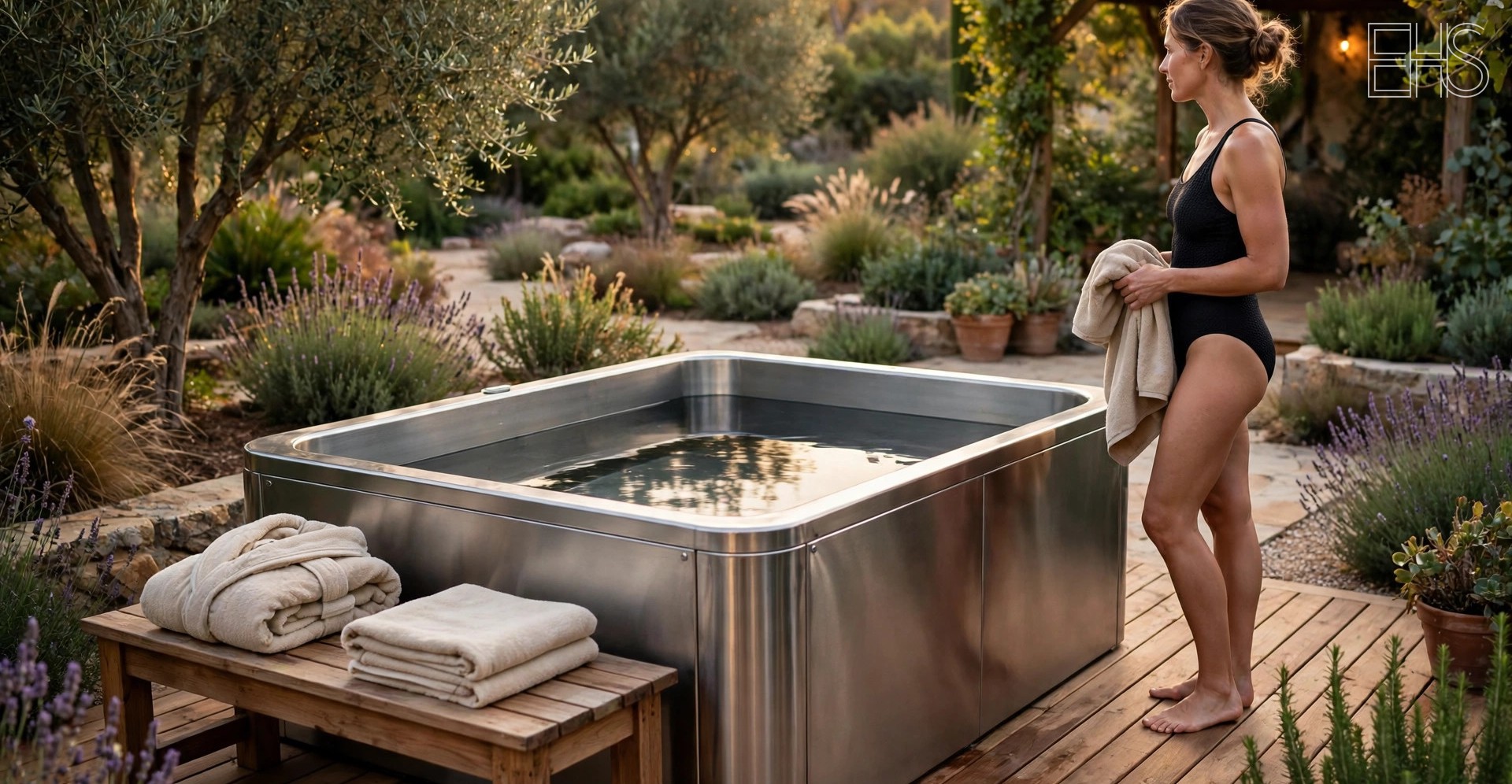
Renu Therapy takes the opposite approach: a stainless steel tub paired with a separate chiller unit. Stainless steel resists staining and odor retention better than plastic shells, and it tolerates aggressive cleaning without surface wear. The separate chiller can be placed out of sight and serviced or replaced without moving the tub. The cost sits at the upper end of the premium range, typically listed from around $8,000 to $11,000, and the look is industrial rather than spa-like. Renu also appears across our cold plunge tub roundup, where its range anchors the top price tier. Current Cold Stoic models and pricing are on Renu's site (see the Cold Stoic (affiliate link)).
Sun Home: The Cedar-Clad Flagship
Sun Home's Cold Plunge Pro is the most expensive system in this comparison, typically listed from around $12,000 to $14,000, and the price buys a different proposition: a cedar-clad, heavily insulated tub designed to sit in a garden or wellness room without looking like equipment. The integrated chiller and UV-supported filtration match the premium standard, and the heating mode covers contrast use. In cold climates the insulation genuinely helps, since a well-insulated tub holds temperature with less chiller cycling, which shows up on electricity use over years. In mild climates the same money buys a mid-range system plus years of filters and electricity.
Polar Monkeys and Nordik Recovery: The Accessible Premium
Not every premium system costs five figures. Polar Monkeys pairs an insulated barrel-style tub with an external chiller, typically listed from around $4,000 to $6,000, and Nordik Recovery offers a similar component formula from around $3,500 to $5,500. Both deliver the two things that define the tier, set-and-hold temperature plus real filtration, at roughly half the price of the flagship all-in-one systems. What gives way is finish and feature depth: barrel tubs read as functional equipment, app control is simpler or absent, and heating modes appear only on selected configurations. The materials guide compares how barrel, acrylic, and steel tubs age over time.
The Specifications That Actually Matter
Temperature stability beats headline low temperature. Every premium chiller advertises a low end in the high 30s Fahrenheit, but few owners plunge at the coldest setting. What matters is recovery: how fast the chiller pulls water back to the set temperature after a session warms it, and how steady it holds overnight in summer heat.
Filtration decides your weekly chore list. A fine filter plus ozone or UV support keeps water clear for several weeks of regular use, while a bare pump and coarse filter means cloudy water and frequent changes. Ask about filter micron rating, ozone or UV inclusion, and suggested water-change frequency. Our water care guide details sanitizer and filtration choices.
Footprint and power are practical gates. Premium systems need a level surface rated for the filled weight, often 800 pounds or more, plus a dedicated outdoor-rated power connection. Check the indoor versus outdoor guide if the tub will live inside, since condensation and humidity change the placement math.
Warranty terms reveal manufacturer confidence. Premium brands typically offer limited warranties in the one to five year range, with the chiller and tub often covered on different terms. Read the exclusions: freeze damage, improper winterization, and commercial use are common carve-outs.
Three-Year Ownership Cost
The sticker price understates what a premium system costs. The table below estimates three-year ownership for three tiers, using typical electricity, filter, and water-change assumptions.
| Cost element | Ice-cooled tub | Mid-range chiller system | Flagship all-in-one |
|---|---|---|---|
| Purchase price | From around $1,000 to $1,500 | From around $4,000 to $6,000 | From around $8,000 to $14,000 |
| Ice (if applicable) | Several hundred dollars per year | None | None |
| Electricity | Minimal | A few hundred dollars per year | A few hundred dollars per year |
| Filters and consumables | Modest | Around $100 to $200 per year | Around $100 to $250 per year |
| Three-year total, approximate | Around $2,000 to $3,500 | Around $5,000 to $7,500 | Around $9,000 to $15,500 |
The ice-cooled column is the honest comparison: a premium chiller system pays back part of its premium by eliminating the ice routine, but only for frequent plungers. Our ice versus chiller comparison runs the math by sessions per week.
Which System Fits Which Buyer
Buy the all-in-one if you want one delivery, one app, and a finished look. Buy stainless and separate components if durability and serviceability outrank appearance. Buy cedar-clad if the tub sits somewhere visible and insulation matters for your climate. Buy the accessible premium if your priority is set-and-hold cold water at the lowest price that delivers it. Buy none of them yet if you plunge less than twice a week: an ice-cooled tub answers the habit question for a fraction of the price. Our safety guide covers who should sit out cold immersion entirely.
What to Verify Before Ordering
Premium listings change often, so confirm these specifics against the current product page: exact low-temperature setting and recovery time, filter rating and ozone or UV inclusion, heating range if contrast use matters, filled weight and footprint, power requirements, warranty terms for the chiller separately from the tub, and delivery terms. A short message with the seller resolves most of these in minutes.
Frequently Asked Questions
Should I buy an integrated all-in-one or a separate chiller?
Integrated units offer the cleanest install and a single point of support, which suits buyers who want the system to arrive ready to run. Separate chillers offer serviceability: the chiller can be repaired, replaced, or upgraded without moving the tub, and it can sit out of sight. The tradeoff is a hose run and a second unit to place. Renu's separate-chiller systems are one example of this approach (see the Cold Stoic (affiliate link)).
What should I check about warranty and delivery before buying?
Read the warranty in two parts, since the tub and the chiller are often covered on different terms and for different periods, and note exclusions for freeze damage, improper winterization, and commercial use. Confirm whether delivery is threshold drop-off or white-glove placement, since an 800-pound system is not a one-person carry.
This article is for informational purposes only and does not provide medical advice or guaranteed outcomes.