The heater decides what a sauna session feels like more than the wood, the bench, or the cabin size. It sets how hot the room gets, how fast it gets there, whether steam is possible, and how much work each session asks of you. Three heater types cover nearly every home sauna sold today: electric stone heaters, wood-burning stoves, and infrared panels. The wrong match is the most common reason a sauna ends up unused.
Key takeaways - Electric stone heaters are the most common home choice: consistent heat and steam on demand, for a dedicated 240-volt circuit. - Wood-burning heaters give the hottest, driest-feeling heat and the most hands-on ritual, at the cost of a chimney, firewood, and regular tending. - Infrared panels heat the body directly at lower air temperatures, warm up in about 10 to 20 minutes, and plug into a standard outlet. - Only traditional heaters, electric or wood-burning, make steam when water hits the stones. Infrared cabins stay dry. - Match the heater to the cabin volume, the electrical supply, and how much tending you want to do.
The Three Ways to Make Heat
All three heater types warm a person, but by different routes. An electric heater passes current through elements under a basket of stones. A wood-burning heater burns logs in a firebox, and the flue gases heat a similar stone mass. Infrared panels skip the air almost entirely: they radiate heat straight toward the body.
That difference shapes everything that follows. Traditional heaters, electric and wood-burning alike, heat the air first, so the room runs hot, typically 70 to 100 degrees Celsius, and the air feels dry until water is ladled onto the stones. The burst of steam that follows, known in Finnish tradition as loyly, is the signature sensation of a traditional sauna. Infrared cabins run cooler, typically 40 to 60 degrees Celsius, because the panels do the warming.
Electric Heaters: The Default for a Reason
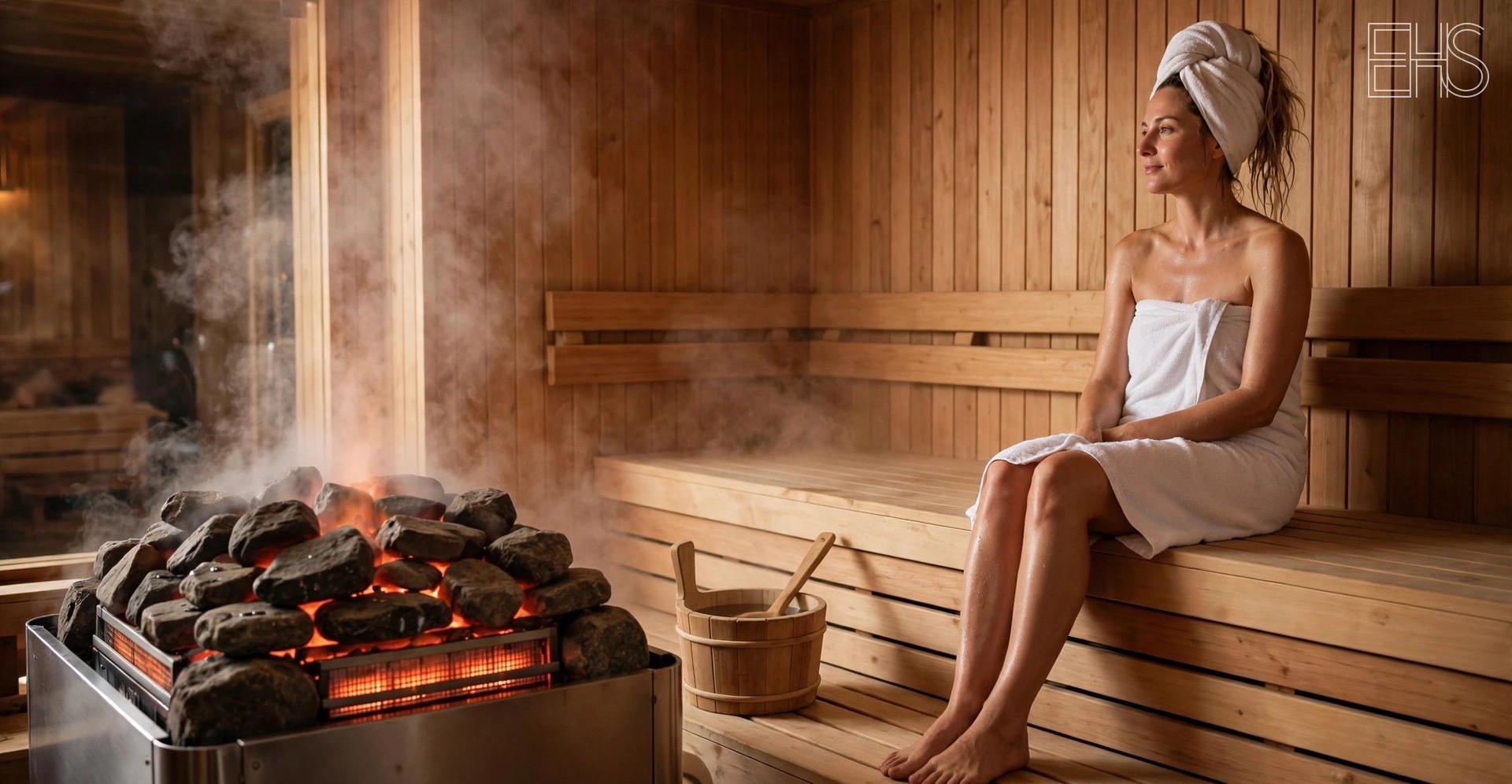
Electric heaters dominate home saunas for a practical reason: they are consistent. Set the thermostat, set the timer, and the room reaches temperature with no further attention. Most home units run from around 4.5 kilowatts for a small two-person cabin to around 9 kilowatts for a four-person cabin, and they need a dedicated 240-volt circuit installed by a qualified electrician. Heat-up time is typically 30 to 45 minutes. A generous stone mass stores heat and releases it as steam when water is ladled on, so a larger stone capacity recovers faster after the door opens.
One traditional indoor cabin built around an electric stone heater is Renu Therapy's Rusticus 2-Person Indoor Sauna (affiliate link), listed from around $5,739, so verify current rates before buying. Its KIP stone heater gives dry heat or steam over the stones. Match the kilowatt rating to the cabin's cubic footage, not its headcount: a heater too small reaches temperature slowly and recovers poorly, while one too large cycles on and off. Our two-person vs. four-person sauna guide explains how air volume drives heater size, and our sauna installation guide covers the electrical work.
Wood-Burning Heaters: The Traditional Choice
Wood-burning heaters are the oldest form of sauna heat, and they still have the most devoted following. A firebox burns split logs, the flue gases heat the stone mass, and the room fills with dry, intense heat. There is no thermostat and no timer: the bather tends the fire, adding a log every 20 to 30 minutes, and judges temperature by feel.
Heat output is the strongest of the three types: a wood heater can push a small cabin past 90 degrees Celsius and hold it there. Heat-up takes longer, typically 45 to 60 minutes or more from a cold start, and no electricity is needed at all. The trade-offs are structural: a chimney through the roof, clearances from combustible surfaces, a non-combustible floor pad, and a supply of dry split firewood stored under cover. Ash needs emptying, the chimney needs periodic cleaning, and smoke rules vary by area, so check local rules before committing. Brands such as Harvia, Narvi, and Kota build wood-burning heaters for home cabins; our Finnish sauna traditions guide covers the bathing sequence they were built around.
Infrared Panels: Heat Without the Hot Air
Infrared cabins work on a different principle from the other two types. Panels mounted on the walls, under the bench, and sometimes behind the calves emit infrared radiation that warms the body directly, while the air stays comparatively cool. Sessions typically run at 40 to 60 degrees Celsius, and most people feel warm within 10 to 15 minutes of switching on. There are no stones, no steam, and no water ladle.
Panel type is the main quality difference. Carbon panels spread heat evenly across a broad surface at lower surface temperatures. Ceramic panels run hotter and more focused. Halogen, or full-spectrum, panels emit a wider range of infrared wavelengths and run the hottest of the three. Judge a cabin by how many surfaces give off heat and where they sit, not by the wattage on the box: panels on the back wall, side walls, and under the bench warm more evenly than panels only behind the sitter. Our infrared sauna buyers guide covers panel layouts, and our low-EMF infrared sauna guide explains what the low-EMF label actually measures. Most infrared cabins draw around 1,750 to 3,600 watts and plug into a standard 120-volt outlet, which is why they are the easiest type to place in an apartment or a spare room.
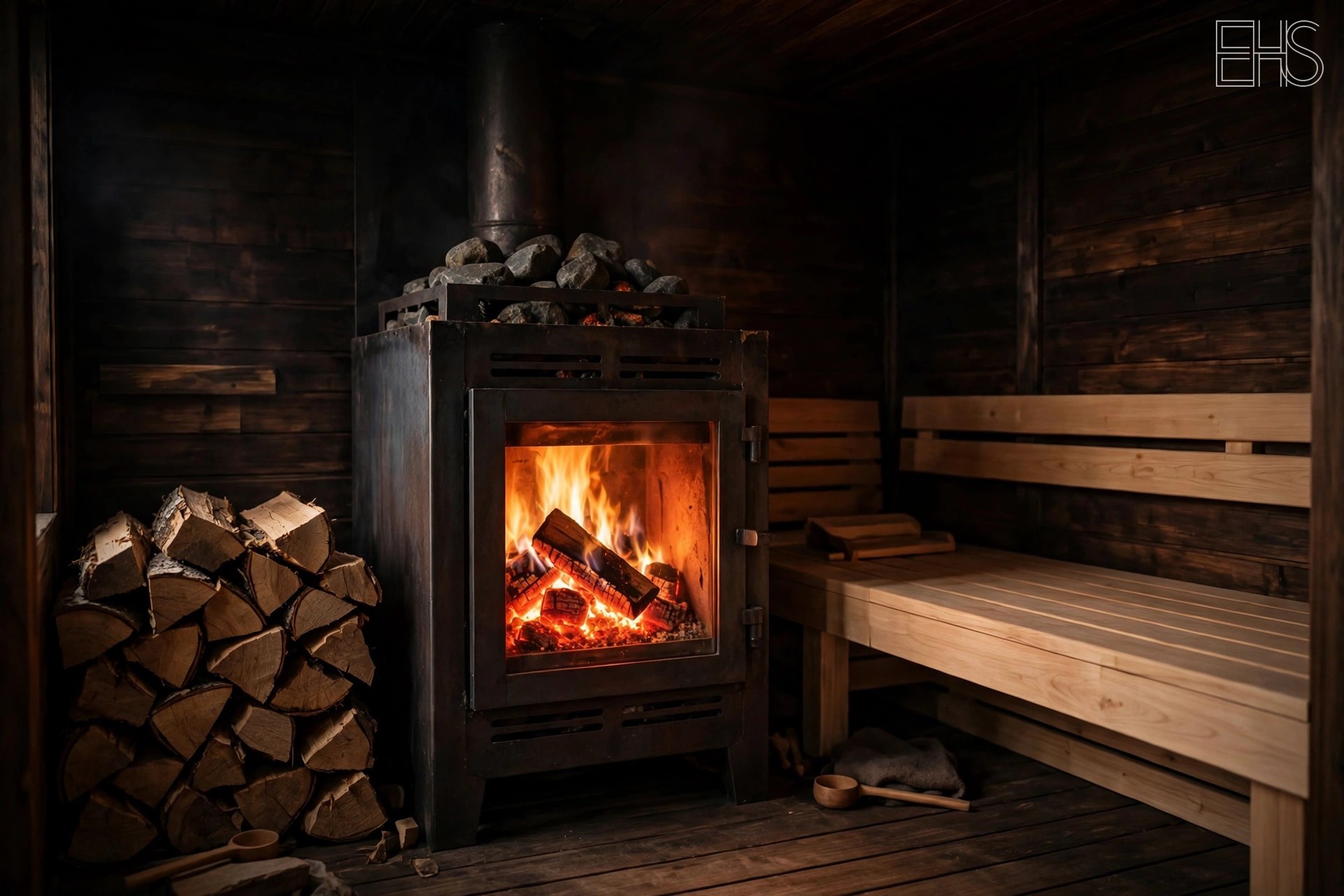
Illustration by EverHealthSpan
The Comparison
The table below sets the three heater types side by side on the factors that decide a purchase. Treat the ranges as typical for home cabins in 2026.
| Feature | Electric stone heater | Wood-burning heater | Infrared panels |
|---|---|---|---|
| Heat source | Resistive elements under stones | Logs in a firebox, flue heats stones | Carbon, ceramic, or halogen panels |
| Typical temperature | 70 to 100 degrees Celsius | 70 to 100 degrees Celsius, often higher | 40 to 60 degrees Celsius |
| Heat-up time | About 30 to 45 minutes | About 45 to 60 minutes or more | About 10 to 20 minutes |
| Steam (loyly) | Yes, water on stones | Yes, water on stones | No, no stones and no water |
| Electrical supply | Dedicated 240-volt circuit | None needed | Standard 120-volt outlet |
| Installation | Electrician, dedicated circuit | Chimney, clearances, floor pad | Assemble and plug in |
| Running cost | Moderate, by kilowatt-hours | Low cash cost, firewood and time | Lowest, by shorter sessions |
| Best for | Daily family use, indoor cabins | Outdoor cabins, off-grid, ritual | Apartments, renters, gentle heat |
If the burst of steam on hot stones is part of what a sauna means to you, infrared cannot provide it, however good the panels are. Running cost follows from power and time: a 6-kilowatt electric heater running for an hour uses about 6 kilowatt-hours, so at typical North American residential rates a session costs roughly a dollar in electricity. A new 240-volt circuit usually runs from around $800 to $3,000 installed, so verify current rates before booking, while an infrared cabin needs only a level floor and a spare outlet. Our sauna ventilation guide covers intake and exhaust placement by cabin size, plus the post-session drying routine that keeps the wood healthy.
Which Heater Fits Which Home
The right heater follows from the home, not from a ranking. An apartment or a spare room with a standard outlet points toward infrared: it plugs in, assembles quickly, and moves out again if you relocate. A family using a sauna daily points toward electric: consistent heat, a thermostat, and steam on demand. A garden cabin, an off-grid property, or a household that values the ritual of tending a fire points toward wood. Renters should weigh portability, since an infrared cabin can be dismantled and moved, while an electric cabin's dedicated circuit stays with the house and a wood heater's chimney is permanent.
One outdoor example built around an electric stone heater is Renu Therapy's Zeno 2-Person Barrel Sauna (affiliate link), listed from around $6,161, so verify current rates before buying. Its KIP stone heater gives dry heat or steam over the stones, and the barrel form sheds rain and snow without a separate shelter.
A Plain-English Safety Note
Sauna heat suits most people, but not everyone. A sauna session lifts heart rate and core temperature, and the hottest rooms ask the most of the body, so start short and build up gradually rather than aiming for a long first session. Avoid long sessions while pregnant, when blood pressure is unstable, or when heart symptoms are uncontrolled. Leave the room at the first sign of dizziness or nausea, and keep water nearby. Never sauna alone when you are new to it. Wood heaters add their own rules: never leave a fire unattended, and let ash cool fully before emptying it.
Frequently Asked Questions
Which sauna heater heats up fastest?
Infrared panels are the fastest, typically warming a cabin to session temperature in about 10 to 20 minutes. Electric stone heaters usually take 30 to 45 minutes. Wood-burning heaters are the slowest, typically 45 to 60 minutes or more from a cold start.
Can I get steam from an infrared sauna?
No, not in the traditional sense. Steam in a sauna comes from water hitting hot stones, and infrared cabins have no stones and no heater surface designed for water. Pouring water on infrared panels risks damage. If the burst of steam on hot stones is part of the experience you want, choose an electric or wood-burning heater.
Do I need an electrician for an electric sauna heater?
Yes, in nearly every case. Electric sauna heaters run on a dedicated 240-volt circuit, sized to the heater's kilowatt rating. Ask a qualified electrician to check the panel has spare capacity before ordering, since an older 100-amp service sometimes needs upgrading first. Infrared cabins are the exception: most plug into a standard 120-volt outlet with no electrical work at all.
Is a wood-burning sauna heater practical in a city garden?
It can be. A wood heater needs a chimney through the roof, clearances from fences and combustible surfaces, a dry firewood store, and a non-combustible floor pad. Smoke rules vary by area, so check local rules before committing. Tending is also real: a log every 20 to 30 minutes, ash to empty, and a chimney to clean. For many city gardens, an electric heater is the simpler choice.
What size electric heater does my cabin need?
Match the kilowatt rating to the cabin's air volume, not its headcount label. Manufacturers publish a volume range for each rating, and a common rule of thumb is roughly 1 kilowatt per 35 to 50 cubic feet of cabin volume. A heater too small reaches temperature slowly and recovers poorly, while one too large cycles on and off.
Which heater type is the easiest starting point for a first sauna?
Electric, for most first-time buyers. A thermostat and a timer remove the guesswork, steam is available whenever you want it, and there is no fire to tend. The one piece of work is the dedicated circuit, arranged once by an electrician. An indoor cabin such as Renu Therapy's Rusticus 4 Person Indoor Sauna (affiliate link), listed from around $6,830, shows the format: a traditional cabin around an electric stone heater, so verify current rates before buying.
This article is for informational purposes only and does not provide medical advice or guaranteed outcomes.